Kolkwitz Comprehensive School: A Model for Future-Oriented Educational Architecture
Kolkwitz Comprehensive School: A Model for Future-Oriented Educational Architecture In Kolkwitz, a school is being created that is more than just a place of learning: a sophisticated spatial concept, sustainable materials, and a close connection…
New Educational Spaces for Lusatia: The Kolkwitz Comprehensive School as a Model for the Future

Education as a Key to Transformation
Structural change is transforming Lusatia – and with it, the educational landscape. Where lignite once formed the economic backbone, a place is emerging in Kolkwitz that offers young people perspectives: a new comprehensive school with an upper secondary level and an attached triple sports hall. The building ensemble planned by Sehw Architektur is more than just a school – it is a symbol of the transformation of an entire region.
A Campus as a Small Town
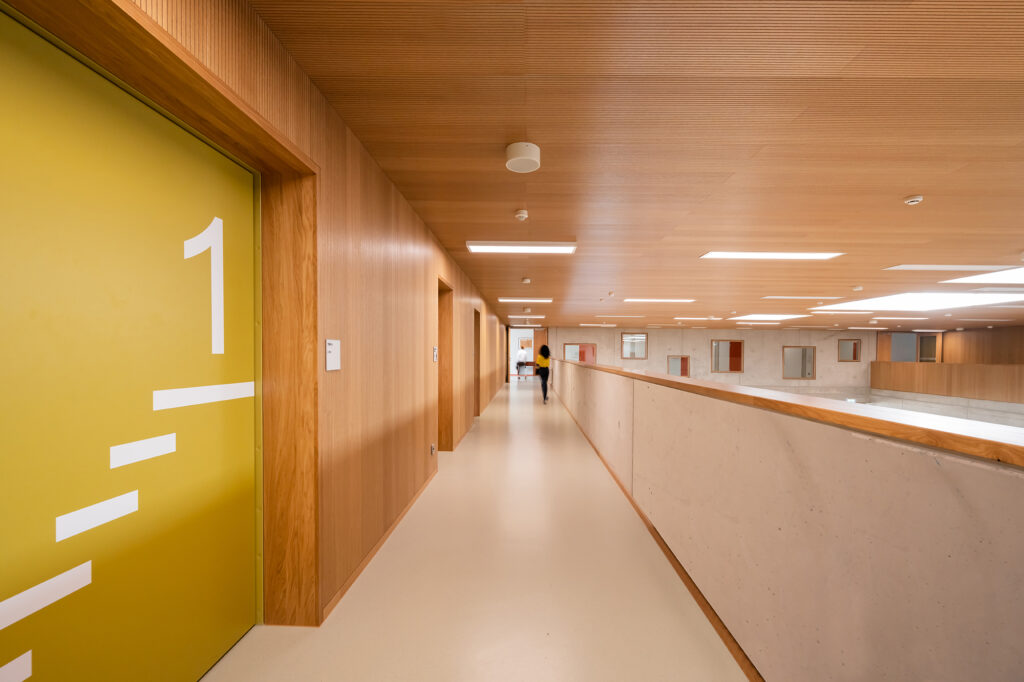
The school building follows a sophisticated concept that combines orientation, community, and flexibility. The architecture is reminiscent of a small town: a generous break hall serves as a marketplace, while learning clusters form the various neighborhoods. Wide corridors and open common areas promote exchange and allow for versatile use of the spaces. The result: an environment that can evolve with the needs of its users.
Learning in Harmony with the Surroundings
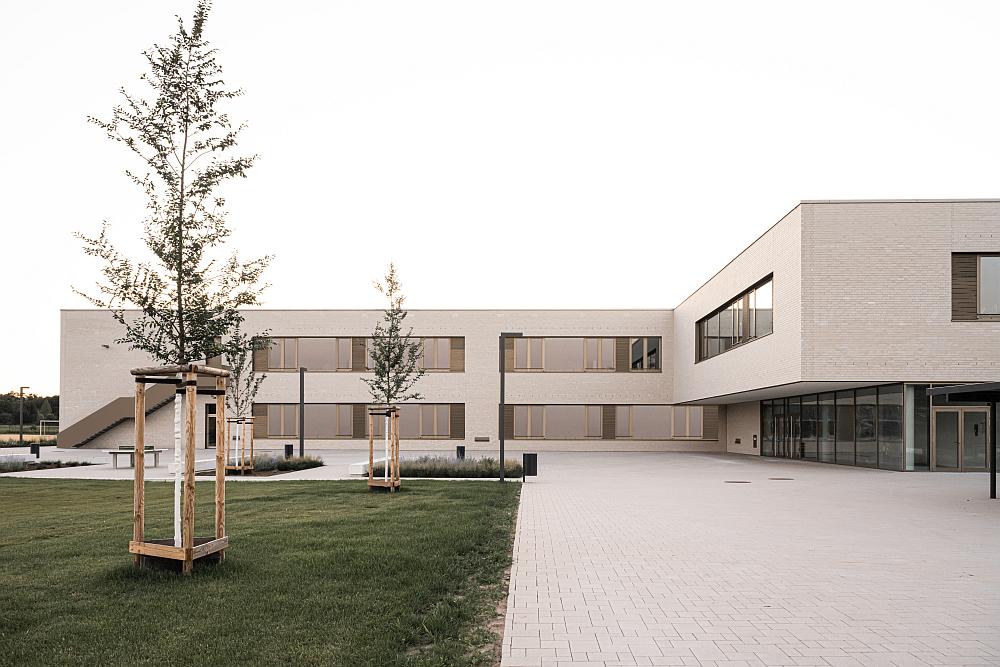
The school opens up to the landscape. The clever combination of one- and two-story building volumes integrates the building harmoniously into the rural surroundings. Generous terraces not only create additional learning spaces but also emphasize the connection between indoor and outdoor space. Bright, open learning areas with large window surfaces ensure natural lighting and offer visual axes into nature.

Sustainability as a Guiding Principle
A large part of the school grounds remains unsealed to protect the microclimate. In collaboration with Schönherr Landschaftsarchitektur, a concept was developed that integrates green courtyards, roof surfaces, and reed swales. These elements improve air quality, regulate temperatures, and make the outdoor space an integral part of learning. A meadow orchard with old apple varieties and diverse green spaces also offer room for movement and recreation.
Materiality and Spatial Quality
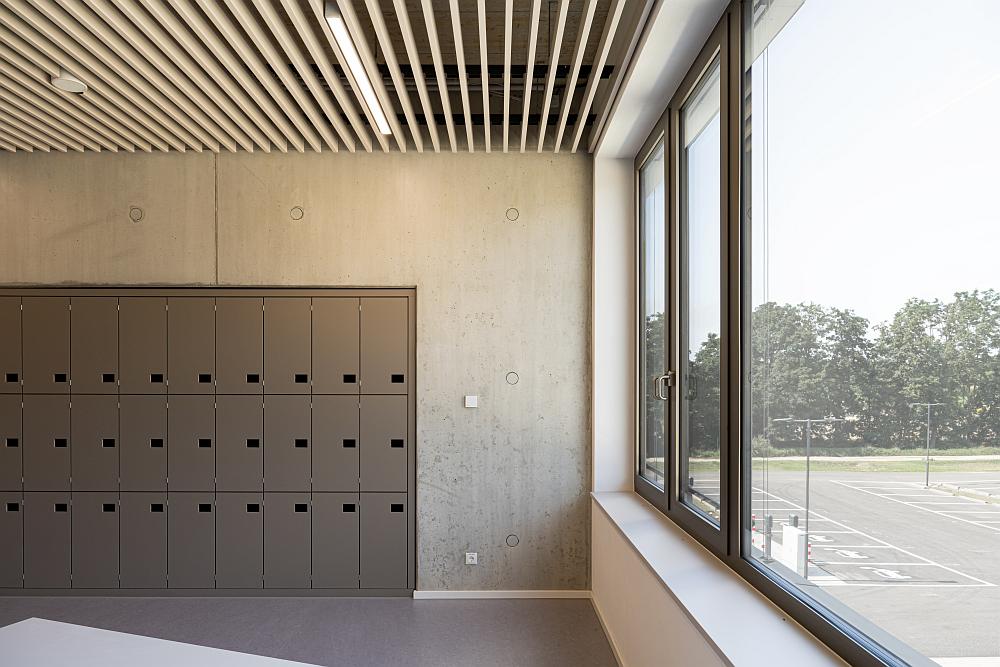
The architecture focuses on durable, natural materials. A light-colored clinker facade lends the building permanence, while wood, linoleum, and cast stone create a pleasant atmosphere in the interior. Acoustic ceilings in the classrooms optimize room acoustics, while open slat structures in the common areas ensure transparency and airiness.


Sophisticated Energy Efficiency
The school’s energy concept relies on a combination of passive and active measures: monolithic walls store the coolness of the night and release it slowly during the day. CO2 sensors control air quality, while deliberately placed, manually operable windows allow for natural ventilation. Rainwater is collected and allowed to infiltrate on-site to use the water cycle sustainably. An air-to-water heat pump ensures a pleasant indoor climate – even in the winter months.
A Model for the Educational Architecture of the Future
The new Kolkwitz Comprehensive School shows how architecture can contribute to social and ecological transformation. It is more than a functional building – it creates spaces that enable encounter, exchange, and inspiration. A model for the school construction of the future.



You might also be interested in
SCHULBAU Fair
SCHULBAU Essen 2025 – Successful industry meeting for educational construction
Architecture, SCHULBAU Fair
Gustav Heinemann Comprehensive School Essen: How architecture accompanies change in the neighbourhood