The new Arnold Freymuth School in Hamm-Herringen as a campus of the future
An example of successful school construction planning with foresight: The campus of the Arnold Freymuth School in Hamm-Heringen combines architecture, education and urban society
When educational issues become urban development, new answers are needed. In many municipalities, new school buildings have long since moved beyond their function as pure places of learning. They become anchors in the neighbourhood, public spaces, meeting centres. It is precisely this potential that an ambitious project in Hamm-Herringen is taking up: the new Arnold Freymuth School.
From the competition to the centre of the neighbourhood
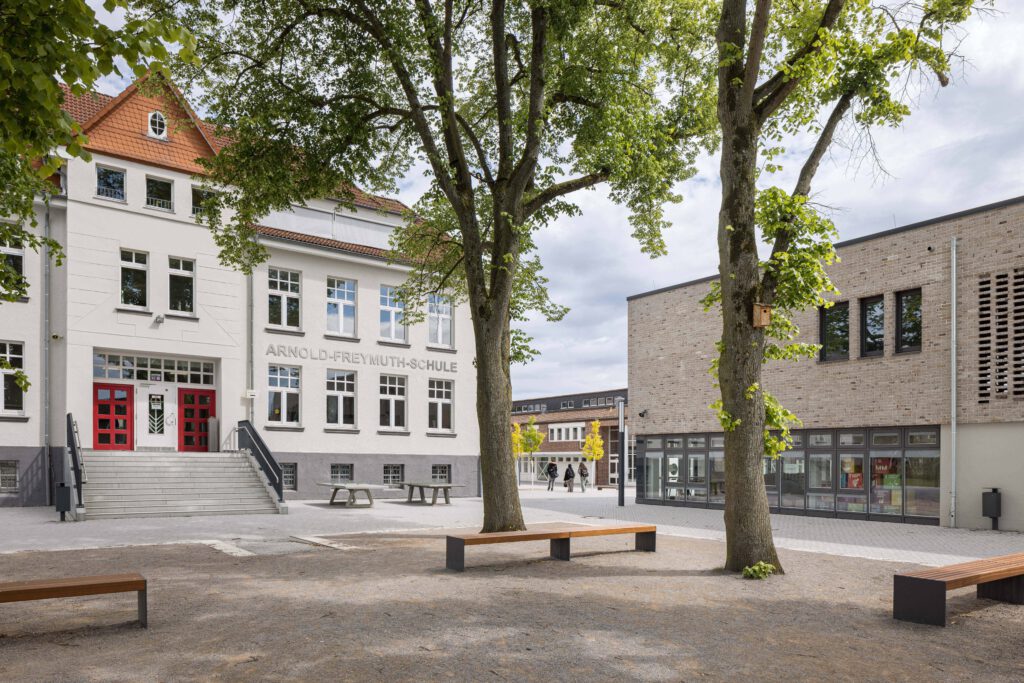
In the 2018 realisation competition, the focus was already on an urban development strategy that thinks beyond the school grounds. The design by Schmidt Plöcker Architekten prevailed because it created relationships – between old and new, inside and outside, learning and living. At the center of the planning: a campus square, intended as the heart of the school community. It connects the various buildings and forms a centre with a quality of stay and orientation.
The complex frames the listed existing building from 1912, which was deliberately preserved and functionally integrated. The placement of the new buildings creates a spatially defined, open educational space that takes up historically grown structures and at the same time creates a new identity.
Learning spaces with attitude
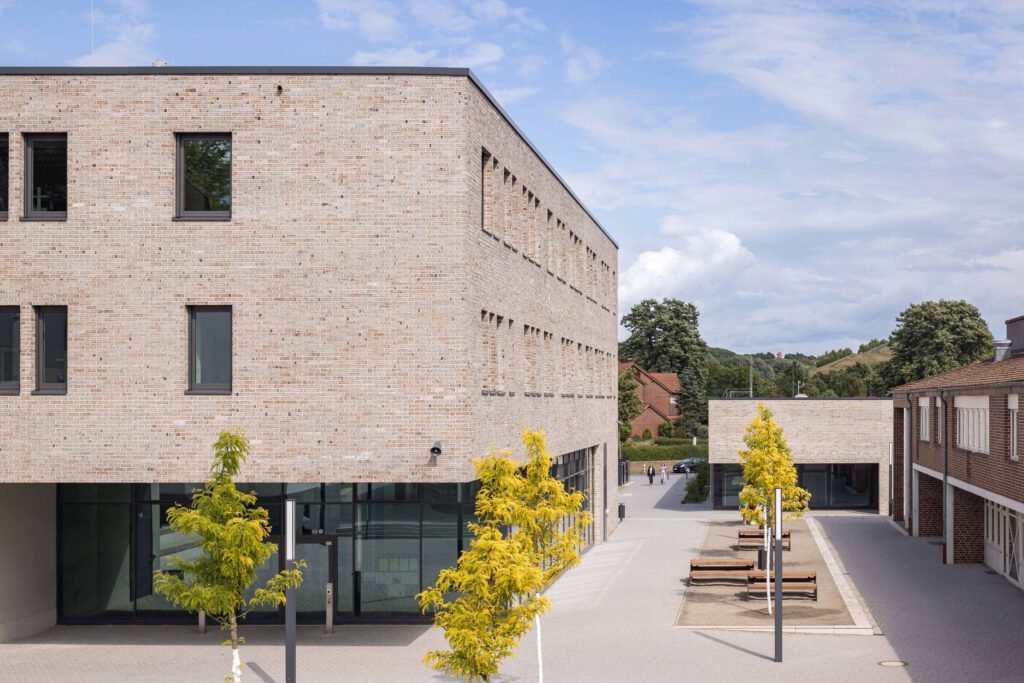
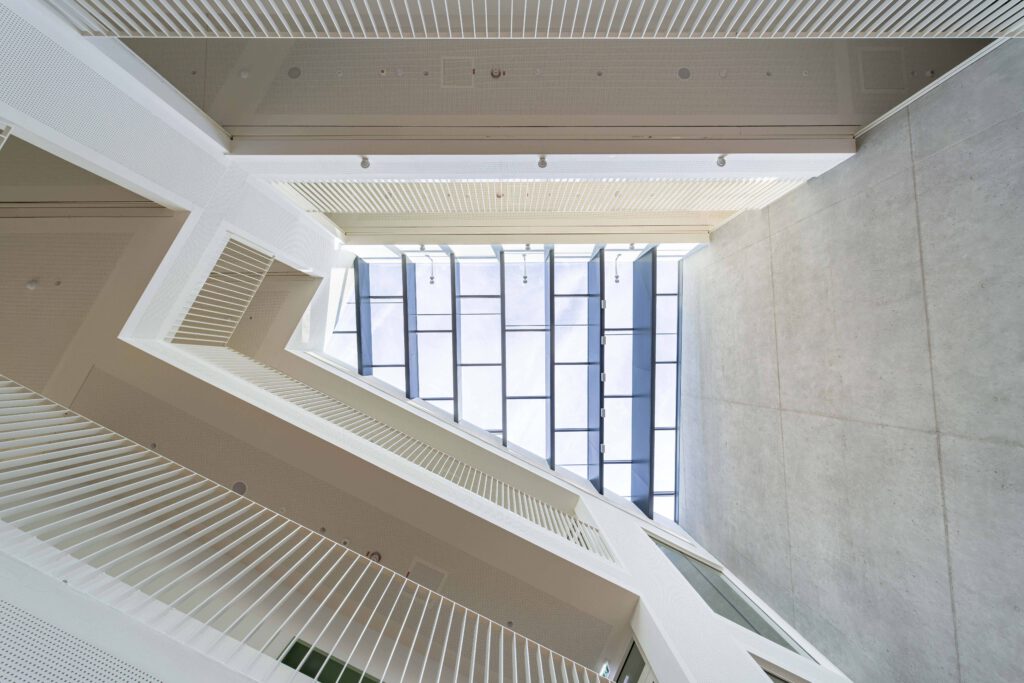
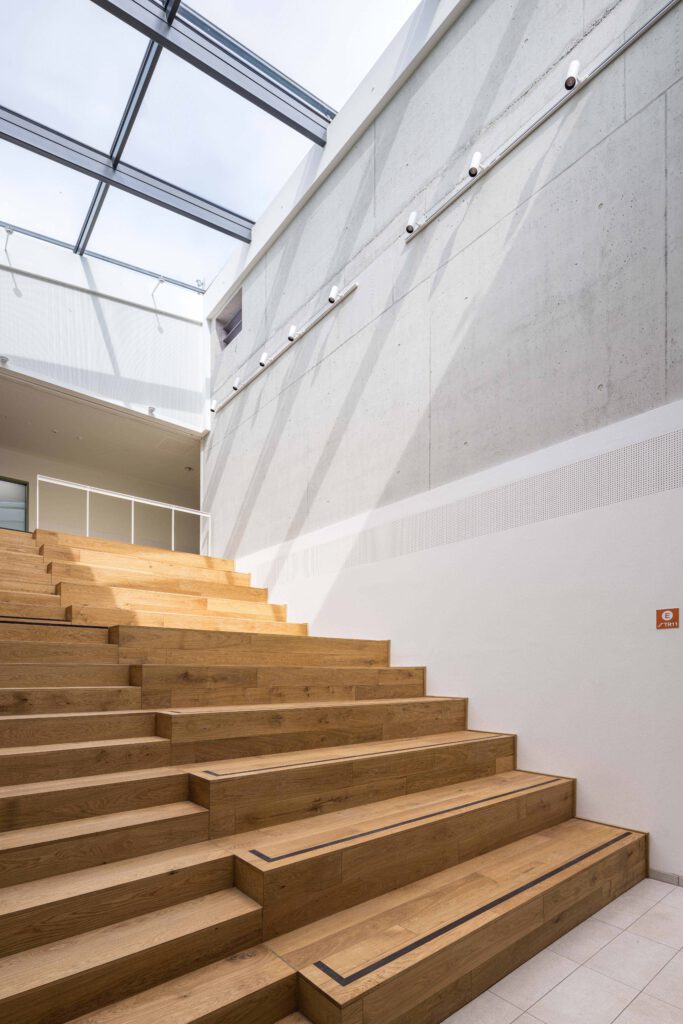
The pedagogical requirements of a contemporary school are consistently reflected in the architectural design: the two new buildings for secondary levels I and II stand for open, flexible and lively learning. Spacious foyers, airy stairwells, retreats and learning islands give rhythm to the buildings. Natural light, clear pathways and a calm choice of materials made of wood, glass and warm clinker bricks characterise the atmosphere.
The spatial concept does not follow a didactic fashion, but reflects long-term pedagogical principles: self-organization, cooperation and individual support need space that provides structure and freedom at the same time. Architecture becomes a tool for learning here.
More than a schoolyard: landscape as a learning field
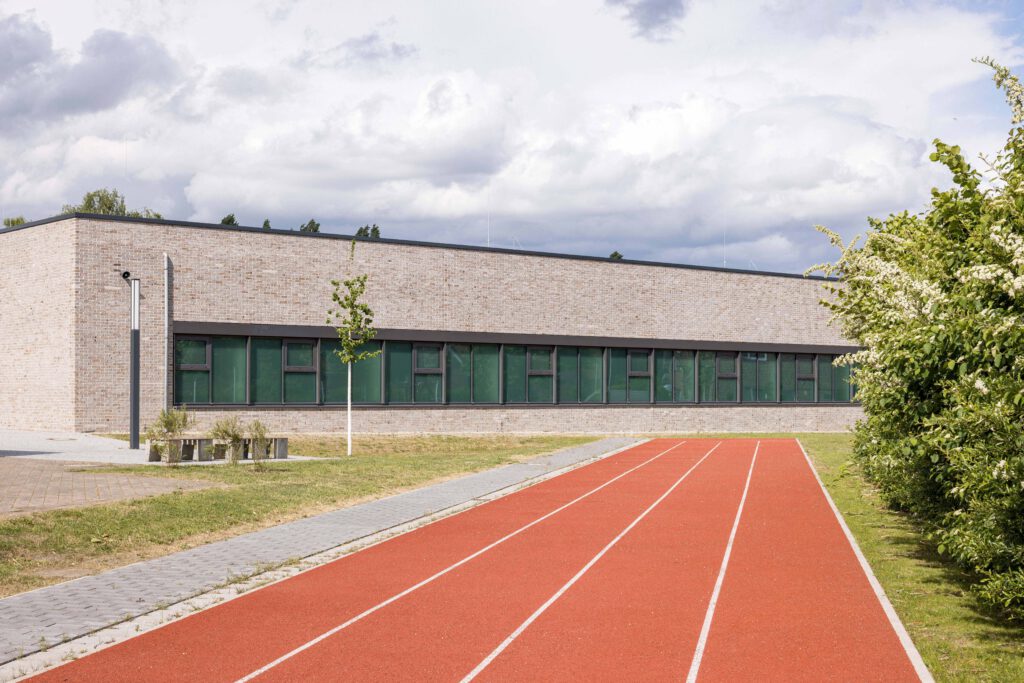
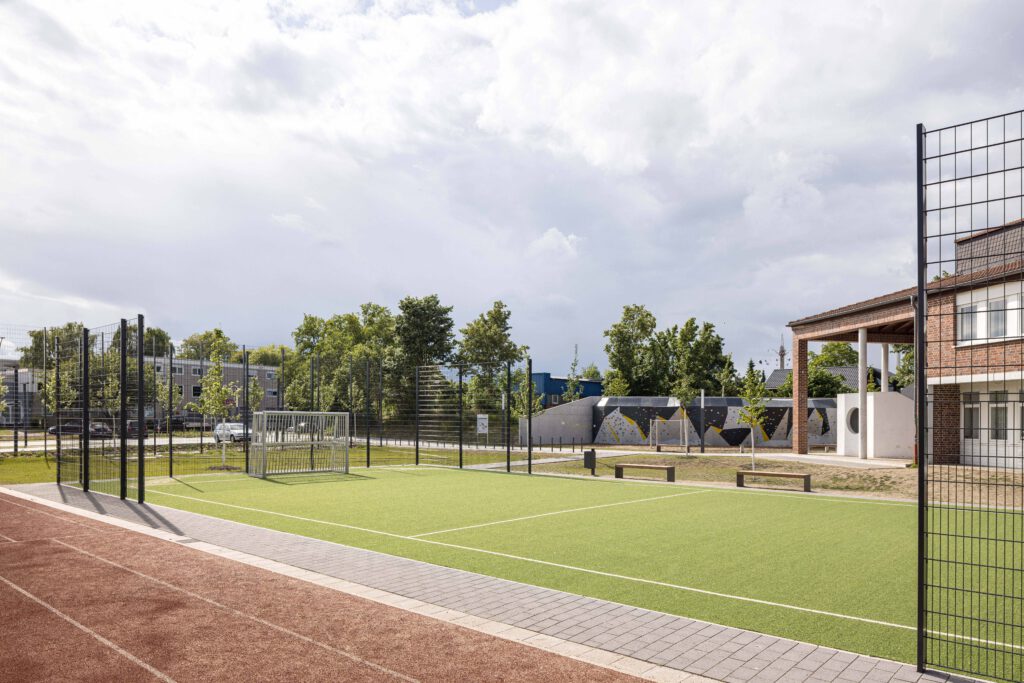
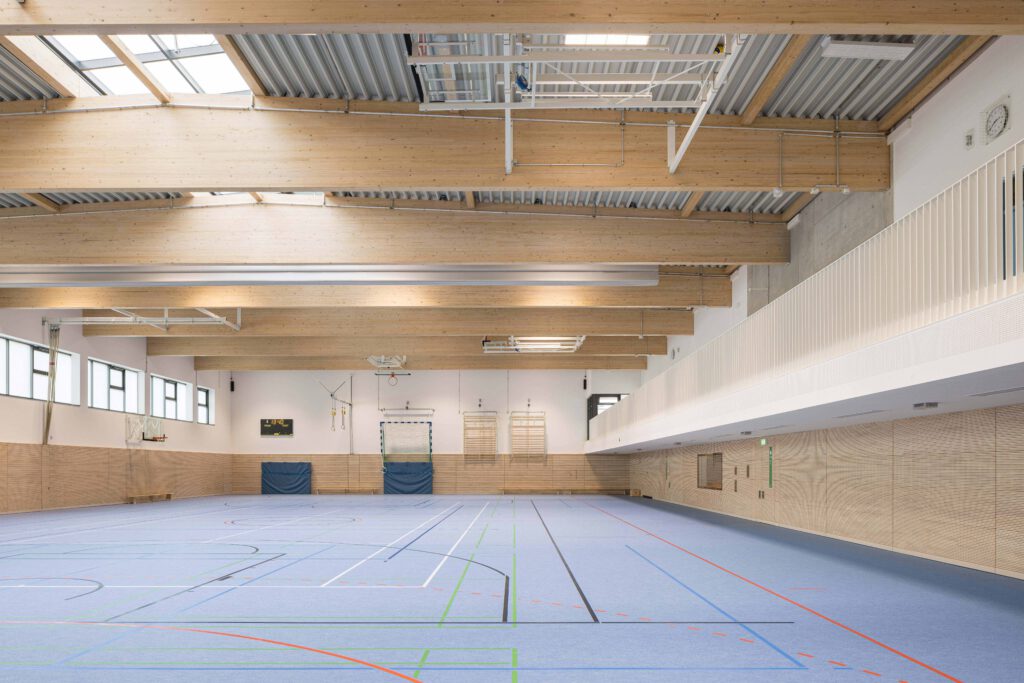
The outdoor space was also rethought – as part of the overall pedagogical concept. In addition to the campus square, a partially sunken sports hall, a spacious sports park with a running track, soccer field, shot put facility and climbing wall as well as a school garden were built. The facility promotes exercise, promotes encounters – and opens up the school to the neighbourhood.
The intensive interlocking of inside and outside, built space and nature is more than design – it sets an educational signal: learning does not end at the classroom door. The schoolyard becomes an extended learning landscape, the garden becomes a space for experience, the sports park a stage for joint activities.
The open space concept, designed by HKK Landschaftsarchitektur, brings its own attitude to the project: instead of classic schoolyard areas, a multi-layered outdoor space enables movement, retreat and exploration in equal measure. The combination of an open campus square, sports park, green retreats and an educational school garden creates an atmospheric learning landscape with a high quality of stay. Each area is designed to address different needs – from informal exchanges to physical activity. The outdoor facilities act as break and exercise areas and actively contribute to social interaction and to anchoring the school in the neighbourhood.
Architecture as a contribution to urban development
The new Arnold Freymuth School is one of the largest educational construction projects in the city of Hamm – and the first in North Rhine-Westphalia for Schmidt Plöcker Architekten. The construction process was challenging: it took place while the school was still in operation, parallel to the pandemic and geopolitical crisis. Nevertheless, the project set an example: for educational architecture that thinks long-term, for spaces that enable social participation and for a school that sees itself as the engine of its surroundings.
The choice of robust materials, economical planning and the focus on energy-efficient compactness are aimed at sustainability in the best sense of the word: a school that grows without becoming obsolete. An ensemble that can change without losing its character.
A place with a future
The campus in Hamm-Herringen is an example of an attitude in educational construction that is not exhausted in surfaces. It’s about the programmatic depth of the spaces, about the ability to embrace change – and at the same time offer reliability. The Arnold Freymuth School reflects exactly this self-image. As an architectural answer to pedagogical questions. As a public place in the best sense of the word. And as an invitation to rethink school.
Construction board
- Location: Hamm-Herringen
- Area (GFA): approx. 7,500 m²
- Construction period: 2019–2024
- Competition win: 2018
- Architecture: Schmidt Plöcker Architects, Frankfurt am Main
- Landscape architecture: HKK Landscape Architecture, Frankfurt am Main
- Construction management: Weicken Architects, Unna

You might also be interested in
SCHULBAU Fair
SCHULBAU Essen 2025 – Successful industry meeting for educational construction
Architecture, SCHULBAU Fair
Gustav Heinemann Comprehensive School Essen: How architecture accompanies change in the neighbourhood