Coppenrath Innovation Centre: From roundhouse to a space for research
Coppenrath Innovation Centre in Osnabrück: Revitalisation with space for AI, education and change In the listed roundhouse, solid timber, research and collaborative working models come together to form a sustainable campus for the future.
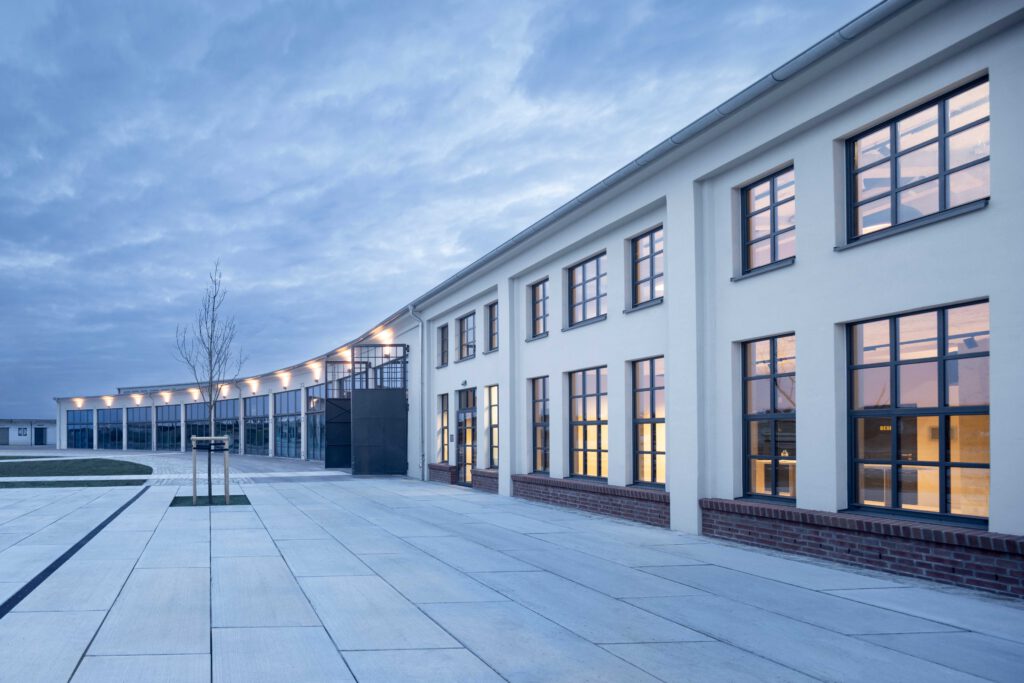
How the Coppenrath Innovation Centre in Osnabrück brings together historic fabric and New Work concepts
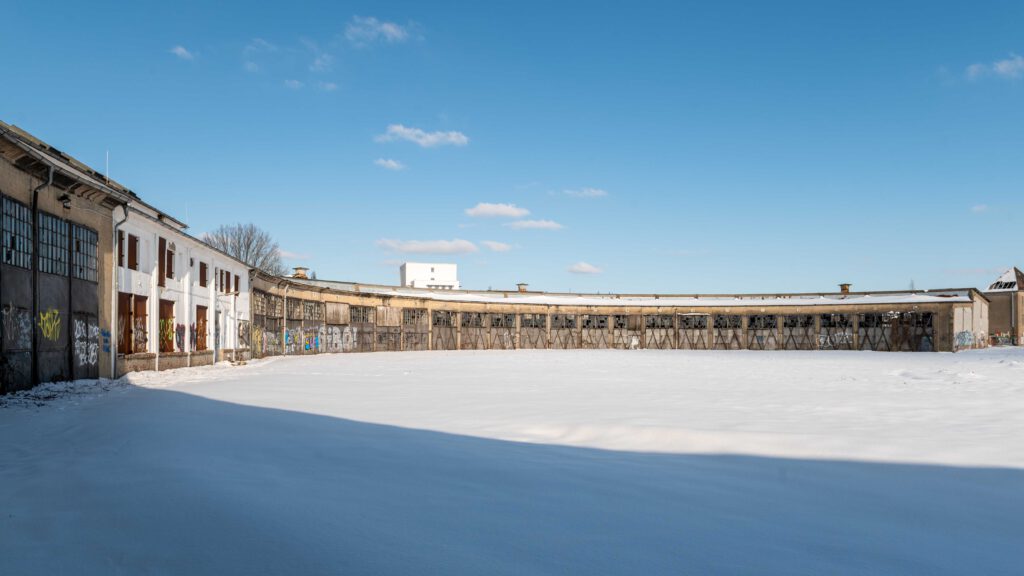
Where steam locomotives once pulled in for maintenance, digital technologies for the future are now emerging. The Coppenrath Innovation Centre (CIC) in Osnabrück shows how a listed roundhouse can become a real-world laboratory for contemporary forms of work and education. On the site of a former freight yard, a versatile campus has been created that brings together research, teaching and start-up culture.
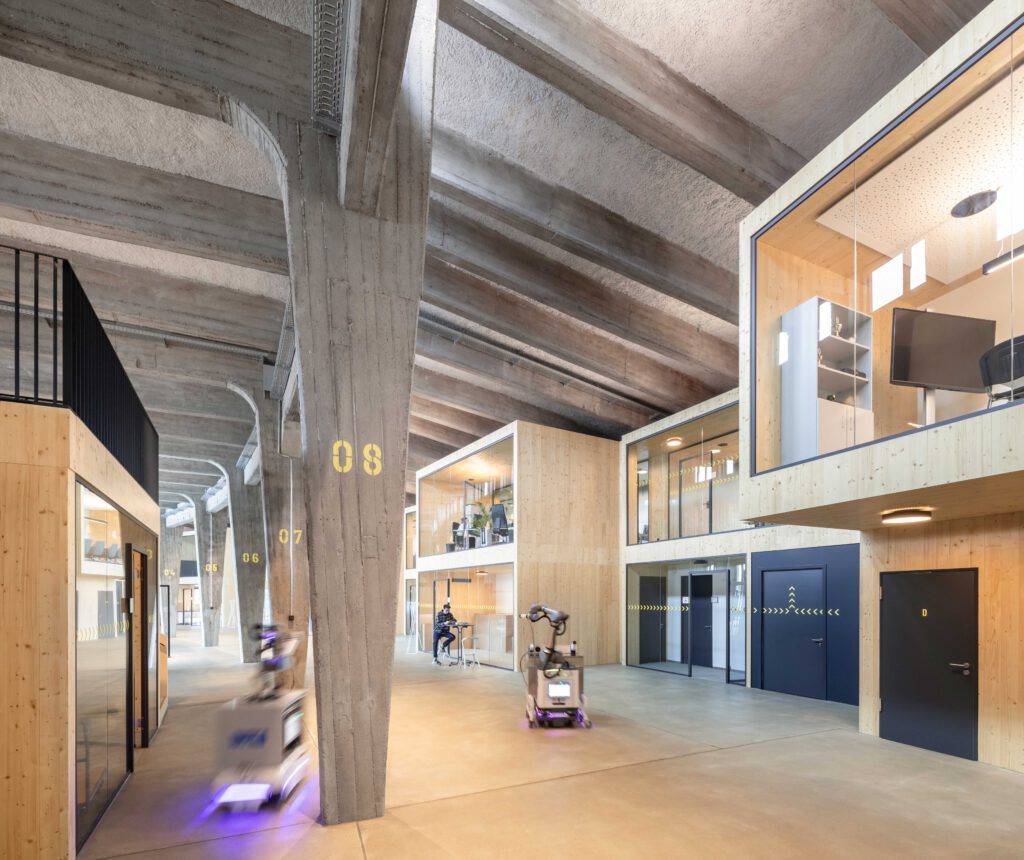
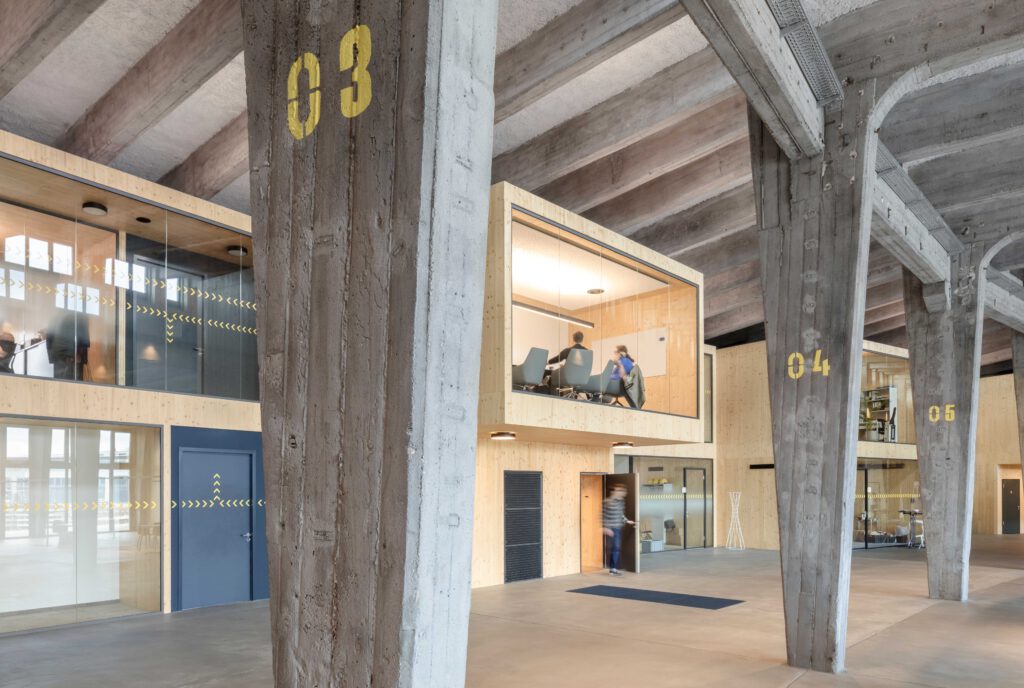
The site itself carries history: the engine shed from 1913 was rebuilt after the Second World War and still shapes the area near the Hase to this day. Kresings Architekten have carefully transitioned the building ensemble—from an industrial past to a digitally networked present. The outer shell was preserved; inside, flexible spatial structures in solid timber were created, complemented by modern building services.
Structural change with architectural clarity
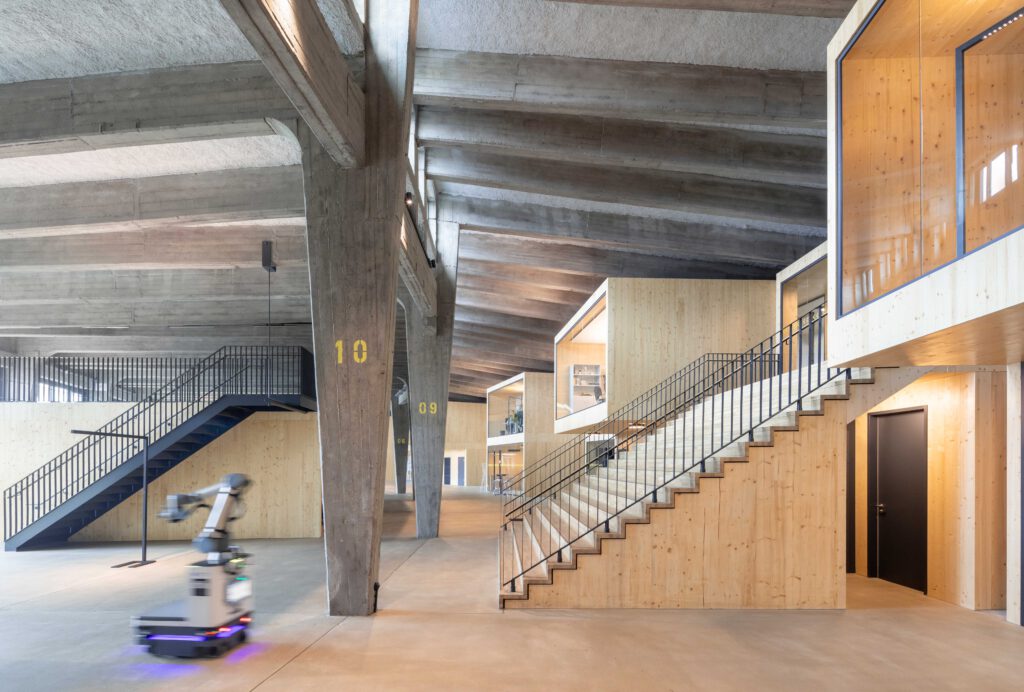
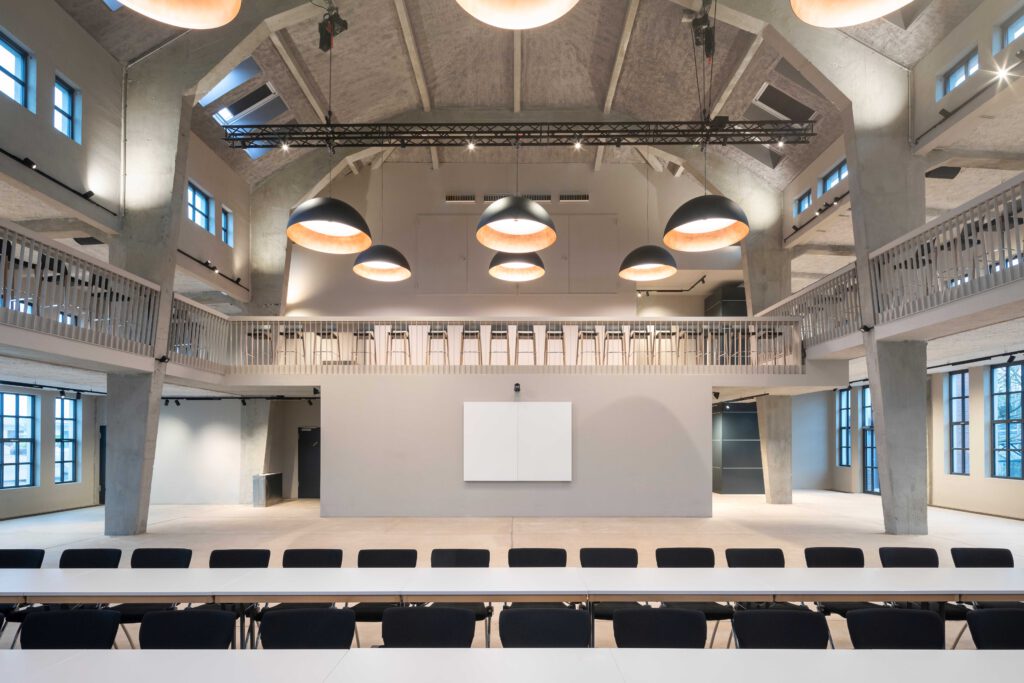
The ensemble is divided into three segment-like halls. At its centre is the so-called “Innovatorium”—a two-storey event space with room for up to 400 people. The adjacent halls contain modular timber room units that can be adapted as required. A layered use across two levels enables maximum space efficiency without compromising spatial quality. Openness, high ceilings and sightlines preserve the character of the original hall while creating new places for exchange and collaboration.
Staircases and intermediate levels connect the spaces physically as well as socially. Materials such as untreated wood and historic steel girders create a balance of warmth, robustness and atmosphere.
Sustainability through fabric and system
The revitalisation of the CIC was funded as a national urban development project—and for good reason. Avoiding demolition, reusing existing building fabric and the targeted use of energy-efficient building services significantly reduce embodied energy. Ventilation, heating and cooling are organised via cross-ventilation, night-time purge ventilation and an activated floor slab. Supply air enters the rooms via former maintenance corridors and is distributed as displacement air. Triple glazing and insulation complement the building’s energy management.
A place for the future between AI, higher education and skilled trades
With the German Research Center for Artificial Intelligence (DFKI), Osnabrück University and Osnabrück University of Applied Sciences, as well as numerous companies from the skilled trades and start-up scene, a broad spectrum of users is activating the new site. AI-controlled agricultural robots are developed here, as are collaborative education formats. The CIC focuses on interdisciplinarity, scalability and sustainable synergies—not as a vision, but as built practice.
What began as a freight shed is now growing into a hub within a new urban fabric. The CIC is exemplary of an architecture that does not replace, but rethinks—and in doing so, confidently activates the realm of possibilities between existing fabric and the future Coppenrath Innovation Centre.

You might also be interested in
SCHULBAU Fair
SCHULBAU Essen 2025 – Successful industry meeting for educational construction
Impulses, Lifestyle
WEtransFORM in Bonn: Exhibition outlines visions for sustainable construction