Socialtecture: Indra Musiol in an interview on holistic urban design
Socialtecture: Interview with Indra Musiol about sustainable urban design Indra Musiol from JES Socialtecture explains in an interview how architecture strengthens social encounters and how urban spaces become living ecosystems. In focus: new concepts for…
Thinking of cities as living systems: Indra Musiol of JES Socialtecture explains how architecture strengthens social cohesion and why school spaces play a central role in developing sustainable neighbourhoods.
The city as a living organism
SCHULBAU: Ms Musiol, with Socialtecture you are creating a new approach that expands architecture to include the social dimension. What does it mean to you to view urban design as a living organism?
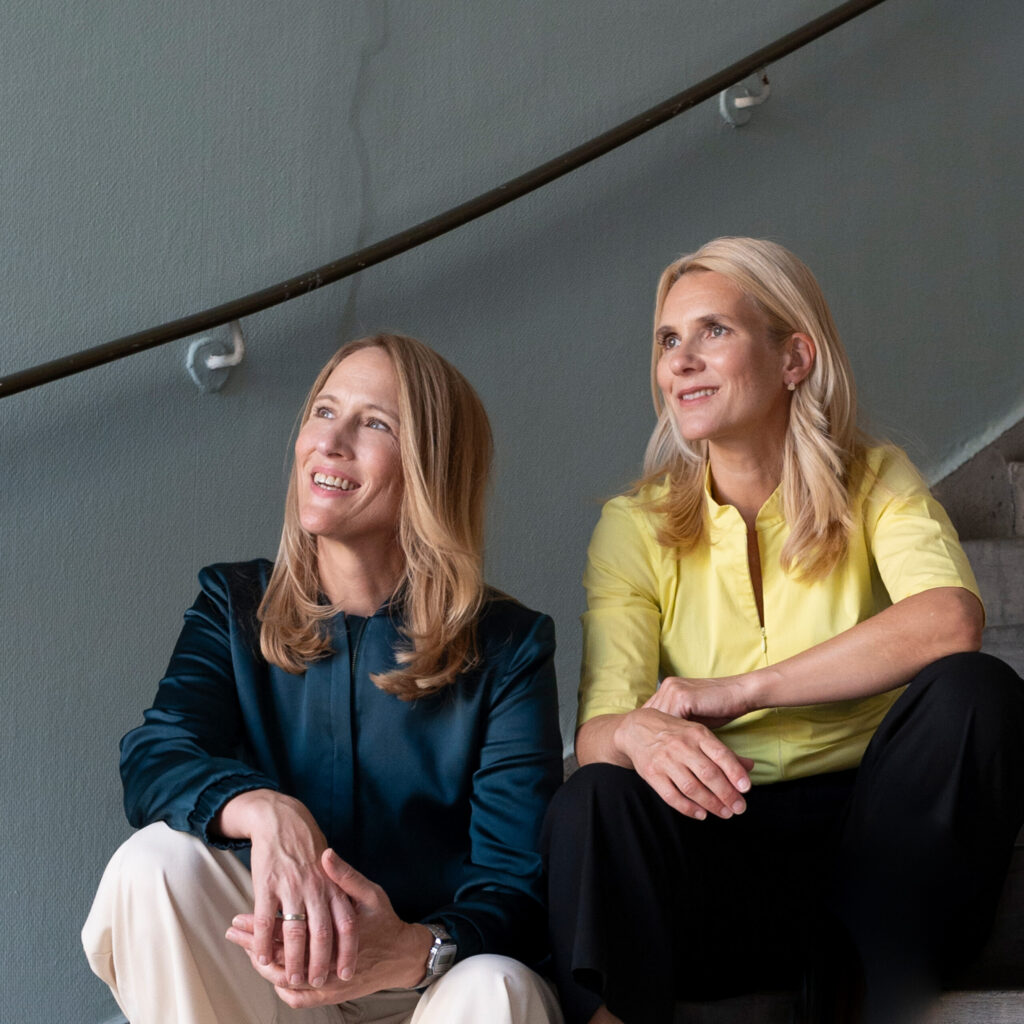
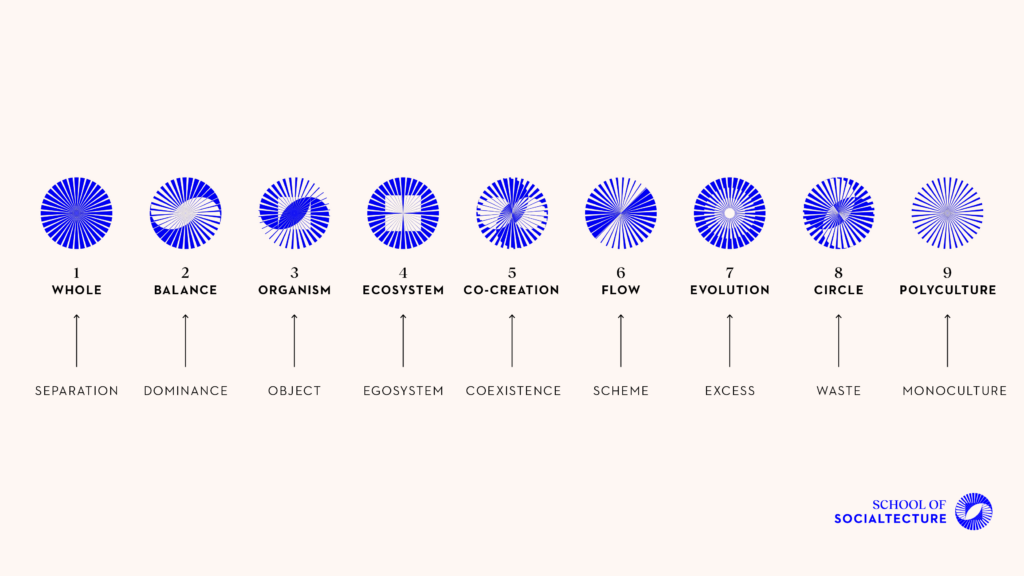
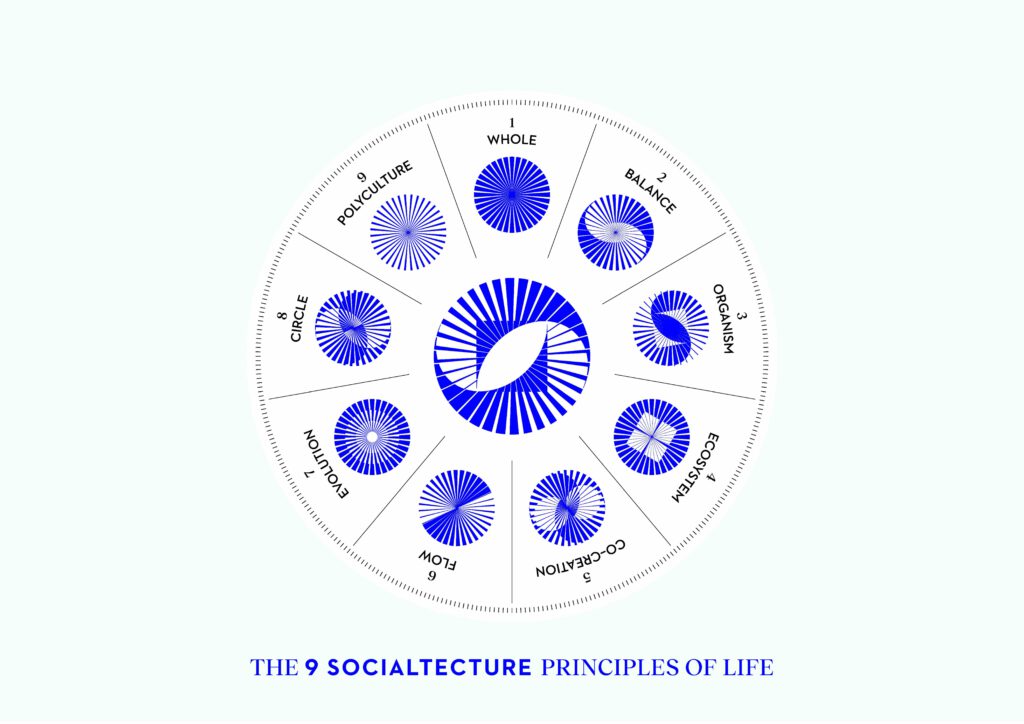
INDRA MUSIOL: For us, everything begins with the perspective of putting life and living together at the centre. This mindset is reflected in how we think about, design and create places and spaces: the “Socialtecture Principles of Life”, for example, are about bringing together rather than separating, about balance instead of dominance, about flow instead of rigid patterns. We look at how life works and develop projects from that which strengthen human interaction.
A key aspect is “Phase -1” – an early phase before the actual planning, in which we engage intensively with the DNA of a place. Before any design is even put on paper, we ask ourselves: What is already alive here? What does the place need, and what do the people need? How can a new place contribute to the neighbourhood?
SCHULBAU: Schools are central places for the community. How should schools and the surrounding neighbourhood be designed to best promote social interaction and education?
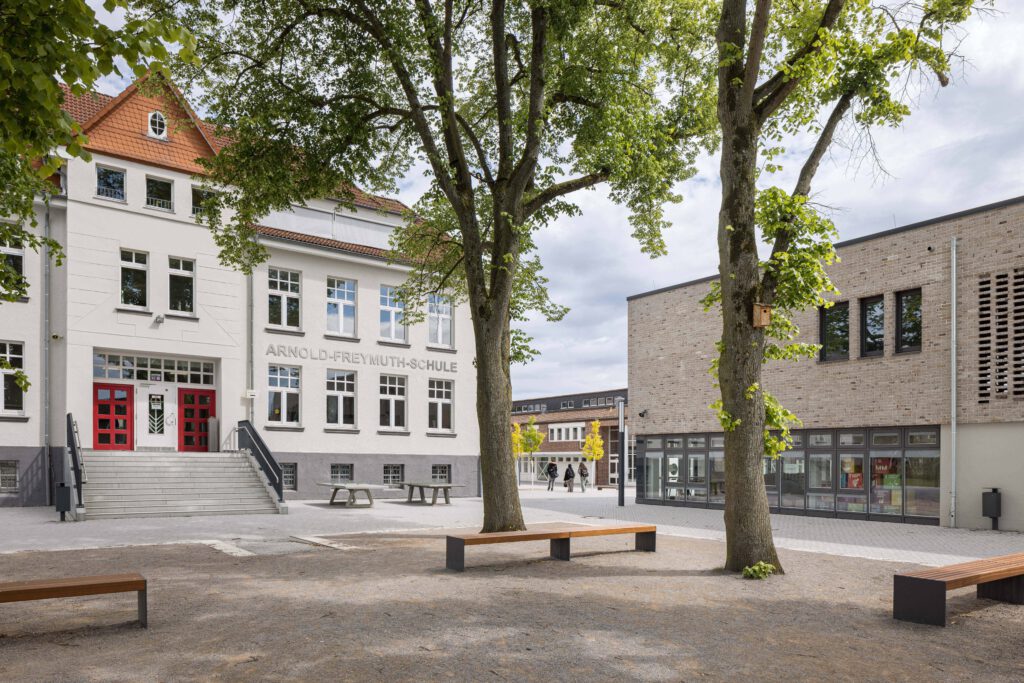
INDRA MUSIOL: School is an important part of our society, not an island. It should be embedded in its urban context as well as possible. We see the school as part of a dynamic network that has an impact beyond the classroom. It is about creating spaces for encounters, places for exchange that are meaningful both for students and for the community.
In one of our projects, we are developing a central upper-secondary level where students from different Waldorf schools can come together. This shared upper school enables lively exchange among young people and also provides an opportunity to implement the “Whole” – a core principle of Socialtecture – in the school environment.
SCHULBAU: What does the principle of “Flow” mean in your work?
INDRA MUSIOL: Flow is the opposite of rigid patterns. Many things flow: time, water or knowledge. In practice, this principle can mean, for example, that schools take students’ different rhythms into account: while primary school pupils are ready to learn earlier in the morning, adolescents may benefit from a later start.
In addition, flow means repeatedly questioning existing patterns. Do we still need them? Do they still fit? This also includes questioning what has been learned: lessons do not always have to last exactly 45 minutes and be interrupted by a bell. And knowledge does not flow only from the teacher to the students.
Urban spaces as interconnected systems
SCHULBAU: Urban space as a living system – how do you work with that?
INDRA MUSIOL: Instead of understanding individual buildings as objects, we view places, cities, districts and neighbourhoods as ecosystems in which each element has a role. A city centre is more than a collection of buildings. It is a network of functions and relationships. Every element – whether it is the florist, the hairdresser or the department store – plays a role in public life and is part of a larger whole. This ecosystem thinking repeatedly opens up new perspectives and good ideas.
For example, an architect recently noted in a project that it could make sense to think about hotels, hospitals and florists together from the outset, because they have many interfaces for shared value creation.
Participation as a design principle
SCHULBAU: How do you integrate participation and community-based processes into your projects?
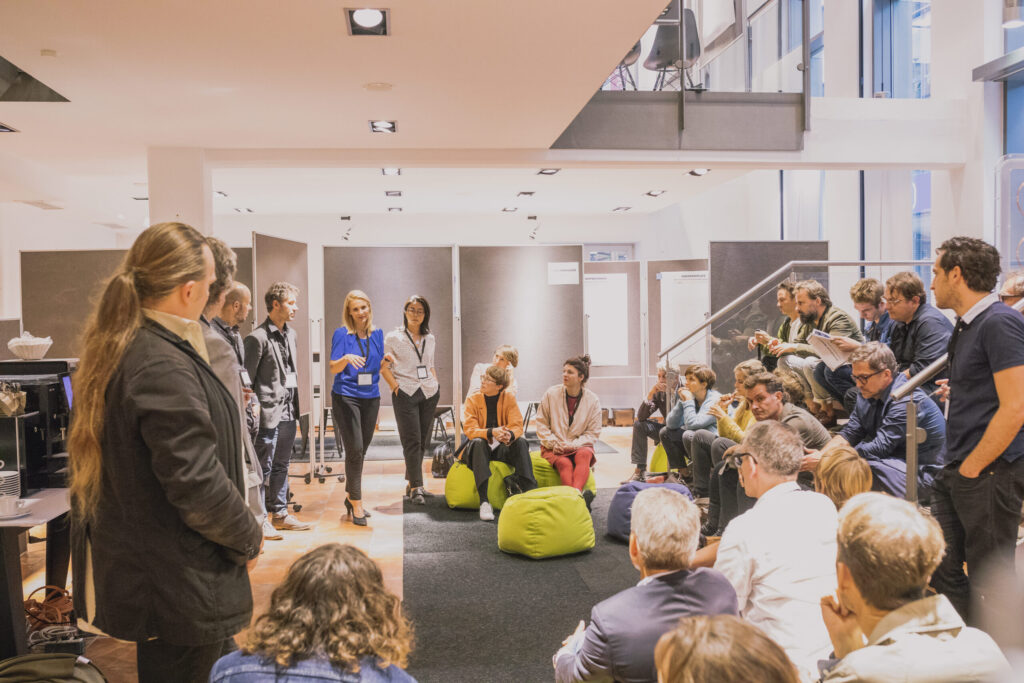
INDRA MUSIOL: Instead of merely asking about needs, we pursue a co-creation approach: this means that real solutions are developed together with citizens, experts and planners in workshops and idea competitions. This was the case, for example, in Münster, where students developed ideas for future-proof mobility in the city.
Through their contributions, such as the issue of safety at bus stops, entirely new and valuable aspects flowed into the work of the transport planners who, together with the city, developed the Mobility Master Plan. For us, these are the kinds of processes that strengthen human coexistence and make urban space liveable for all generations.
SCHULBAU: What are the principles of Socialtecture, and how do you work with them?
INDRA MUSIOL: The nine principles of Socialtecture (“Principles of Life”) are a compass for our work: it is about thinking and acting in ways that serve life, not about “higher, faster, further”. The question is: “What would life do?” This compass helps provide orientation – in a world that is becoming ever more complex, in which more and more regulations and requirements are shaping construction.
With Socialtecture, we want to create places and spaces that are truly liveable in the best sense: for positive coexistence, sustainable and healthy.
SCHULBAU: What visions are you pursuing with Socialtecture?
INDRA MUSIOL: Our vision is to shape a building culture that focuses on diversity and resilience. Nature creates polyculture, but in the built environment we see a great deal of monoculture. A diverse, vibrant place emerges when every element, every function and every space has its own meaning, and together they form a resilient system. Socialtecture is therefore more than an architectural approach – it is a catalyst for developing our urban spaces as places to live.

You might also be interested in
SCHULBAU Fair
SCHULBAU Essen 2025 – Successful industry meeting for educational construction
Architecture, SCHULBAU Fair
Gustav Heinemann Comprehensive School Essen: How architecture accompanies change in the neighbourhood