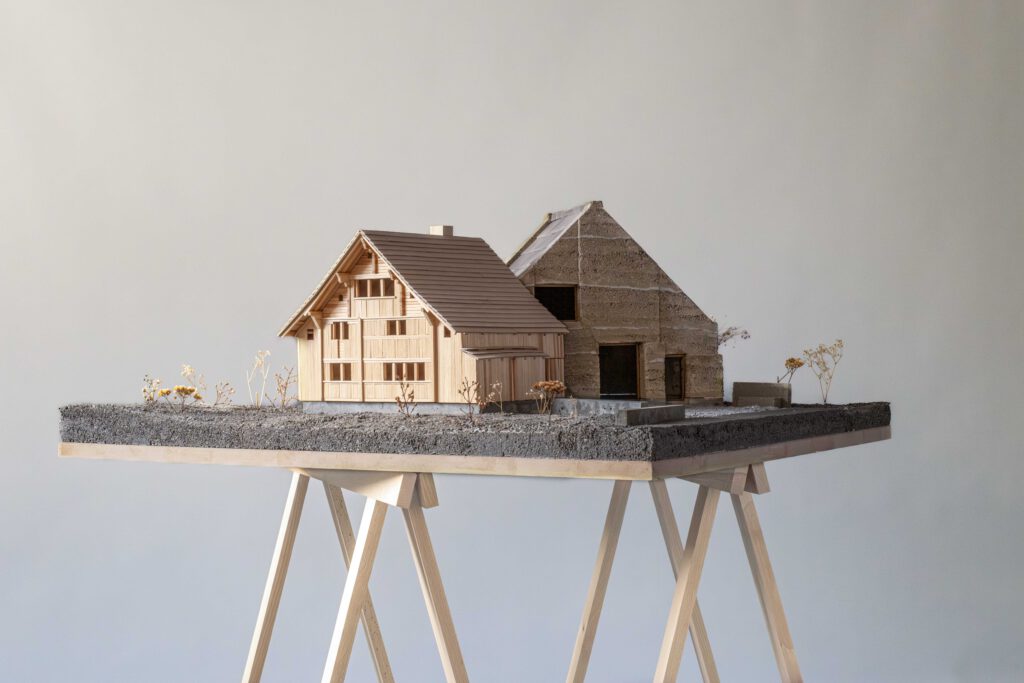
Marille School in Berlin: A new educational vision is looking for space to unfold
Self-directed learning, flexible structures and lived inclusion: Marille School aims to launch in Berlin in 2025 – but the right school building is still missing. Co-founder Ann-Kathrin Keppke provides insights into the concept and the…
A school without grades, with individual support, project-based learning and participatory leadership: Marille School in Berlin aims to rethink educational spaces. Its pedagogical concept is in place – now all that is missing is the right school building. In the interview, co-founder Ann-Kathrin Keppke explains how she envisions future-ready education, the role self-determination plays, and why flexibility and inclusion are central.
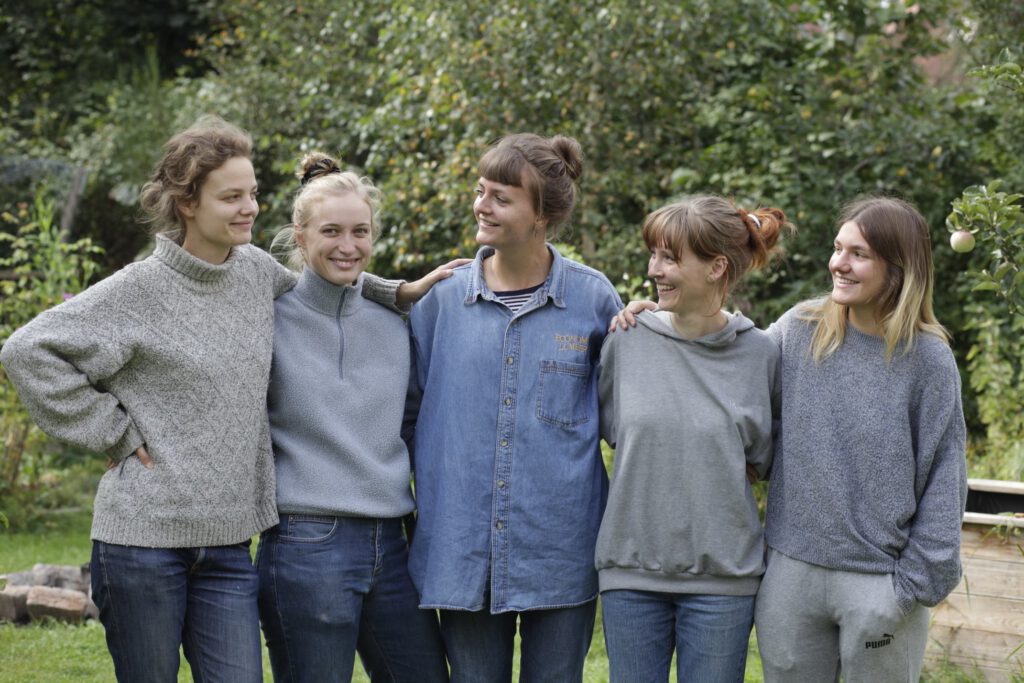
SCHULBAU: Ms Keppke, you have founded a school, but you do not have a school building. What requirements do you have for the property?
ANN-KATHRIN KEPPKE: Because our school concept leaves a great deal of scope for the concerns and wishes of the school community, we are flexible when it comes to different spatial options. Of course, we need open spaces for shared activities and places to retreat that give students space for focused work, as well as an area we can use as a schoolyard. In addition, the building should be designed so that it can grow with the school. Initially, we would need 600 m²; in principle, we are assuming a minimum size of around 1,200 m² and a maximum size of 6,000 m².
SCHULBAU: What motivated you to found your own school?
ANN-KATHRIN KEPPKE: I had the feeling that a lot of time is wasted at school. After finishing school, I studied educational sciences and took part in the “Weltlernreise” project run by the “Kreidestaub” initiative, where we visited schools in various countries. We saw many good approaches, but nothing that fully met our expectations. By the end of the trip, it was clear: we have to found a school ourselves.
SCHULBAU: What does the pedagogical concept of Marille School look like?
ANN-KATHRIN KEPPKE: Marille School is intended to become a place where everyone involved feels comfortable and can thrive. Everyone learns there to participate actively in the world and shape it in a future-ready way. The pedagogical concept is based on flexible learning opportunities that all students independently put together into an individual timetable with the support of mentors. Students can also offer learning opportunities themselves for other children and young people.
In addition, core groups provide a social foundation, while learning formats of all kinds and cross-disciplinary offerings make everyday school life varied. It is important to us that learning remains something positive for children—something they enjoy and that feels meaningful to them.
SCHULBAU: What does social integration in core groups and through mentoring look like in practice?
ANN-KATHRIN KEPPKE: Mentoring supports students in feeling at home at Marille and in defining and achieving their goals. In addition, we offer regular reflection meetings to accompany and adjust the individual learning process. The focus is always on ensuring that each student can develop in line with their own strengths, interests and needs. The close interlinking of individual support and learning as a community creates a balance between personal development and social interaction, which is an essential part of the educational process for us.
Students should even be able to design their timetables largely themselves.
That sounds like a great deal of freedom, but the structures behind it are well thought out. Students are supported by their mentors, who develop the plans together with them. At the end of the quarter, there is a learning-offer gala where both teachers and learners present their offerings. This allows children and young people to decide for themselves which learning opportunities they want to take up in the coming months—and which they would rather not.
The idea behind this is that learning works best when it is driven by personal interest. Learning is enjoyable when you have a say in what you learn.
SCHULBAU: You also largely rely on alternative forms of performance feedback. What is the concept behind this?
ANN-KATHRIN KEPPKE: Instead of grades, there is an individual learning map that makes students’ development transparent. This is intended not only to show the children themselves how far they have come, but also to give parents a clear overview of where their children stand. A close relationship between mentors, students and parents is essential. It is not about every child being equally good in all subjects. Rather, the diversity of interests and abilities is valued. If a child, for example, does not choose maths, that is an indication that the offerings or the way teaching is delivered are not yet suitable. This feedback is used to adjust the offering accordingly.
SCHULBAU: Marille School is to have participatory school leadership that also involves the children. How do you intend to involve the students?
ANN-KATHRIN KEPPKE: The concept of participatory school leadership is another core element of Marille. Students are to be actively involved in decision-making processes. For younger children, there will be an age-appropriate introduction so that they learn to take responsibility and help shape their school. It is a new model, and we do not yet know whether it will work from the outset as we imagine. But we are ready to grow with the challenges and to adapt the structures flexibly.
SCHULBAU: You are planning a flexible school year with set times for projects, internships and school development days. Which partners do you already have on board for this, and which could you envision in the long term?
ANN-KATHRIN KEPPKE: In the start-up phase, it is particularly important to us to integrate project work in a targeted way. Initially, we are planning with partners from the region who have already expressed interest, such as local craft businesses, cultural institutions and social organisations. These collaborations are intended to give students the opportunity to gain hands-on experience and test their skills in real projects.
In the long term, we would also like to expand our network to include partners beyond the region and internationally, in order to offer children an even broader perspective. It is important to us to continuously expand the school’s social sphere and to involve external experts and volunteers as well. In this way, the school is to become a vibrant place where learning and civic engagement go hand in hand.
SCHULBAU: What measures are you taking to make the school inclusive from the outset?
ANN-KATHRIN KEPPKE: Marille School’s long-term goal is to create a model that can also be transferred to other places. An inclusive place that meets the needs of all students and where learning is enjoyable. We want to reach as many children as possible and give them the opportunity to develop freely. It is important to us that the school is not accessible only to a particular group. During the build-up phase, the school concept is to ensure through targeted measures that all social milieus are represented. We want to create a place that meets today’s challenges and thinks ahead—a school that is open to the developments of a constantly changing world.
SCHULBAU: What does future-ready education mean to you?
ANN-KATHRIN KEPPKE: For us, future-ready education means that students learn to take responsibility for their own learning and their environment. We want to empower them to think critically, solve problems creatively and participate actively in social processes. This includes not only acquiring subject knowledge, but also social skills and the ability to act flexibly and adaptably in a globalised world. We focus on project-based learning, interdisciplinary approaches and the involvement of external experts to give children the opportunity to apply their knowledge in real contexts.

You might also be interested in
SCHULBAU Fair
SCHULBAU Essen 2025 – Successful industry meeting for educational construction
Impulses, Lifestyle
WEtransFORM in Bonn: Exhibition outlines visions for sustainable construction