From Historic to Energy-Efficient
The listed Lavater school complex in Zurich was carefully modernized and adapted for contemporary educational use. Energy-efficient renovation and new functions are integrated seamlessly. The school complex is among the significant examples of school building…
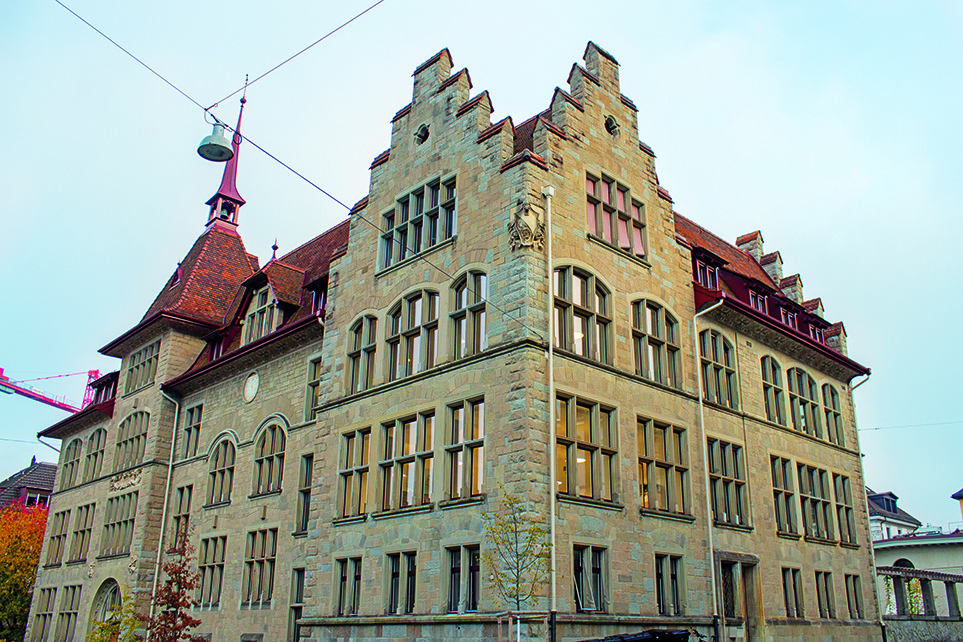
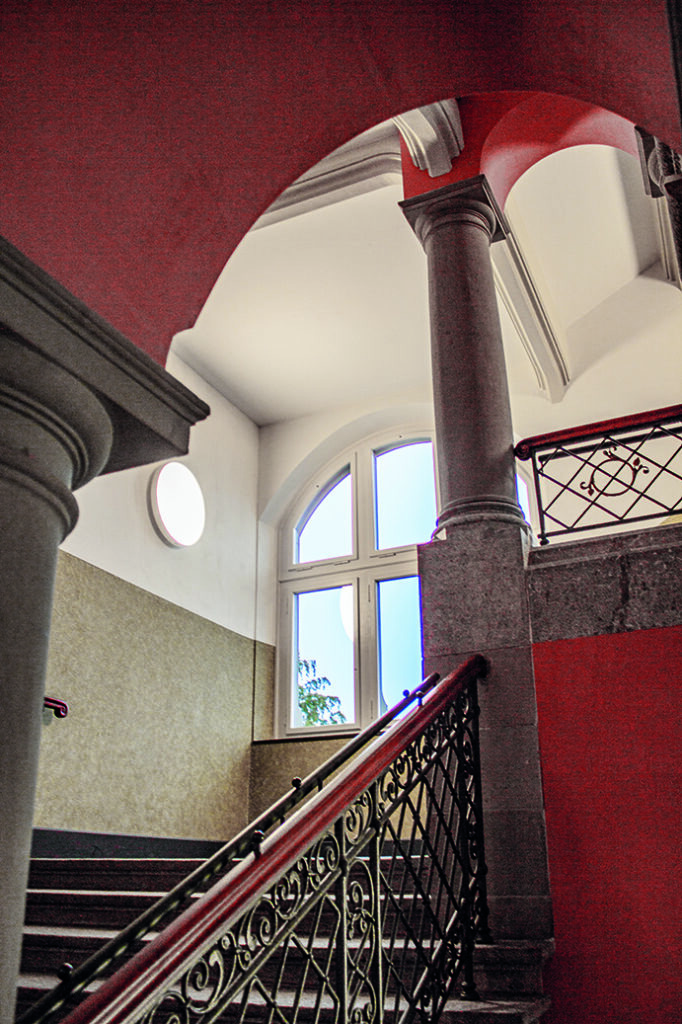
The listed Lavater school complex in Zurich was carefully modernized and adapted for contemporary educational use. Energy-efficient renovation and new functions are integrated seamlessly. The school complex is among the significant examples of school building construction in the late 19th century. The building ensemble from 1896/97 was designed by city architect Gustav Gull and draws stylistically on the Zurich National Museum. The current renovation not only restored the historic complex but also adapted it for today’s educational operations.
Architecture Between Preservation and Development
The design by neff neumann architekten from Zurich pursues a sensitive approach to the historic fabric. The goal was to preserve the architectural quality of the existing structure while integrating new functions. The school was designed for modern all-day school operations with twelve secondary classes. A notable change concerns the former gymnasium. It was converted into the Lavater Forum and now serves as a dining and multipurpose area. Additionally, a new underground double sports hall was created beneath the playground, available for both school use and community sports.
Historic Spaces with New Quality
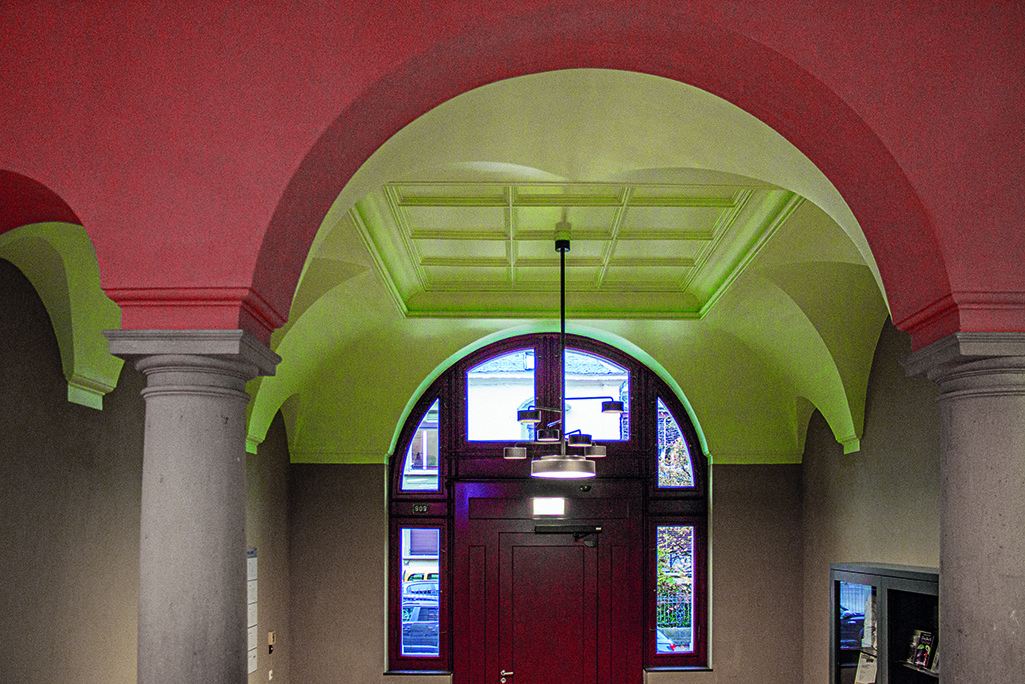
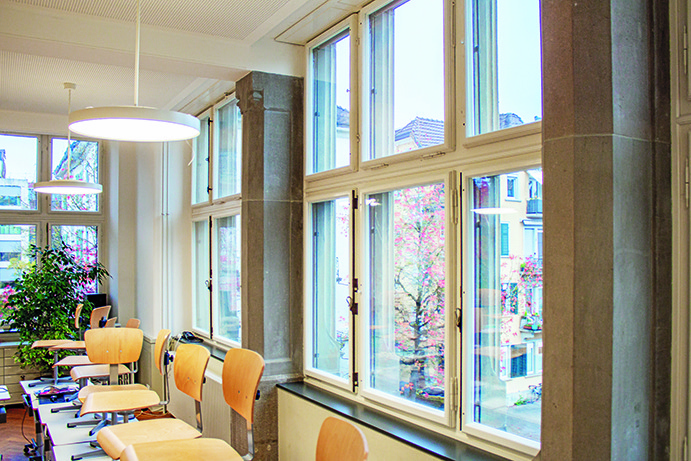
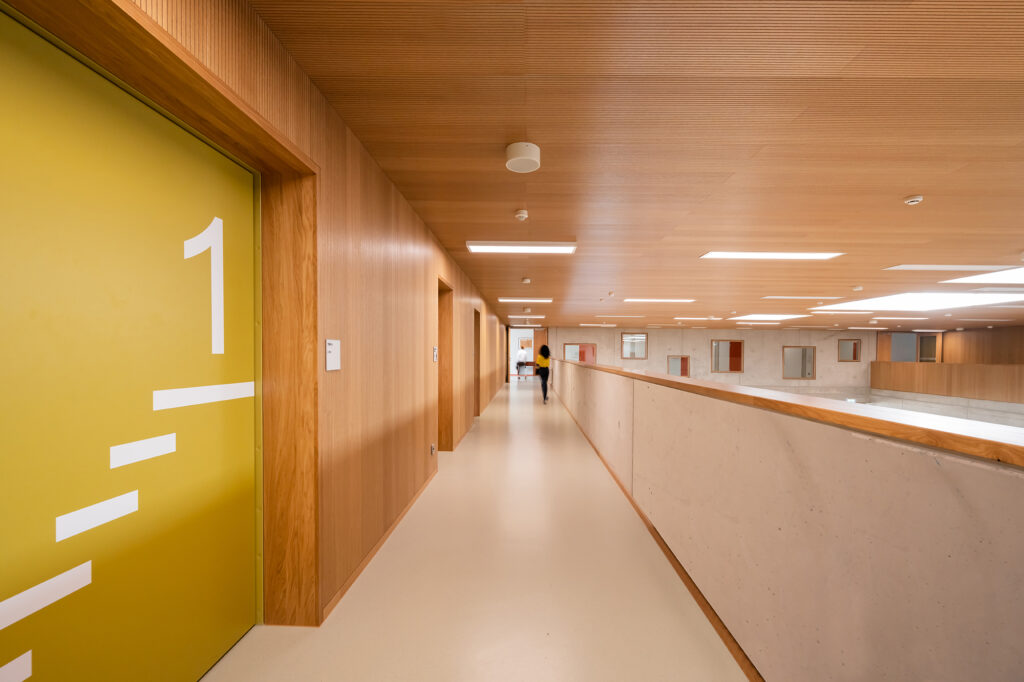
In the main building, accessibility, room acoustics, and lighting were the focus of the interventions. The original spatial structure of the classrooms was preserved, while central areas were reinterpreted architecturally. Ceramic wall surfaces reference historic motifs. Full-height glazing with wooden frames brings additional daylight into corridors and group rooms, while the clear spatial structure remains legible.
Windows as Part of the Energy Strategy
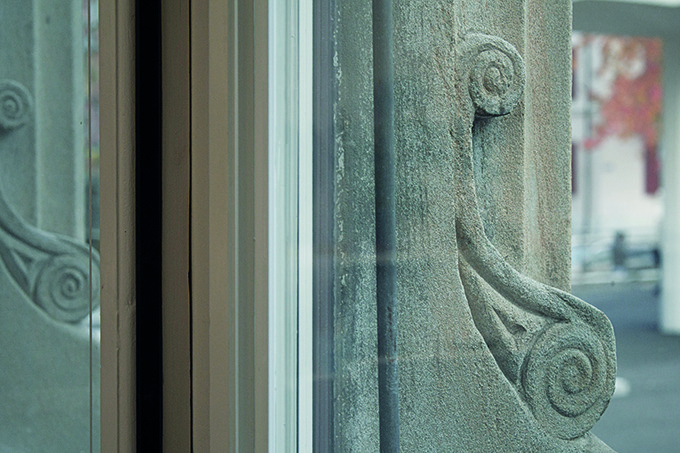
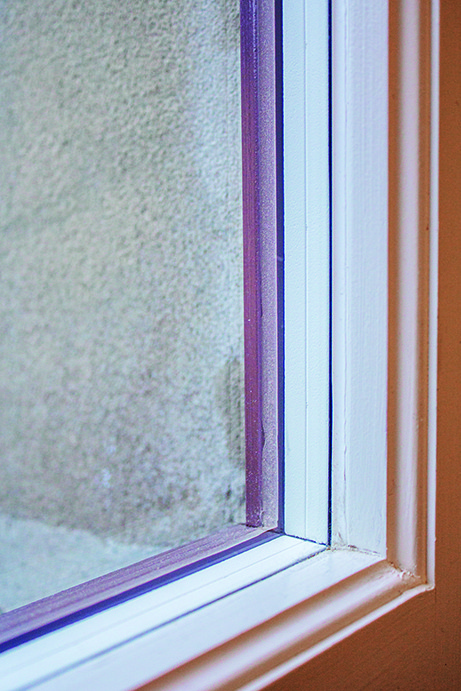
A central detail of the renovation concerns the historic windows. The original coupled windows were carefully refurbished and supplemented with modern insulating glazing. While the historic inner glass was retained, new glazing was integrated on the exterior. The windows achieve a Ug-value of 1.4 W/m²K, thus combining heritage conservation requirements with contemporary energy efficiency and permanently improved interior comfort.

You might also be interested in
SCHULBAU Fair
SCHULBAU Essen 2025 – Successful industry meeting for educational construction
Architecture, SCHULBAU Fair
Gustav Heinemann Comprehensive School Essen: How architecture accompanies change in the neighbourhood