Gustav Heinemann Comprehensive School Essen: How architecture accompanies change in the neighbourhood
A new school building between educational mission, district work and low-tech principle – to be viewed at the SCHULBAU trade fair in Essen on 25 September.
The restructuring of the Ruhr area has long since ceased to be a purely economic project. Anyone who talks about reuse, decarbonisation and new cityscapes must ask themselves how people in post-industrial neighbourhoods will learn, live and meet each other in the future. With the Gustav Heinemann Comprehensive School, Essen-Schonnebeck is home to a place of education that is opening up in terms of urban planning and programming instead of relying on retreat to the interior of the school. The architectural concept comes from sehw architektur in Berlin. The new building sees itself as a structuring response to a district in upheaval – and as an invitation to think and help shape things.
Educational campus with dual function
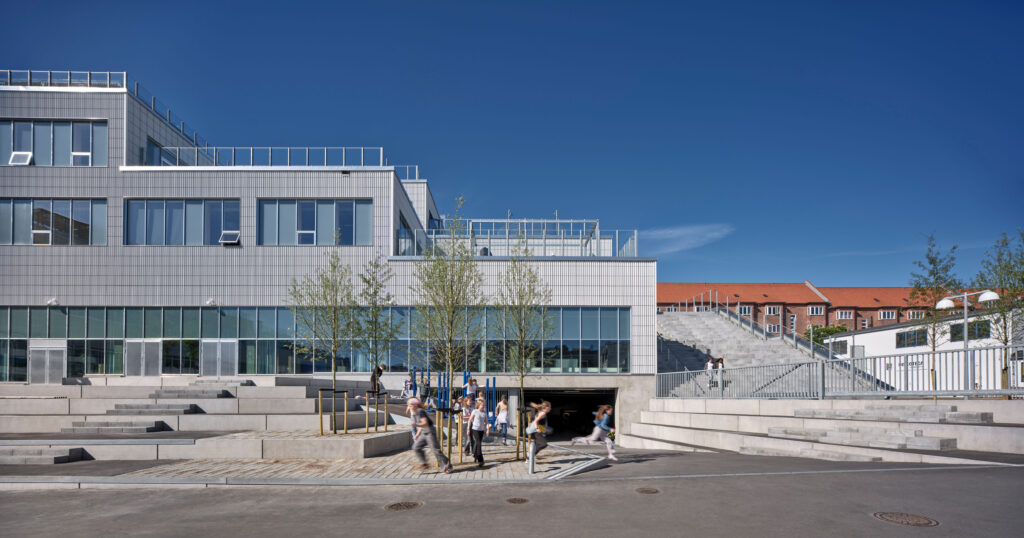
The school was designed for around 1,300 pupils – but the neighbourhood around the former workers’ settlement also benefits directly: the district library, assembly hall, forum, cafeteria and specialist rooms are open to the public. The complex thus sees itself as an urban network that deliberately interlocks school and neighbourhood life. The forecourt at the main entrance becomes a threshold space between the city and the school. Skating, biking, meetings, discussions – all this is planned here. Even the monument of oversized horn-rimmed glasses, an allusion to the namesake Gustav Heinemann, becomes part of this built welcome gesture.
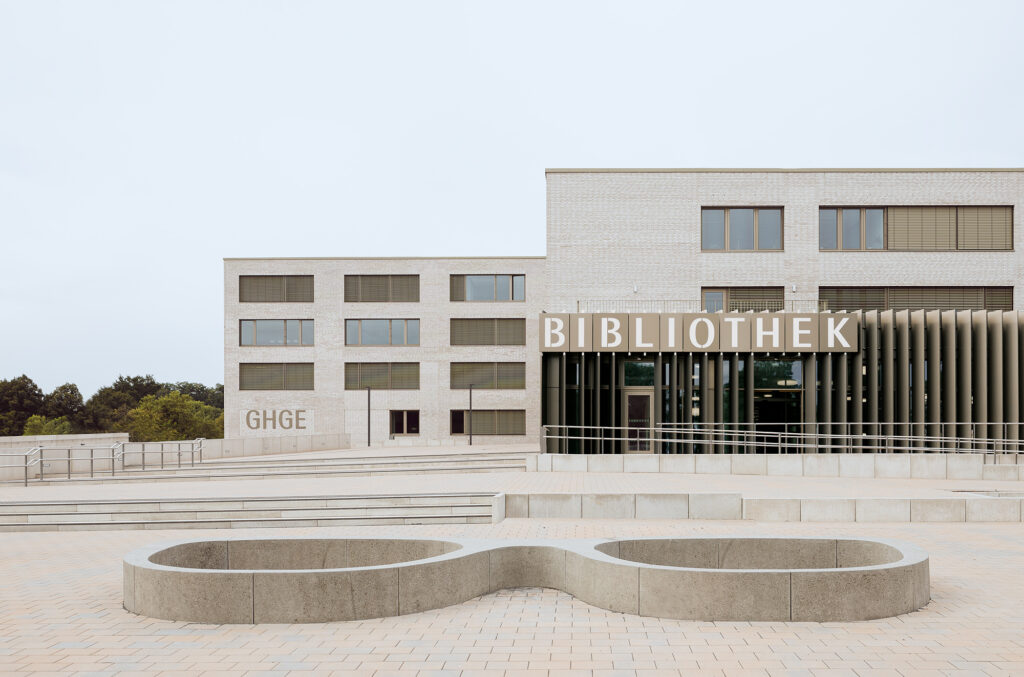
The school boulevard as the backbone
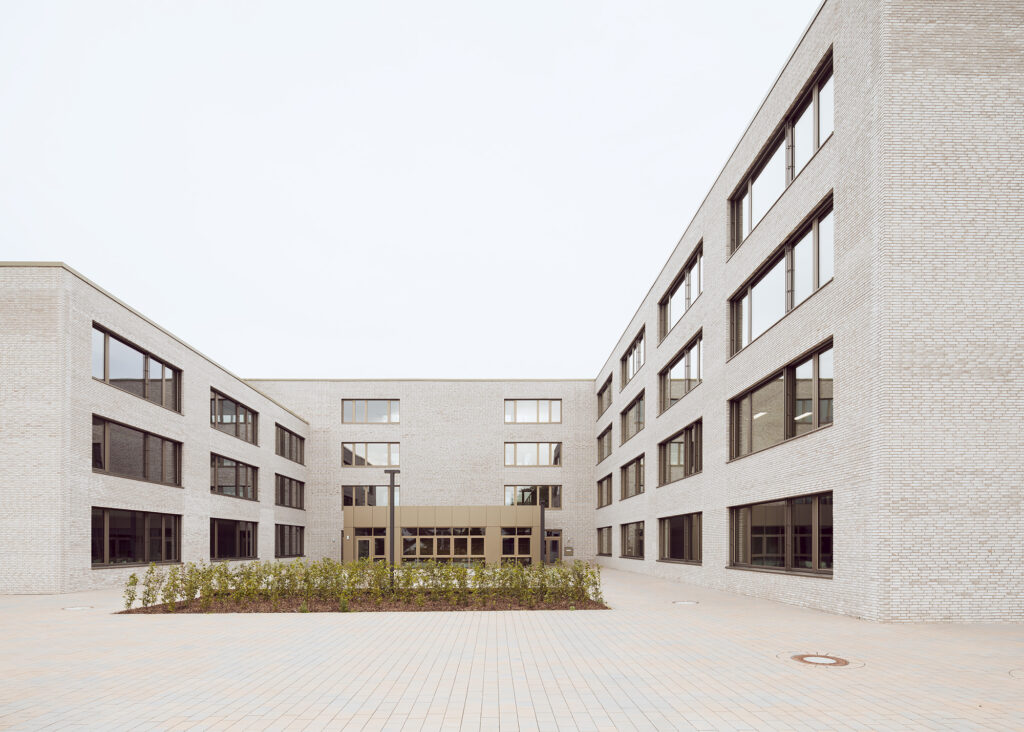
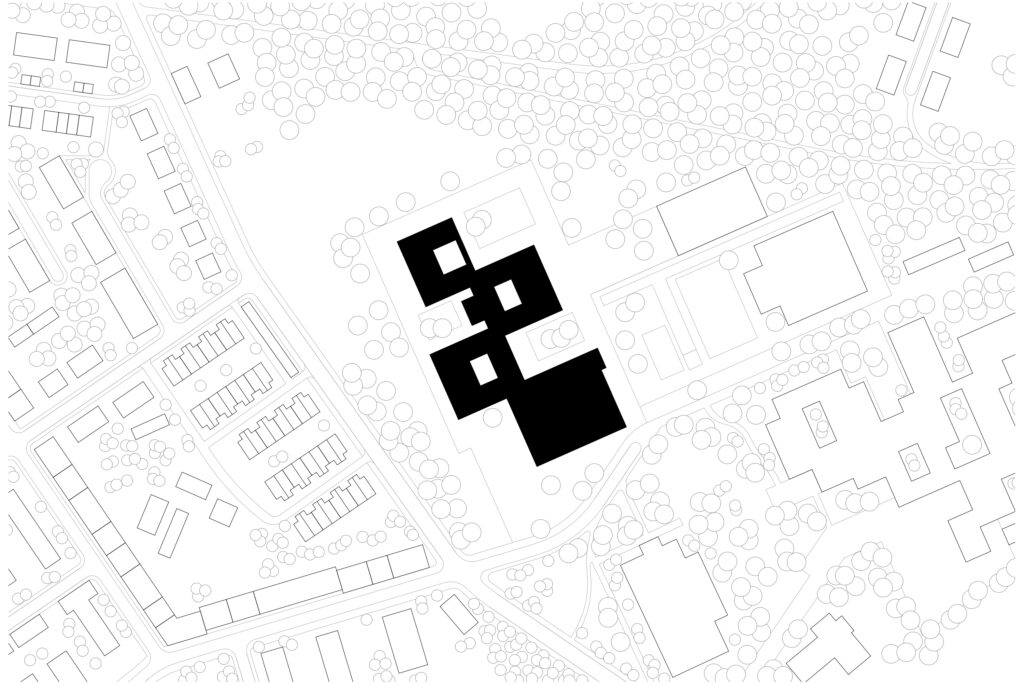
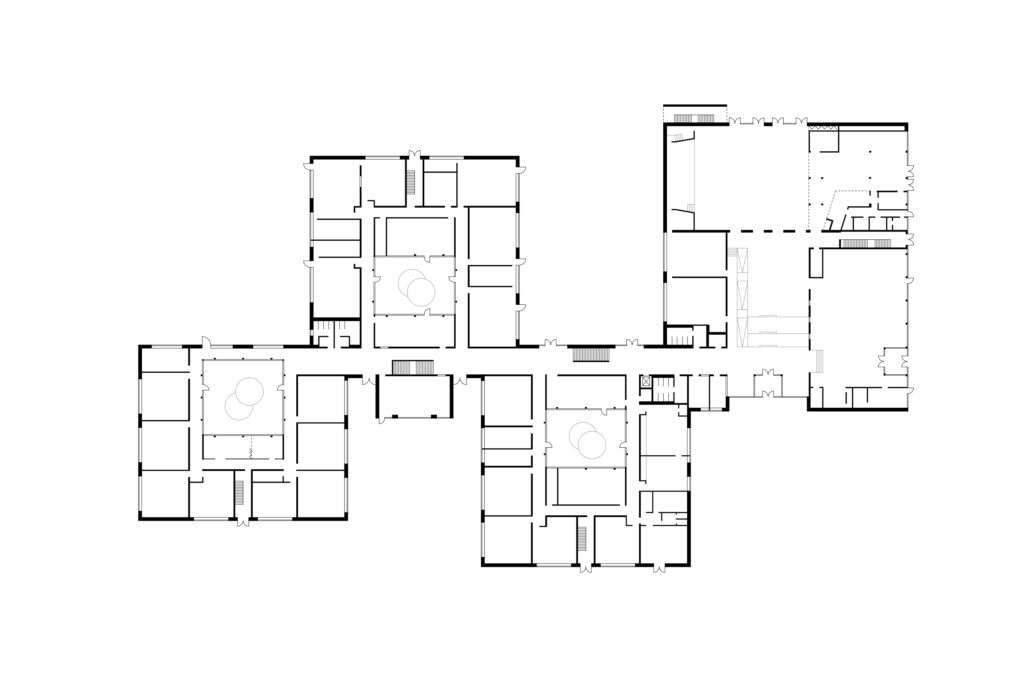
In terms of urban planning, the building dissolves into individual building volumes, which are connected to each other by a central “school boulevard”. This structures the spatial structure along a north-south axis and creates orientation. The cluster structure follows a modular system: year groups are grouped into independent room families, each with its own courtyards, differentiation zones and learning areas. The classrooms are connected by a flexible central zone, which can be transformed into group areas and informal recreation rooms when opened. Exterior and interior spaces are closely interlinked, and visual relationships and daylight access are structurally considered.
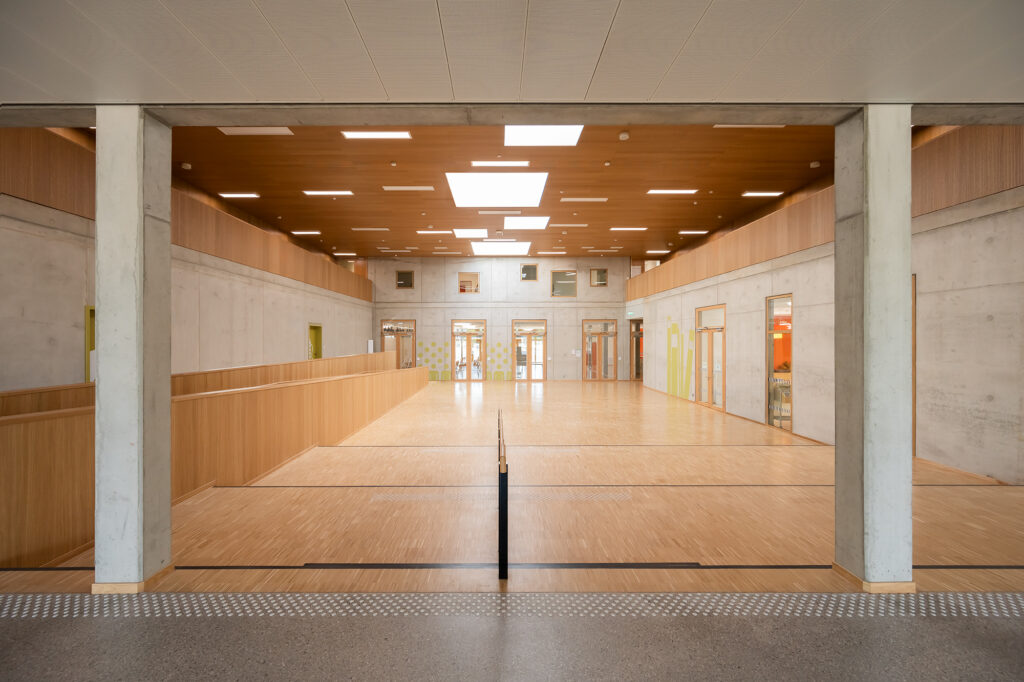
Choice of material, lighting, colour concept
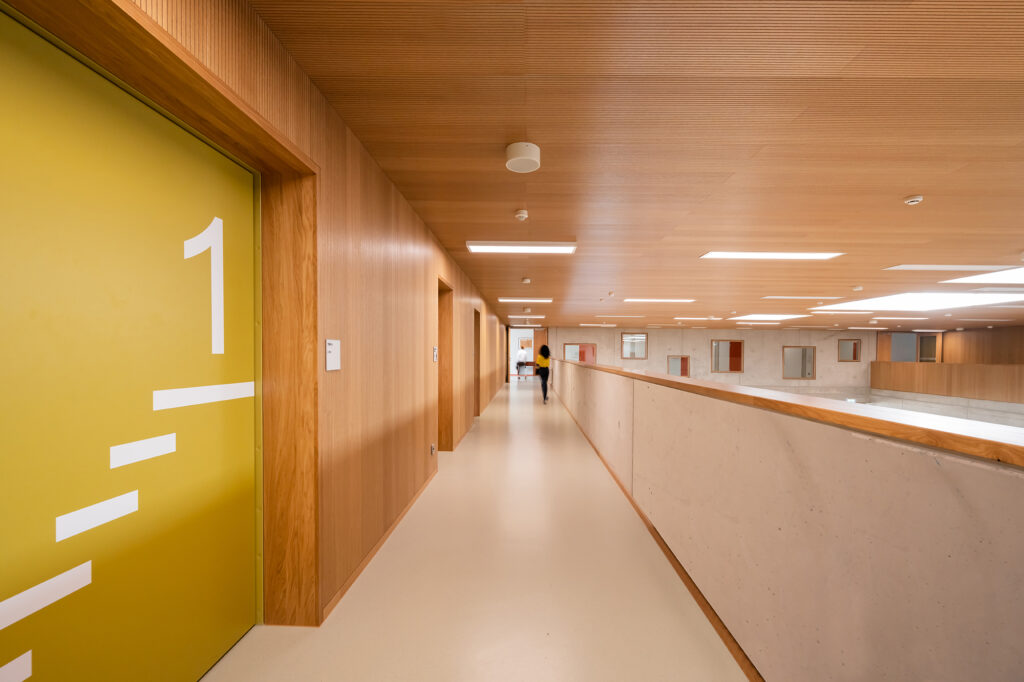
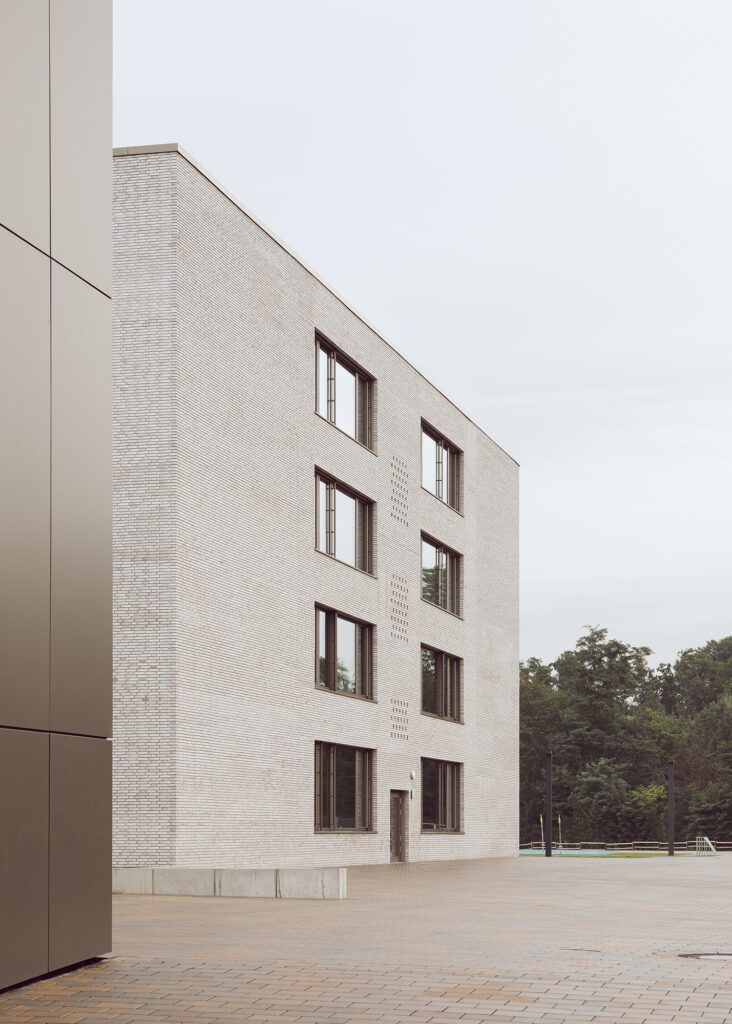
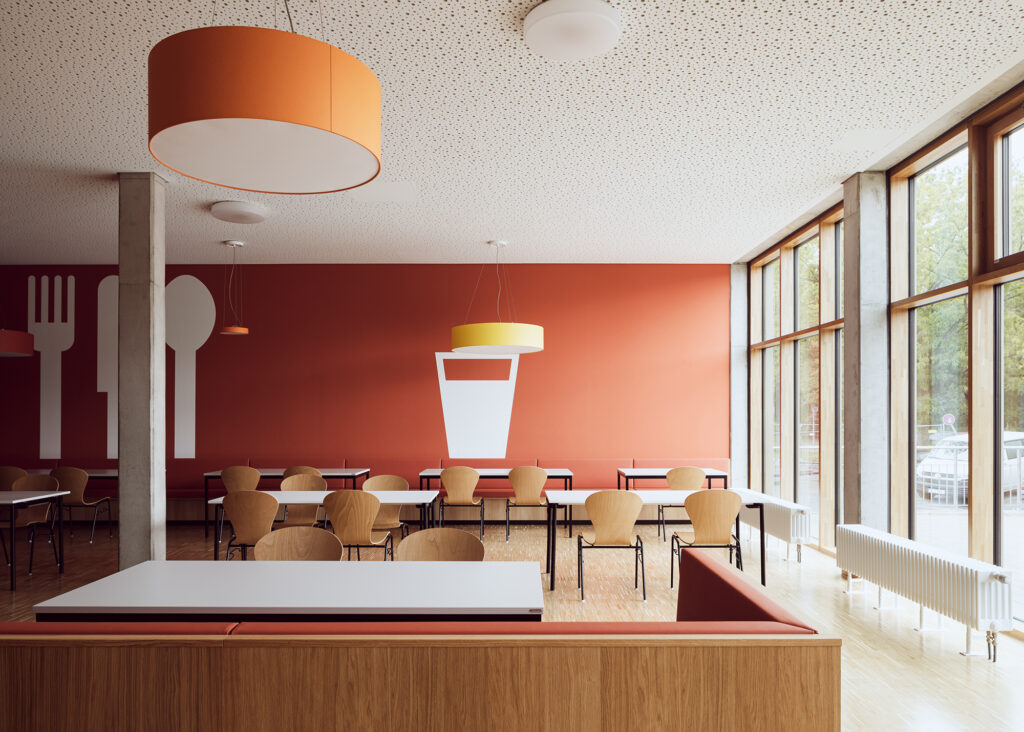
The façade is characterised by a light-coloured, slurry clinker brick. Generous window openings structure the building volumes, frame the cluster zones and provide natural light. Wood plays a decisive role in the interior: wooden slats on the ceilings improve the room acoustics, furniture made of birch plywood sets warm-toned accents, complemented by industrial parquet and wood-glass elements in doors. Orientation and atmosphere are created by a colour concept that refers to Le Corbusier’s Polychromie Architecturale from 1959. Each cluster is defined by its own colour scheme – translated into graphic symbols, accent walls and stairwells.

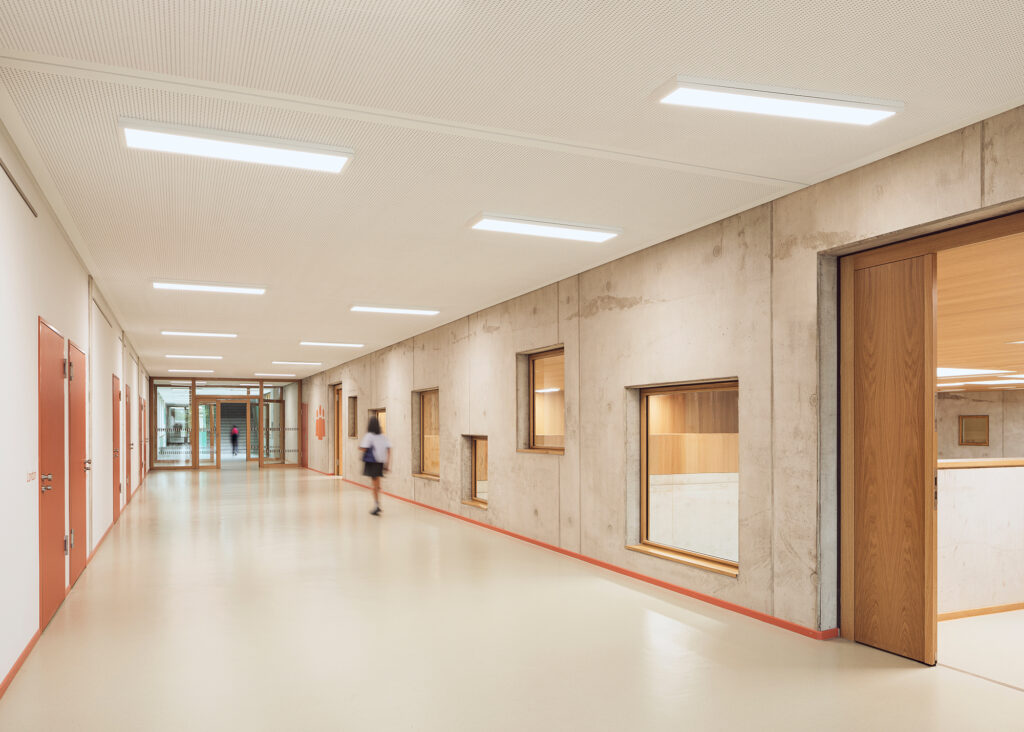
Sustainability without a technology fetish
The new school building is 20 percent below the requirements of the EnEV 2016 and was designed according to passive house standards. The energy concept is based on low-tech principles: shock ventilation, night-time cooling, external sun protection and green roofs form the functional framework. Certification according to BNB Silver is in preparation. A robust and economical supporting structure made of masonry and reinforced concrete was planned. The non-load-bearing partition walls between the classrooms enable flexible room layouts during operation – a prerequisite for permanently adaptable learning environments.
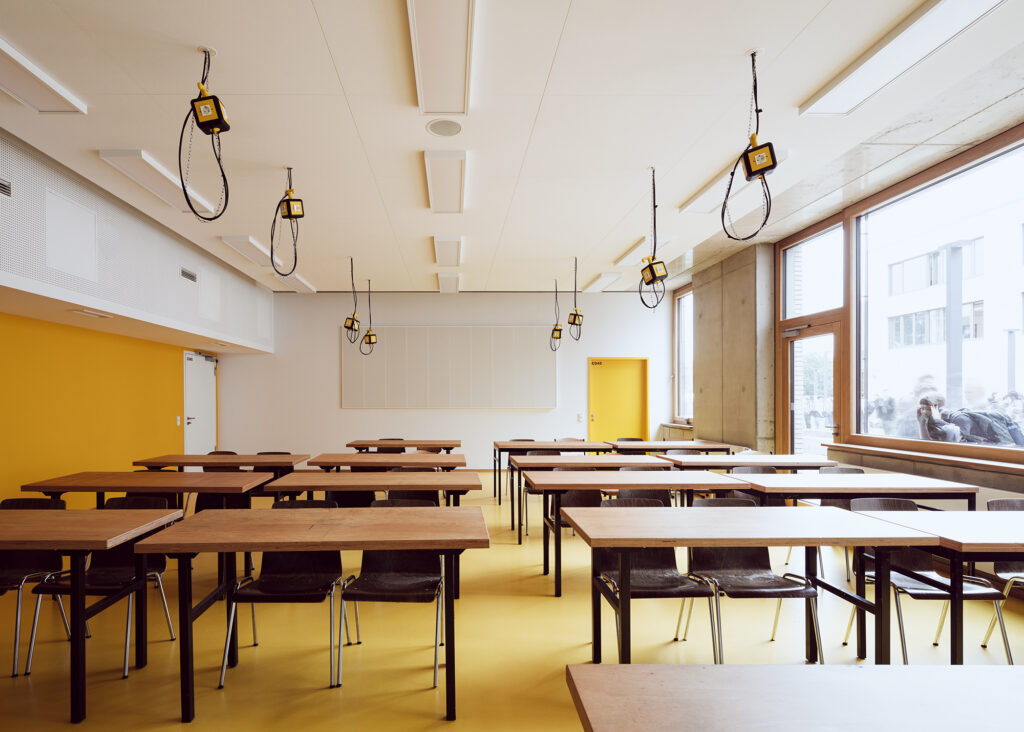
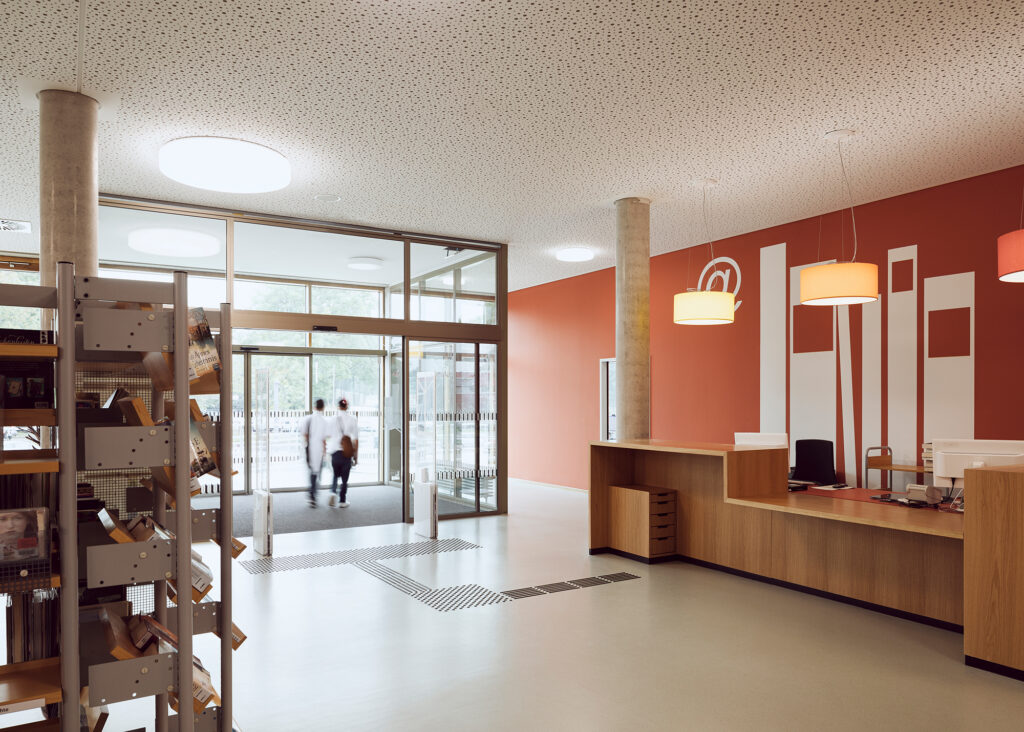
School as a public place
The two-storey forum is at the centre of the spatial organisation – it combines the library, auditorium, cafeteria and multi-purpose rooms into a coherent centre. This is about more than just learning: this is where the public sphere is created. The building sees itself as a learning structure – with open transitions, use-neutral zones and architectural scope for future changes. In addition to marking an educational milestone for the city of Essen, the Gustav Heinemann Comprehensive School also marks an architectural contribution to the social transformation of the Ruhr region.
On-site inspection as part of the SCHULBAU Salon & Messe in Essen
On the second day of the SCHULBAU Salon & Messe in Essen, 25 September 2025, an excursion will take place to the Gustav Heinemann Comprehensive School. Participants will have the opportunity to experience the project on a scale of 1:1 and to exchange ideas with the planners directly on site. The visit is not included in the trade fair ticket, tickets can be purchased separately here in the ticket shop of the trade fair: CLICK!
Construction board
- Project: Gustav Heinemann Comprehensive School
- Place: Essen-Schonnebeck, Germany
- Client: City of Essen Real Estate Industry
- Architecture: sehw architektur GmbH, Berlin
- Design Team: Matthias Gall, Maija Gavare, Karoline Hietzschold, Martin Krüger-Holdack, Víctor Maquílon Yelo, Eva Poggenklaß, Birgit Winkelmann
- Typology: Comprehensive school, educational building
- Completion: 2021
- Area: 18,610 m² GFA
- Construction costs: approx. 56.8 million euros

You might also be interested in
SCHULBAU Fair
SCHULBAU Essen 2025 – Successful industry meeting for educational construction
Architecture
The new Arnold Freymuth School in Hamm-Herringen as a campus of the future