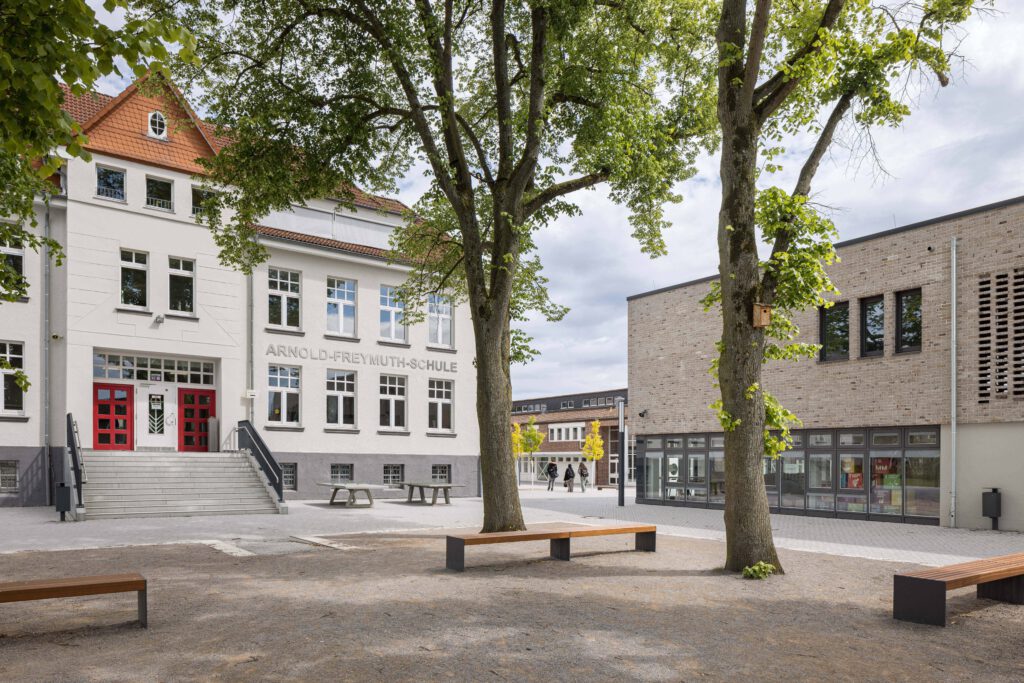
Rethinking Vacant Spaces: Daycare Conversions in Existing Buildings as a Future Model for Urban and Educational Development
Daycares in Existing Buildings: How Hamburg’s largest provider transforms churches, supermarkets, and hospitals into vibrant educational spaces – resource-efficient, pragmatic, and right in the neighborhood.
Bank branches, churches, hospitals – many of these spaces have lost their original function. What remains are buildings with character, history, and spatial volume. In cities like Hamburg, this becomes an opportunity: while residential and educational construction suffers from land scarcity, working with existing structures becomes viable. Provided one rethinks them.
When Vacant Spaces Become Living Spaces
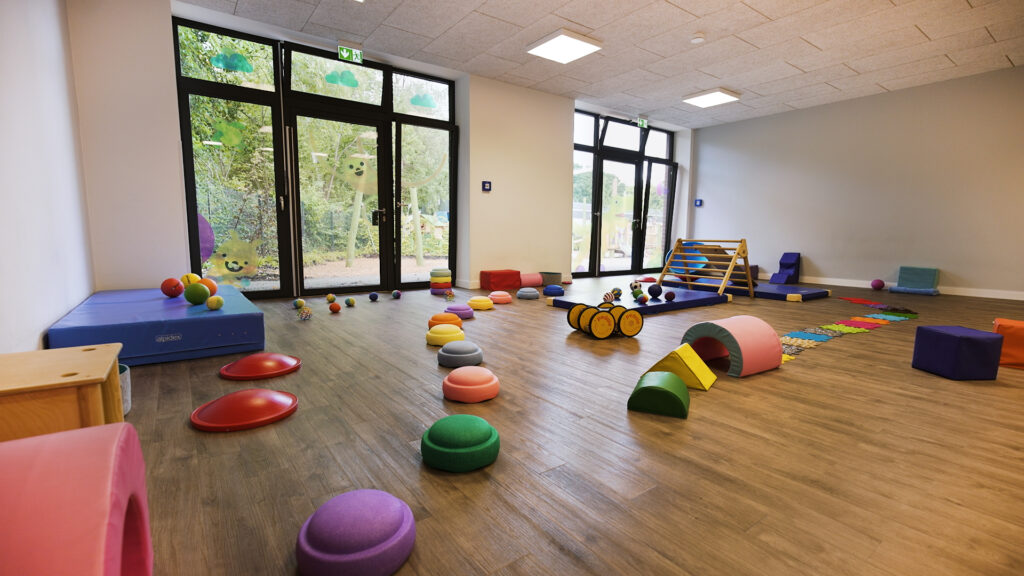
Instead of relying on the lengthy search for new construction sites, KMK kinderzimmer pursues a different approach: Hamburg’s largest independent daycare provider transforms existing buildings into early childhood educational spaces. The goal is clear – creating urgently needed daycare places exactly where demand is greatest. The method: creative, architecturally sophisticated adaptive reuse.
“We create early childhood educational spaces exactly where they are needed. Our special role lies in rediscovering the potential of existing buildings and filling them with new life,” says Benny Seidel, responsible for real estate development and expansion. This also means: flexible planning, close coordination with heritage protection authorities, and a clear commitment to sustainable urban development.
Education in the Heart of the Neighborhood
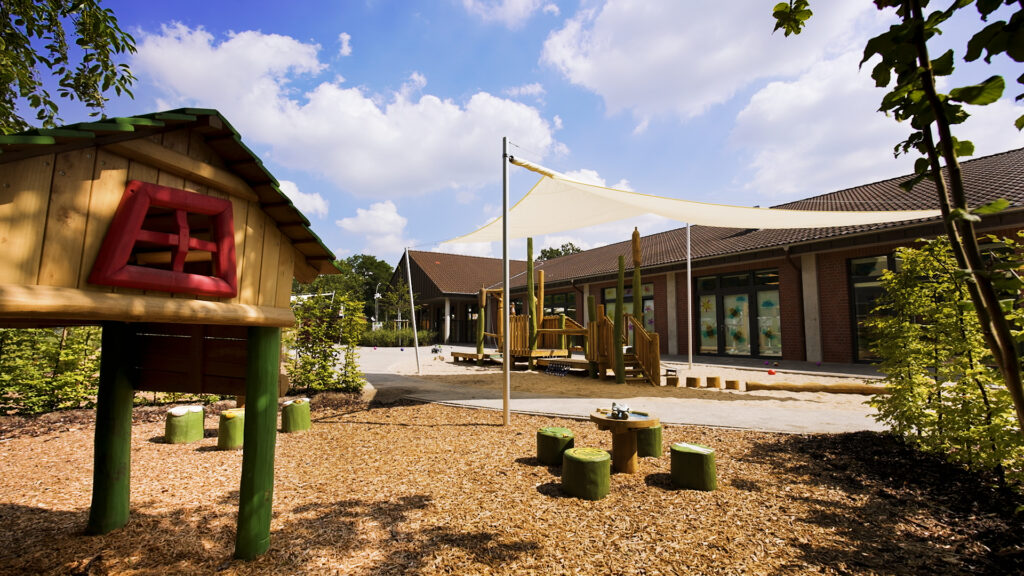
The range of converted locations is extensive. A vacant Aldi supermarket in Hamburg’s Osdorf district becomes a daycare with its own play shop in the role-play room. Where shopping carts once rolled, children now play on a newly created outdoor area. The formerly sealed parking lot surface has been transformed into a play area with quality of stay – a complex undertaking that requires precise architectural and structural planning.
On the site of a former amusement arcade in Wandsbek, play also takes place today – with purpose. 74 new daycare places have been created here. The project exemplifies urban adaptive reuse with added value: spaces that were previously used in isolation now become meeting places in the neighborhood.
Old Walls, New Relationships
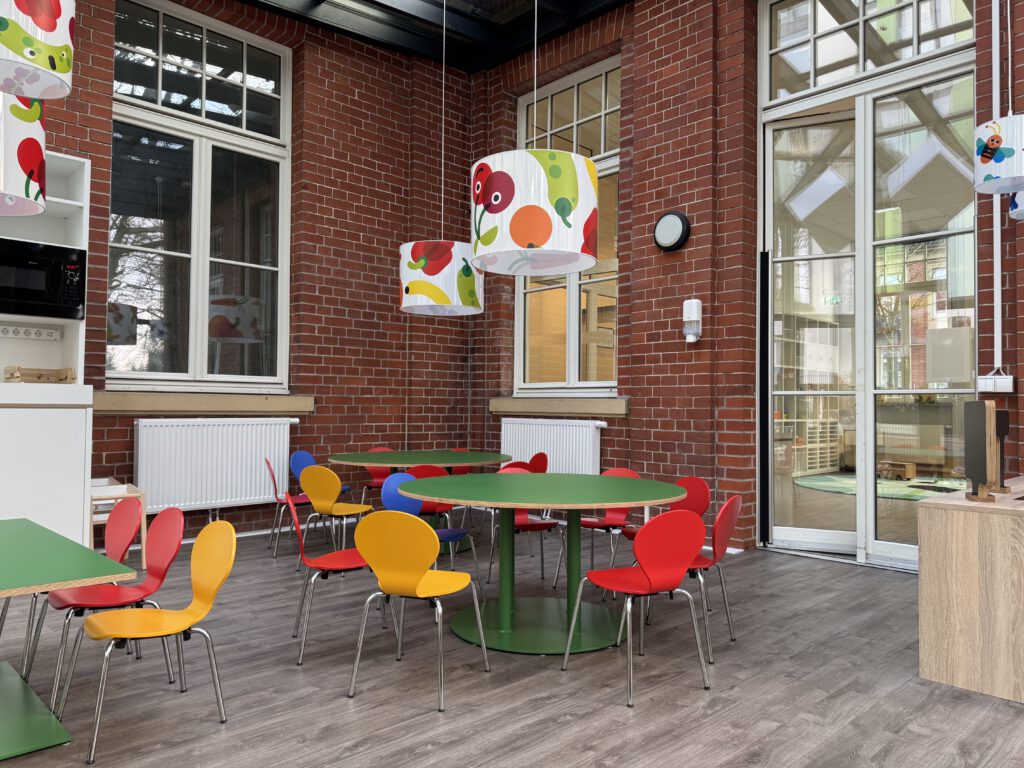
Particularly impressive is the conversion of the former admission building of Barmbek Hospital. A daycare with 55 places has moved into the listed brick building – complete with winter garden, spacious outdoor area, and spatial proximity to a senior residence. This opens up potential for intergenerational learning and interaction. A sensitive interplay of heritage protection, social function, and pedagogical standards is made tangible here through architecture.
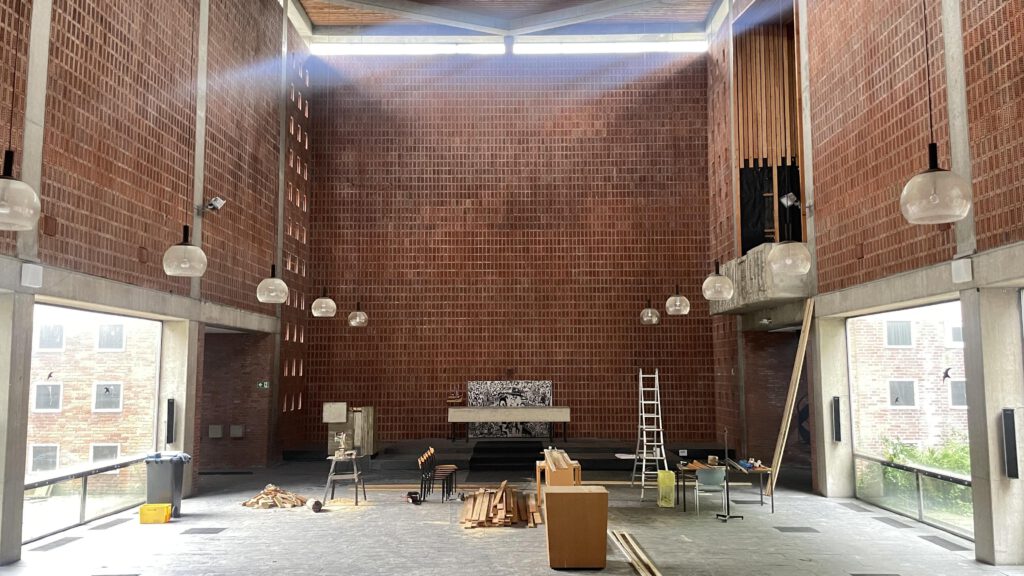
Even more ambitious is the conversion of Trinity Church in Hamburg-Harburg. Starting winter 2024/25, a daycare with 170 places will be created here – complemented by a publicly accessible children’s library, the so-called kiziThek. What makes it special: it specifically targets families with limited access to literature, creates low-threshold offerings, and extends the role of the daycare far beyond childcare.
Resource Conservation Meets Equal Opportunity
The projects by KMK kinderzimmer do not follow solely a pedagogical or urban planning mandate. They also contribute to the climate balance. Through the adaptive reuse of existing building fabric, so-called embodied energy is preserved – that is, the energy once expended for construction and material use. At the same time, CO₂ emissions that would arise from demolition and new construction are avoided.
This is also about equity. Families gain faster access to early childhood education. Long waiting times, which frequently occur with conventional new construction, can be reduced. This accelerates the integration of new educational offerings into neighborhood development – and contributes to forward-thinking social infrastructure.
Shift in Perspective in Educational Construction
What KMK kinderzimmer plans and realizes in Hamburg is more than creative adaptive reuse: it is a vision for educational architecture in an urban context. The projects demonstrate how resource-efficient construction, pedagogical quality, and neighborhood-based enhancement can interlock – without waiting for new construction sites. It is about new approaches to dealing with existing buildings, about urban planning responsibility, and about taking educational spaces seriously as part of municipal infrastructure.

You might also be interested in
SCHULBAU Fair
SCHULBAU Essen 2025 – Successful industry meeting for educational construction
Architecture, SCHULBAU Fair
Gustav Heinemann Comprehensive School Essen: How architecture accompanies change in the neighbourhood