Skolen ved Dybbølsbro in Copenhagen: Architecture that brings together nutrition and learning
In Copenhagen’s Kødbyen district, a school project is bringing architecture, nutrition and exercise into a new relationship. How space, attitude and urban society inspire each other in Skolen ved Dybbølsbro.
What goes on the plate shapes the head. In Copenhagen, this connection is no longer just discussed, it is actively shaped. Between historic cold stores and urban gastronomy, an educational project is setting out to bring the topic of nutrition from the margins to the middle of everyday school life. The Skolen ved Dybbølsbro in the Kødby district, Copenhagen’s Meatpacking District, combines a pedagogical approach with architectural clarity – and in doing so picks up on the DNA of the listed Kødbyen district.
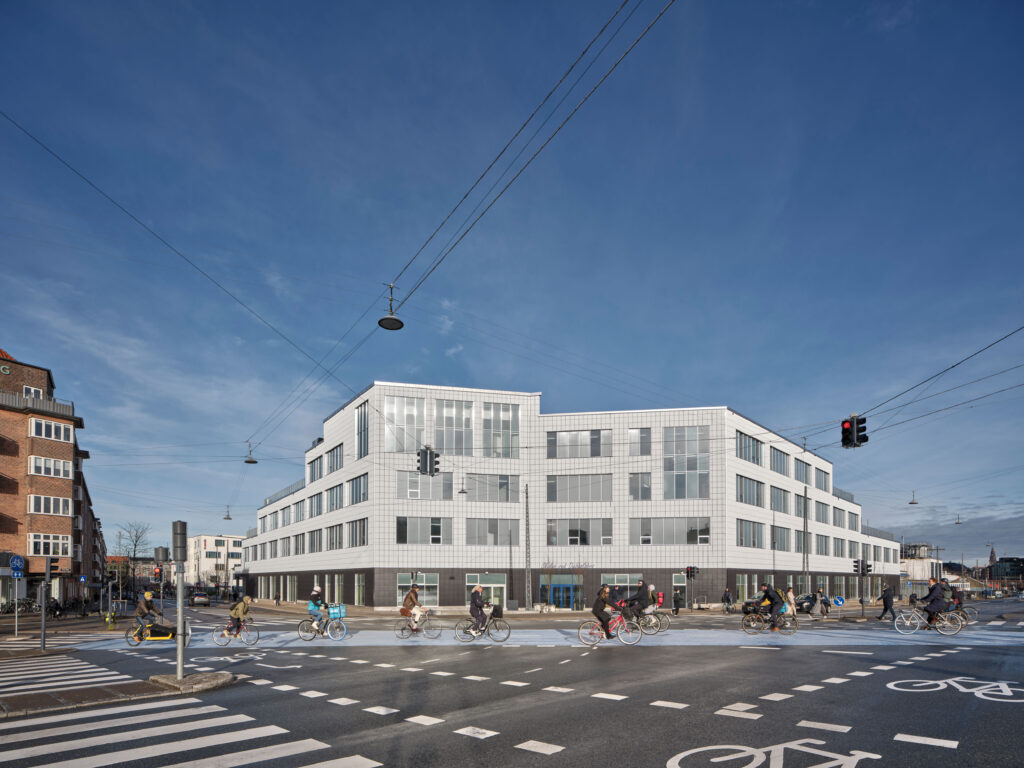
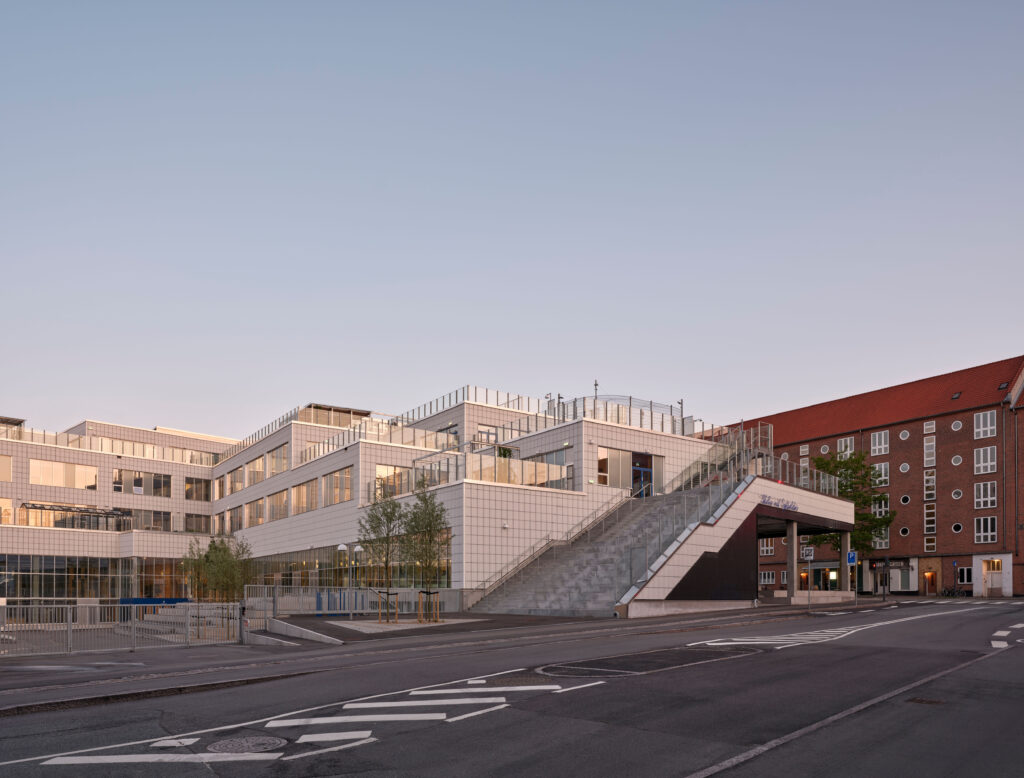
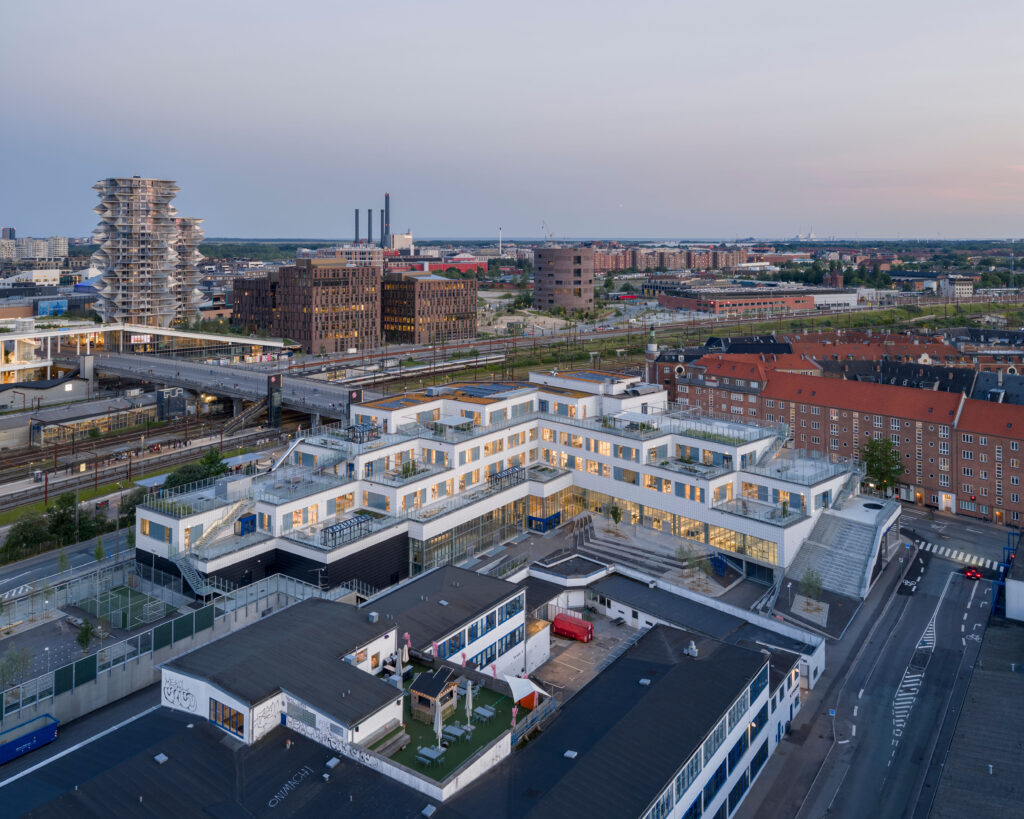
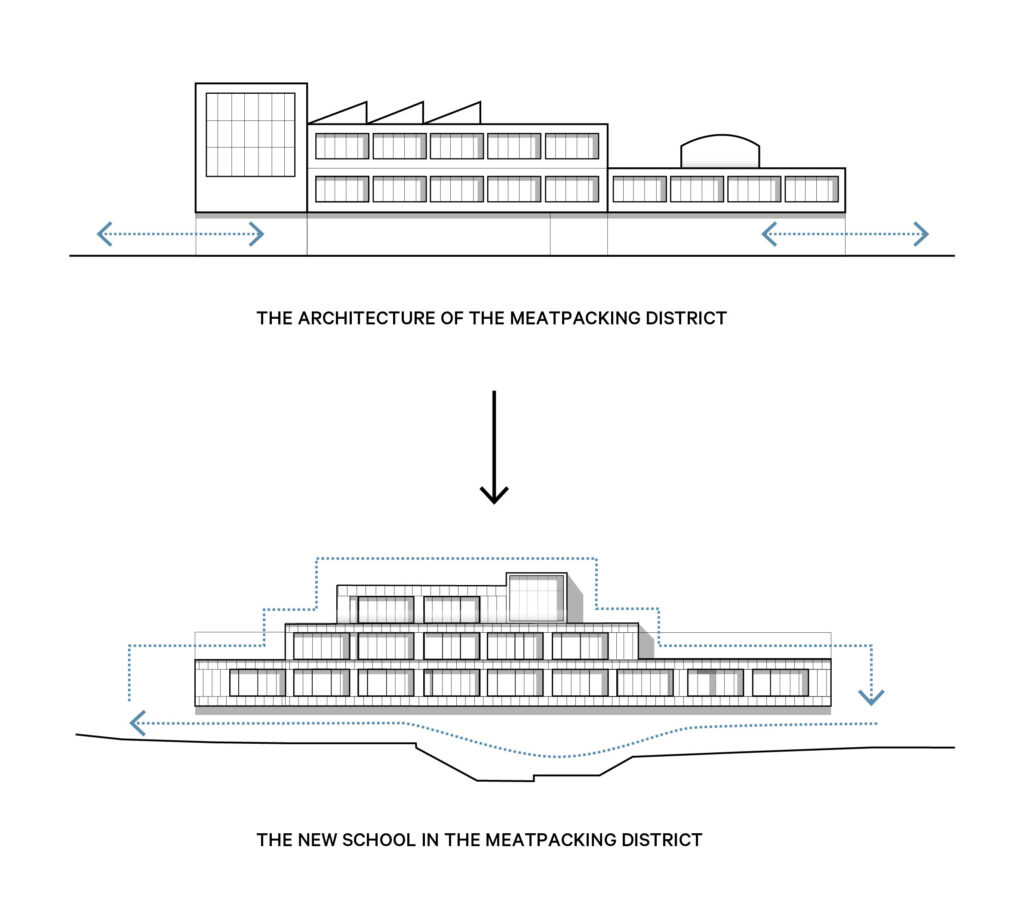
The former meat town has long since ceased to be just a place of production. Galleries, restaurants, media companies and urban infrastructure coexist here. Now a new school building is expanding the range of uses – not as a foreign body, but as a source of inspiration. White tiles, linear facades and open room sequences play with the language of Hvide Kødby, the “White Meatpacking District”, without clinging nostalgically to it.
Learning with a connection to the urban space
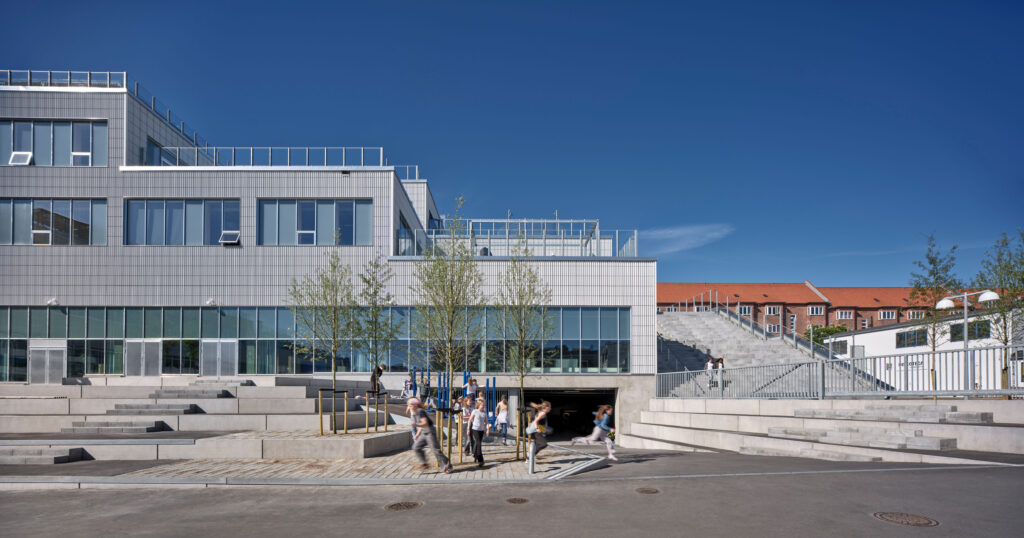
The design by NORD Architects and BBP Arkitekter confidently positions itself in the urban fabric. Instead of retreating, the building opens up to the quarter in many places. Visual axes create visual references, spacious terrace areas define new qualities of stay.
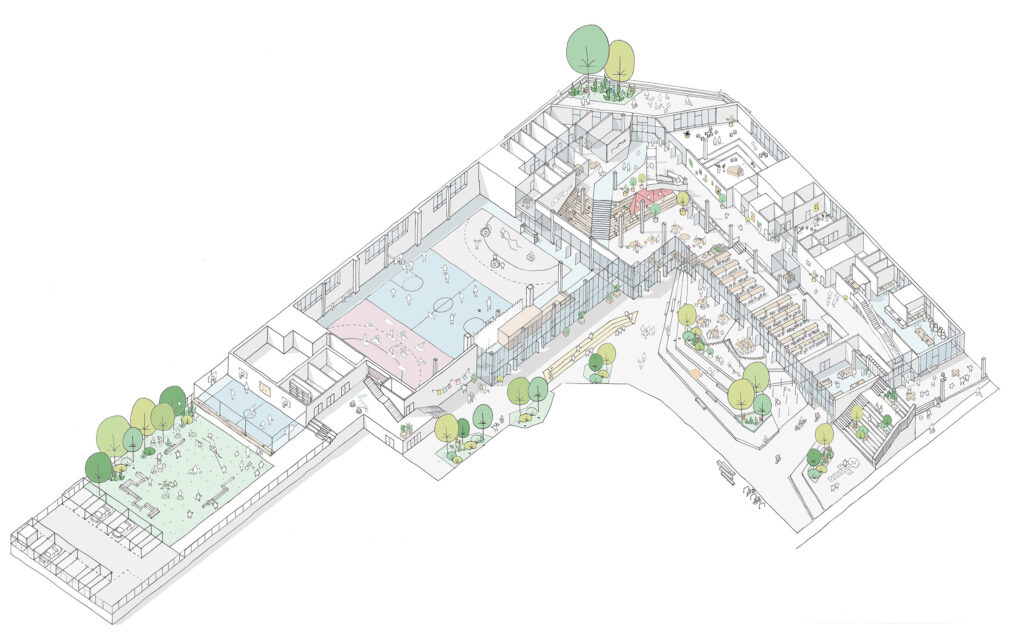
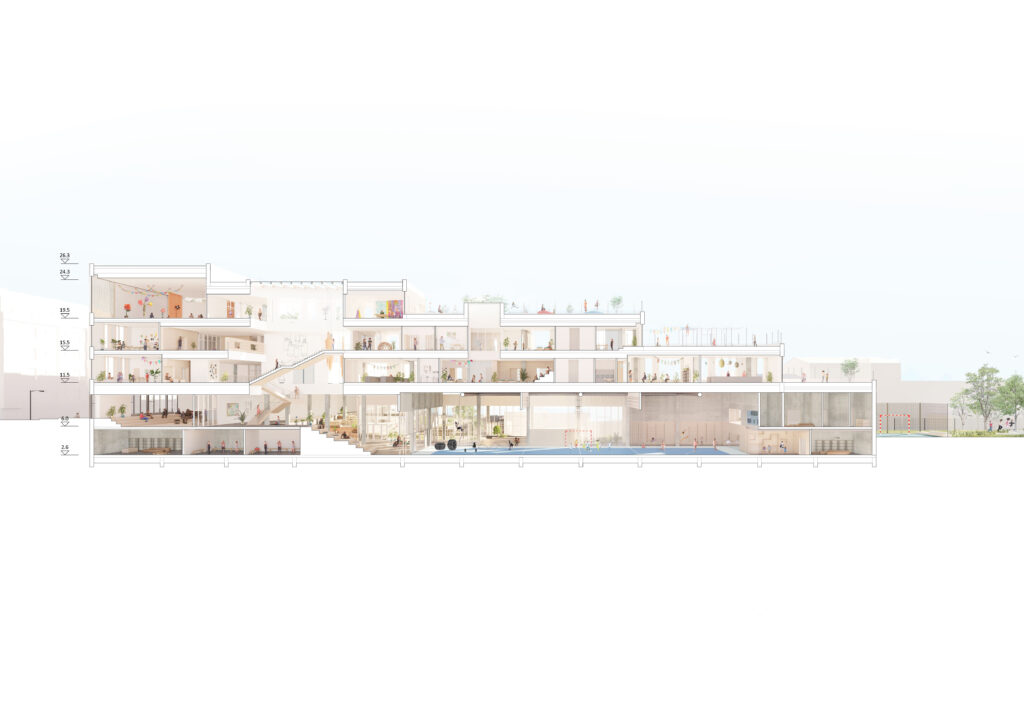
Movement is also at the heart of the spatial concept: a staggered roof schoolyard links different levels and uses. Workshops, planting areas, sports zones and retreats form a coherent spatial continuum. The route follows a loop that promotes activity – without the classic schoolyard, but with a high quality of stay.
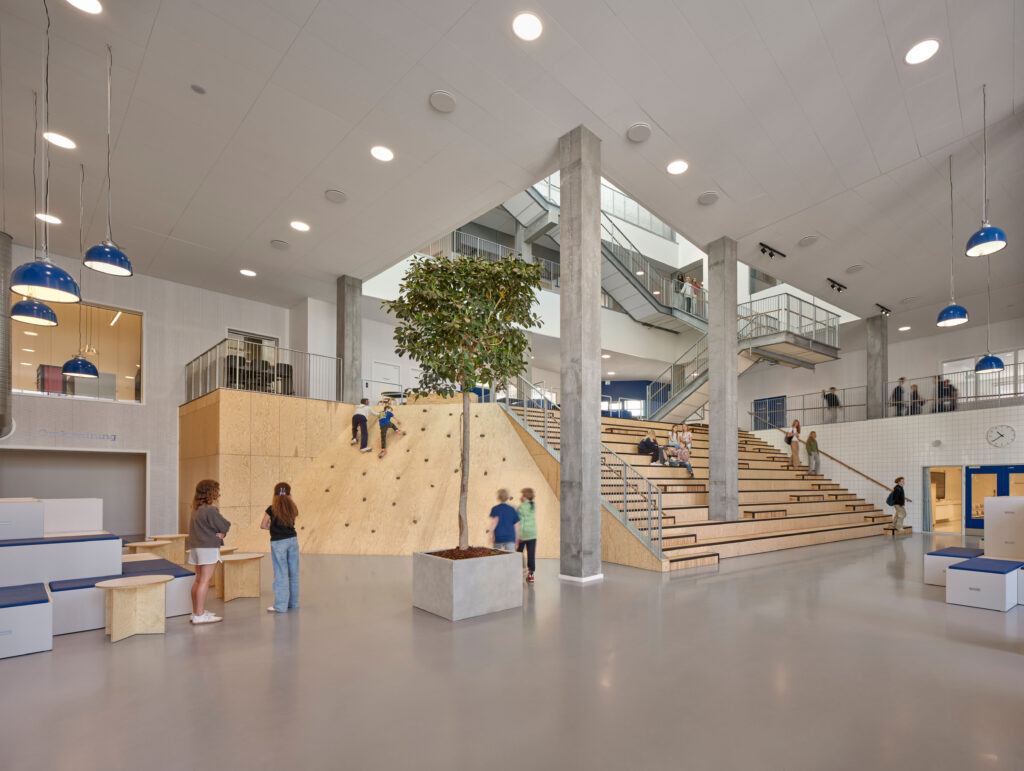
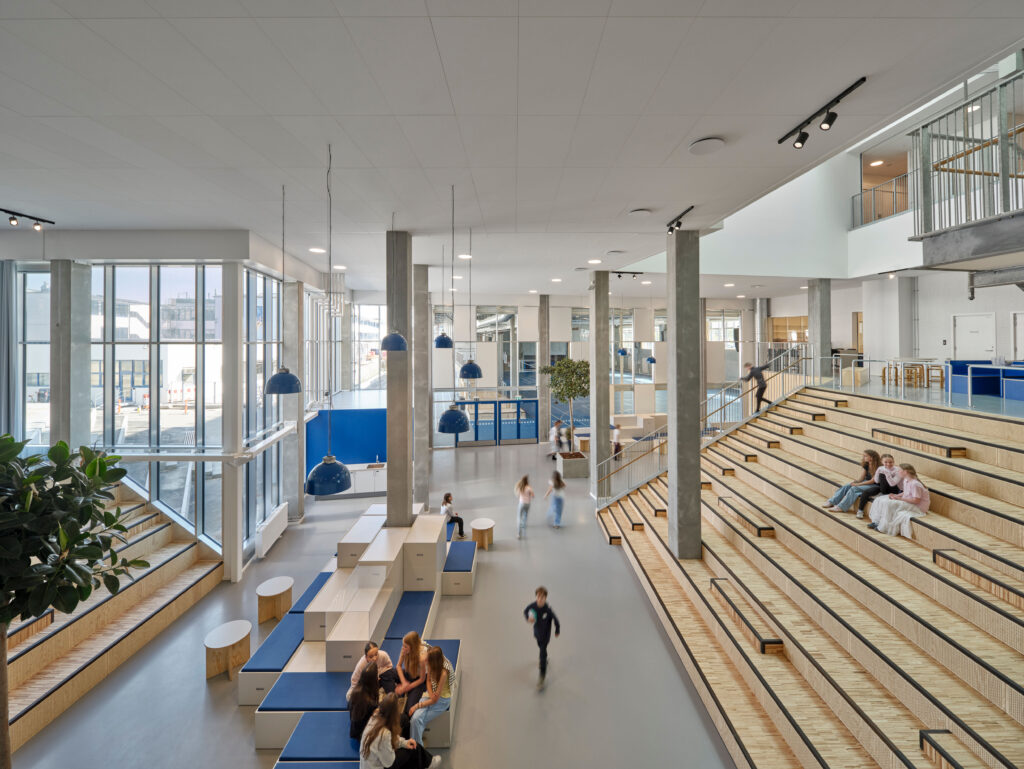
An open atrium connects the floors. Stairs and a central slide translate the idea of vertical movement into built experiences. A 1,250 m² sports hall completes the range of exercise. It can be flexibly divided and is also open to associations – as an infrastructure component in the district.
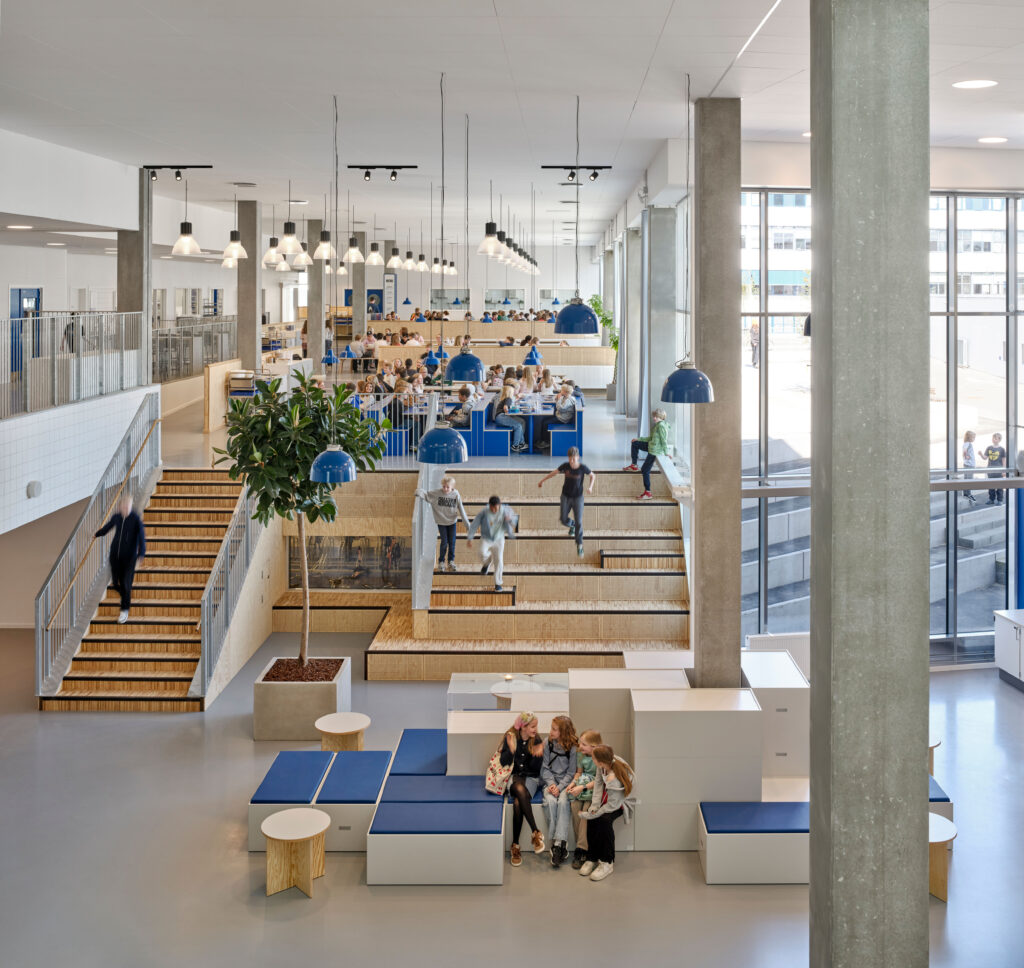
Light, colour, atmosphere: design with attitude
In addition to space programming, exercise and nutrition, the atmosphere also shapes the learning environment. In the Skolen ved Dybbølsbro, light and materiality were deliberately used to increase orientation and quality of stay. Colourful accents – especially in shades of blue and grey – visually structure the rooms and create a design reference to the Kødbyen’s industrial past.
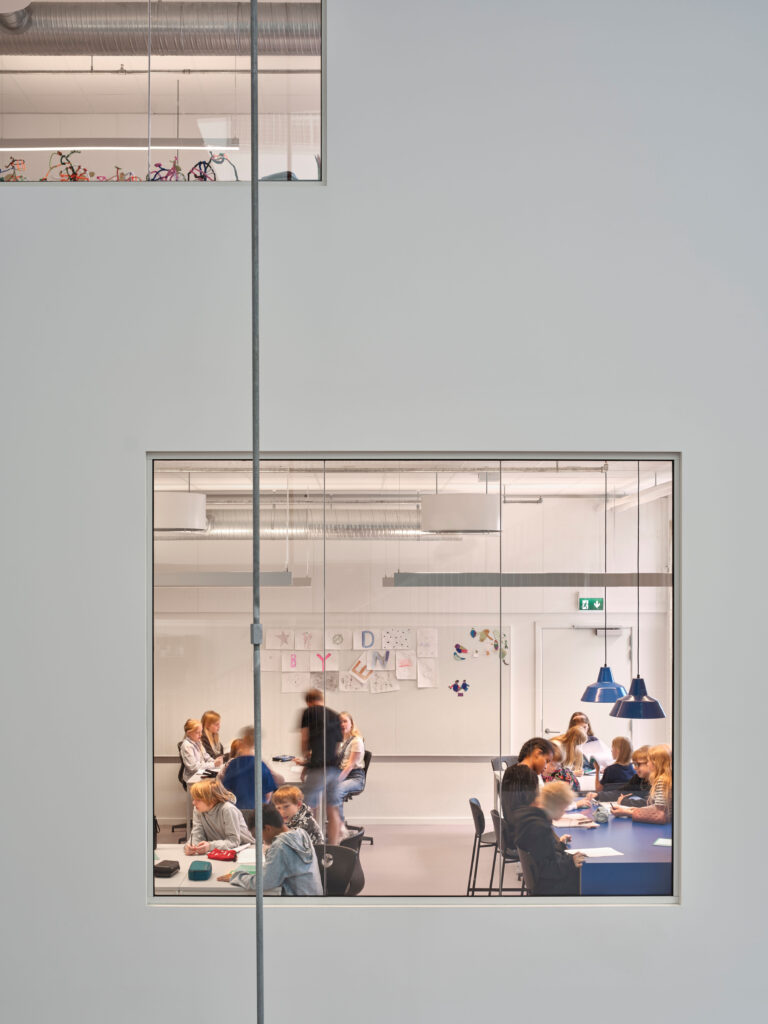
In terms of interior design, the building relies on robust but finely tuned surfaces. Exposed concrete, wood and tiled surfaces meet soft furnishings and targeted lighting. Daylight penetrates deep into the classrooms and common rooms through generous ribbon windows. Artificial lighting not only performs functional tasks, but also contributes to the atmosphere – for example, through strikingly used luminaires that consciously pick up on colour and form.
This creates an environment that enables both concentrated work and informal learning – a spatial structure with character that is clearly oriented towards the reality of young people’s lives.
Nutrition as an educational principle
The school goes further than the classic subject “home economics”. Eating and cooking are an integral part of the pedagogical orientation. The term “madborgerskab” – which translates as “culinary bourgeoisie” – stands for a concept that understands nutrition as part of cultural education.
The centrepiece is an open kitchen area that is networked with the dining room and outdoor terraces. This is where people cook, serve, share. The children take responsibility, create rituals, learn through practice: pupils cook and serve lunch themselves here in order to approach the handling of food as part of everyday school life. The kitchen remains open even after the end of class – as a place for exchange and communal use in the neighbourhood. That’s why the kitchen is not hidden, but visible and accessible – architecturally as well as didactically.
This structure creates learning spaces in which community is created. The handling of food becomes an opportunity to talk about origin, quality and responsibility. And about what a school can do in the best case: education with an impact on everyday life.
School construction as an urban resource
Instead of exclusive use, the house remains open to the district. Leisure activities, sports activities and communal cooking are also planned outside the timetable. The rooms create conditions for exchange – with architecture that mediates instead of demarcates.
At the same time, the project remains consistently anchored in its location. Instead of reshaping the Kødbyen district, inspired by the Stockholm exhibition of 1930 and listed as a historic monument since 1999, it is carefully continued. The school is part of this narrative structure – charged with history, open to the future.
Construction board
- Location: Skelbækgade / Ingerslevsgade, DK-1717 Copenhagen
- Client: City of Copenhagen, Byggeri København
- Period: 2020 (1st prize in the competition with prequalification) – 2025
- Gross floor area: 12,500 m²
- Architecture: NORD Architects and BBP Architects
- Engineers: Norconsult
- Landscape Architecture: BOGL Landscape Architects
- General contractor: BAM Danmark
- Use: Public primary school with a focus on nutrition, exercise and community learning
- Special features: Roof schoolyard over three levels, open kitchen and dining areas, integrative use by the neighborhood, sports hall for school and extracurricular use

You might also be interested in
SCHULBAU Fair
SCHULBAU Essen 2025 – Successful industry meeting for educational construction
Architecture, SCHULBAU Fair
Gustav Heinemann Comprehensive School Essen: How architecture accompanies change in the neighbourhood