Friedrich-von-Keller-Schule in Ludwigsburg: Renovation as an Opportunity for Educational Architecture
Renovating the Friedrich-von-Keller-Schule: Rethinking Existing Structures in Educational Architecture In Ludwigsburg, a school from the 1960s is being transformed into a future-oriented place of learning. The renovation of the Friedrich-von-Keller-Schule demonstrates how a sensitive approach…
Existing Architecture Reimagined
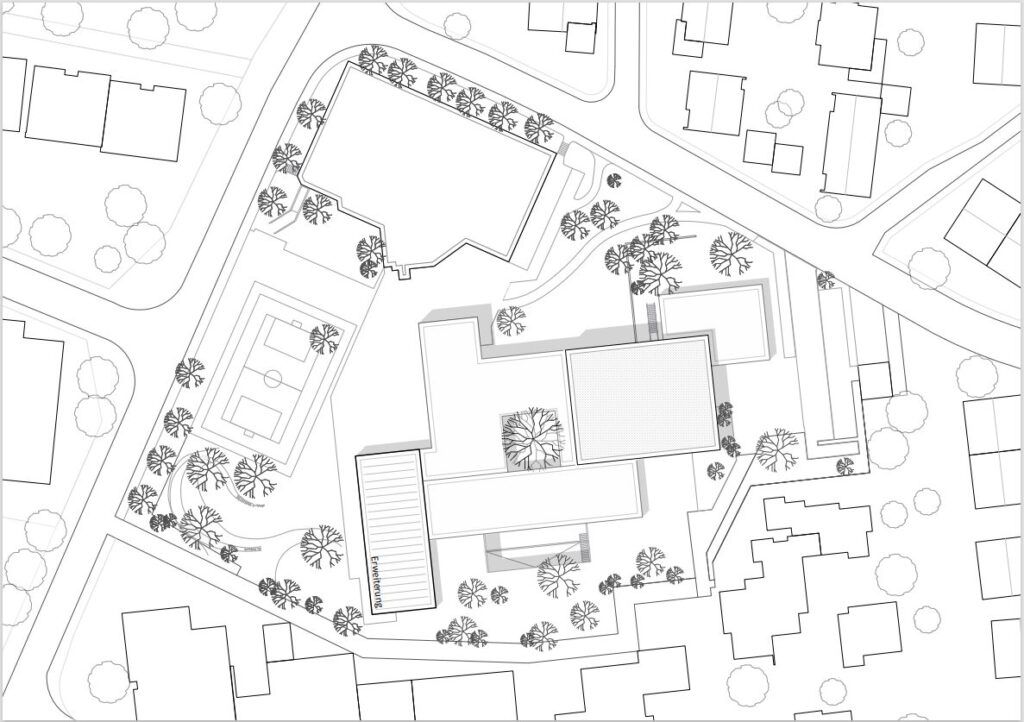
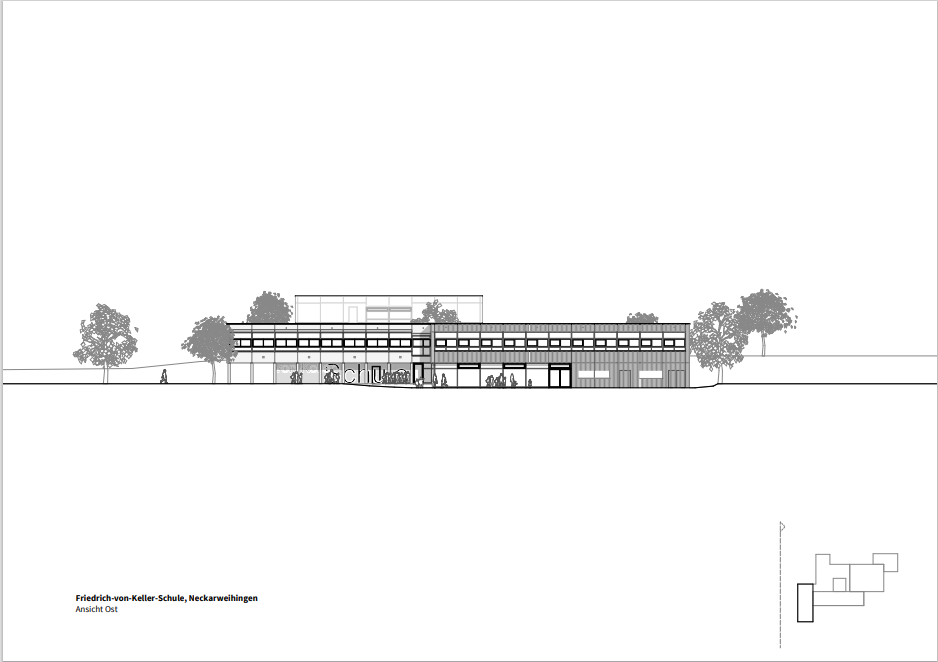
Calls for demolition grow loud when old school buildings no longer meet today’s requirements. Yet, existing structures often hold potential that can be unlocked with care and foresight. In Neckarweihingen, a district of Ludwigsburg, this path was chosen. The Friedrich-von-Keller-Schule, built in the 1960s by Günter Behnisch, was not replaced but further developed.
The school building utilizes a terraced layout that fits into the slope according to scale. No part of the building exceeds two stories. For the city, this was relevant not only in terms of design—the clear structure also provides a valuable starting point pedagogically. Following a VOF procedure, h4a Gessert + Randecker Architekten were awarded the contract for the renovation and extension.
Extension in Dialogue with the Existing Structure
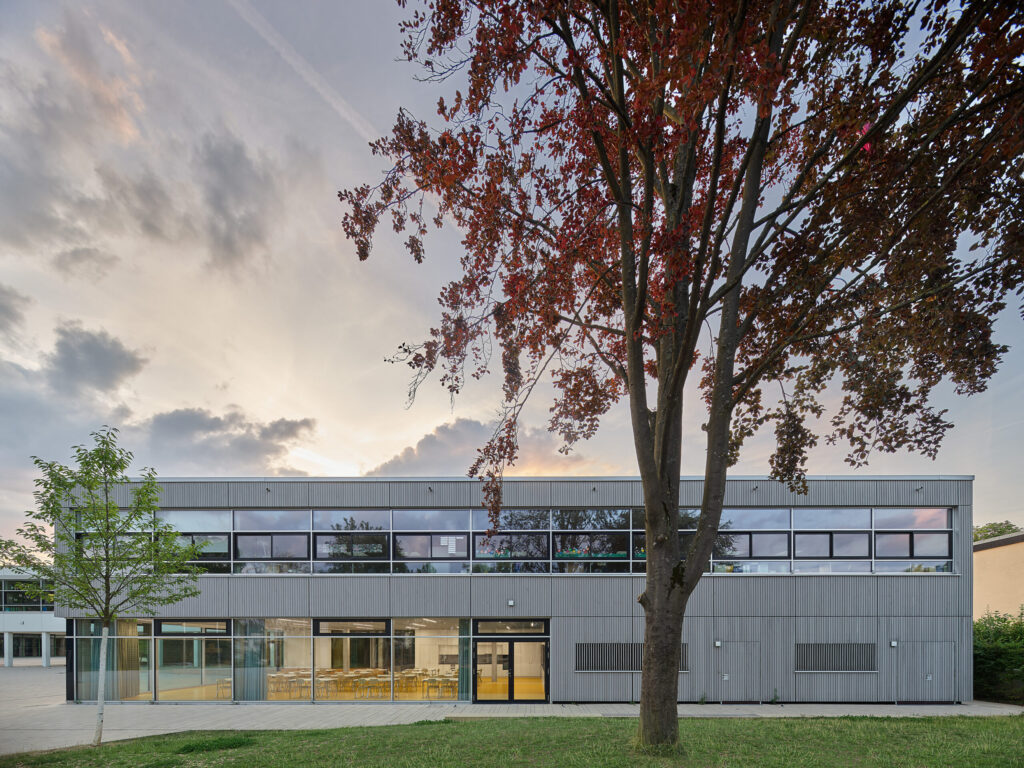
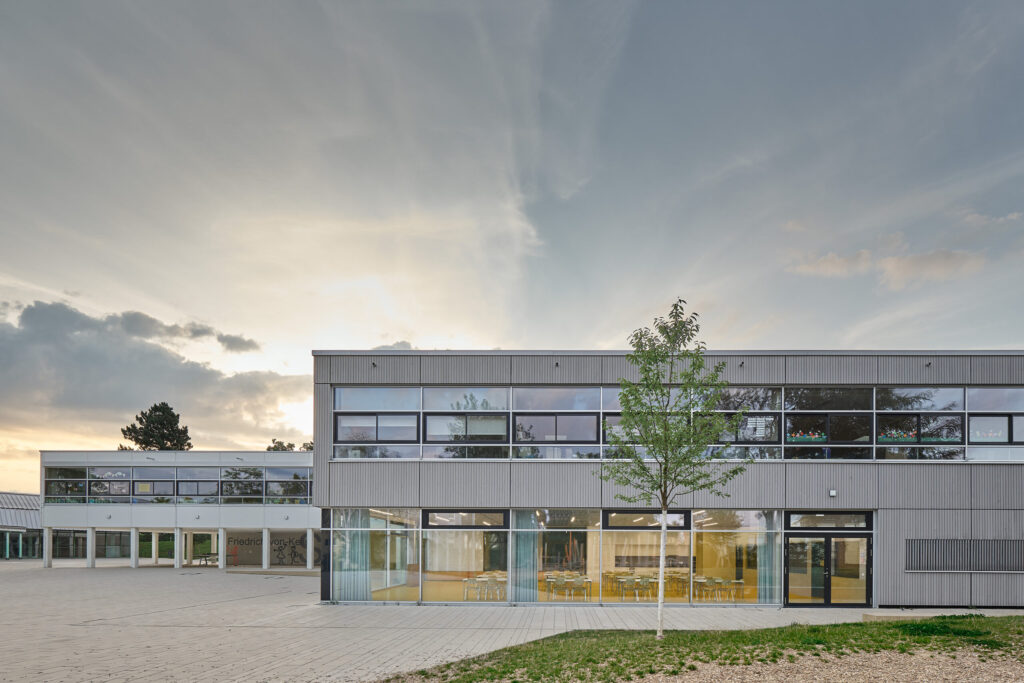
The new spatial program is realized through two primary measures. One of these is the construction of a new two-story wing on the west side, which houses the cafeteria, additional classrooms, and a library. The wood cladding of the new building creates a restrained presence, while large glass surfaces on the ground floor enable visual connections between the interior and exterior spaces.
The new cafeteria faces the schoolyard, while the rooms above open onto the rear garden. The extension creates a coherent courtyard situation that conveys a sense of security and serves as a communicative open space. Inside, an event area with a direct connection to the foyer is created—a place with multifunctional potential for everyday school life.
Atrium and Landscape in Dialogue
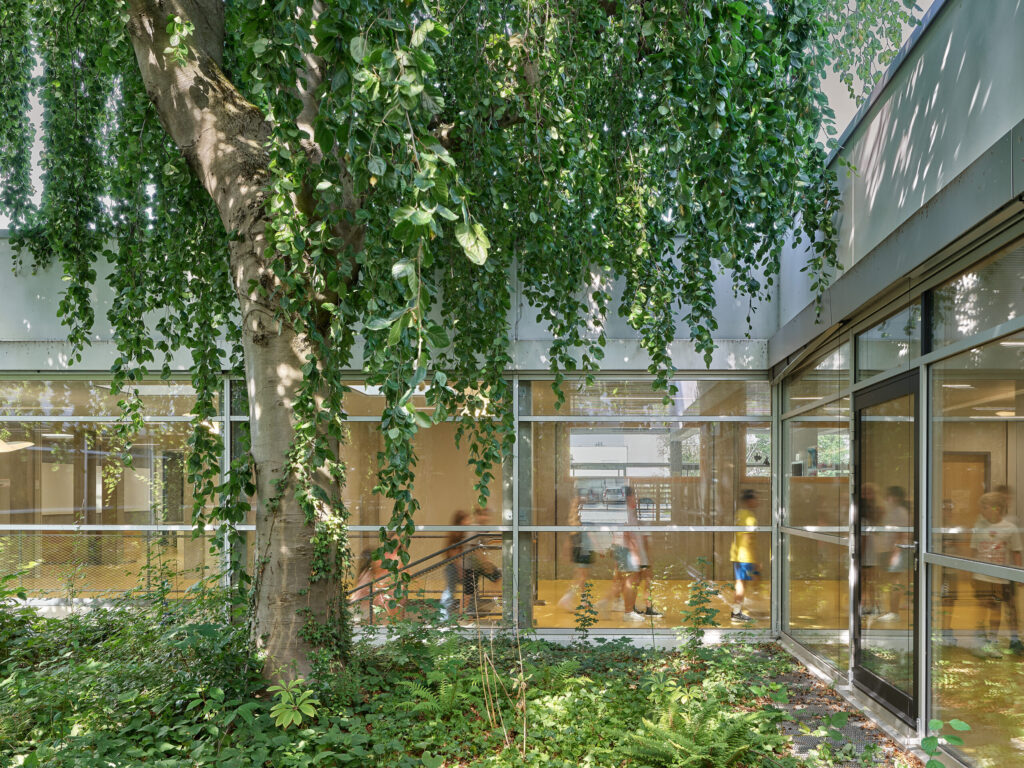
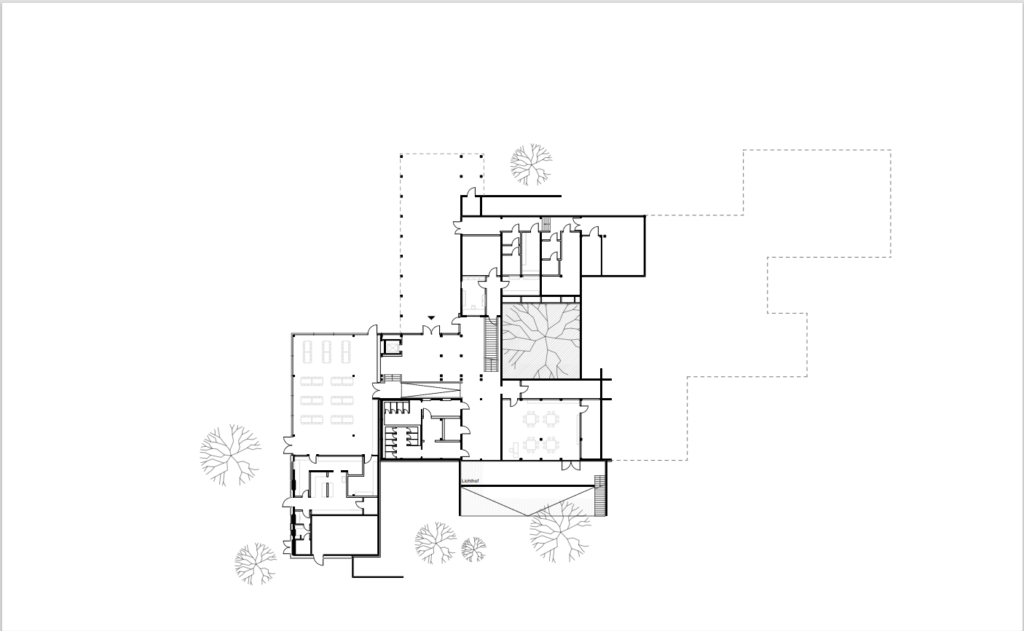
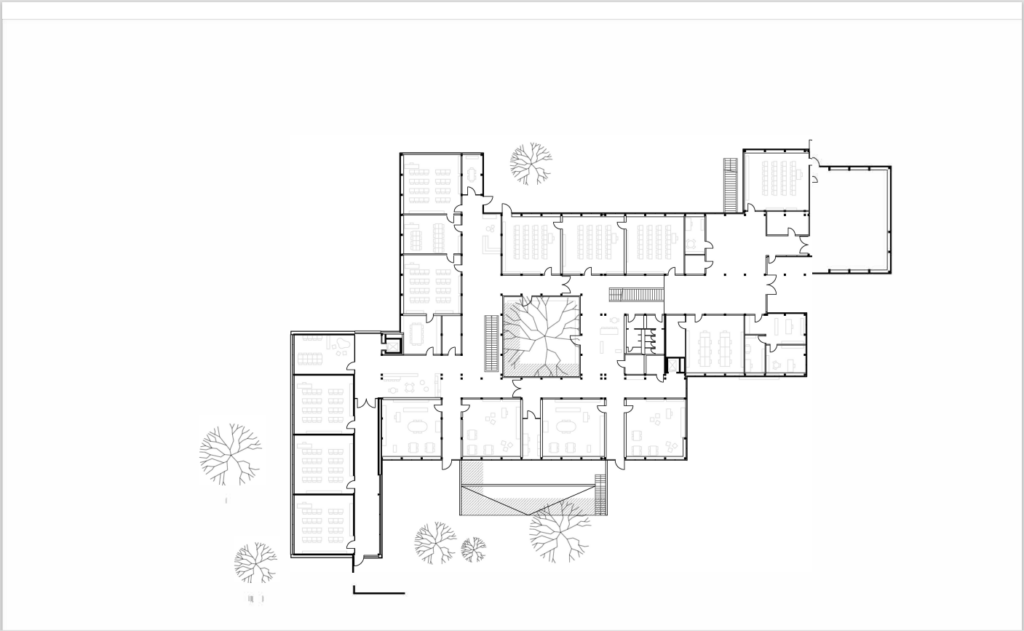
A second structural intervention provides new access to the garden level. An atrium ensures more daylight and expands the spatial framework. The view falls on an old pagoda tree—a Sophora, whose preservation influenced the floor plan design. The approach to the existing structure here incorporates not only architecture but also the landscape into the concept.
This opening does more than just improve the lighting of adjacent rooms. The connection to the outside world is also strengthened, allowing the quality of stay and orientation within the building to be reimagined.
Structures for Contemporary Pedagogy
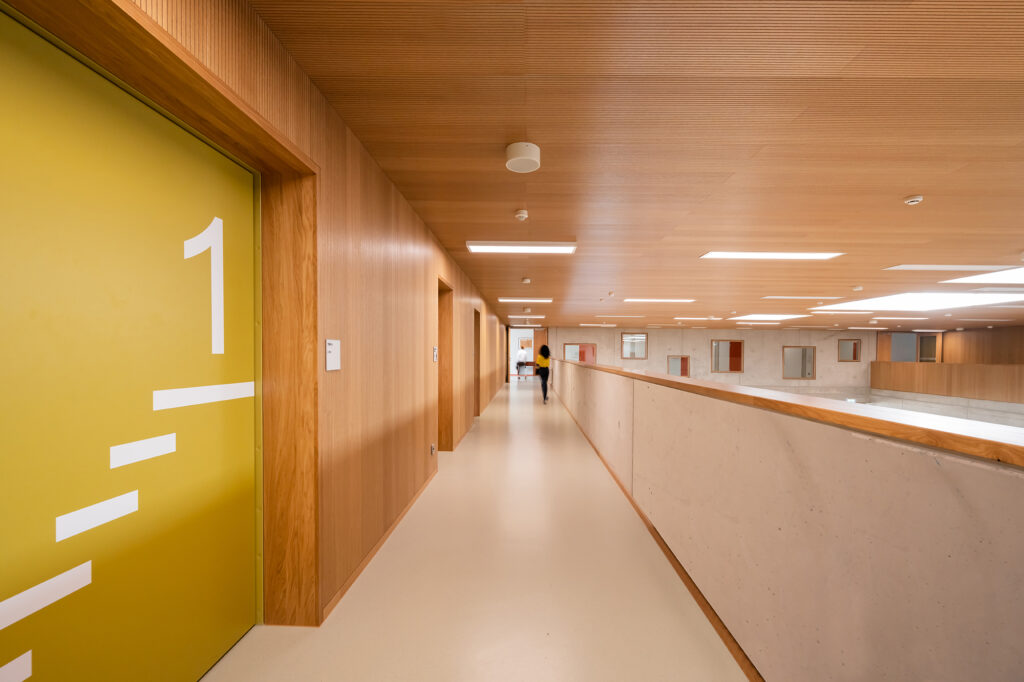
Inside, the reorganization builds upon existing strengths. The spatial structure has been reorganized, and previously closed glass joints between corridors and classrooms have been uncovered. Corridors are no longer purely circulation areas but versatile learning zones.
All-day care with direct access to the garden complements the pedagogical offering. A movement room with a climbing wall was integrated on the top floor. The architecture creates differentiated learning spaces that support both communal and individual use.
Material and Atmosphere in Balance
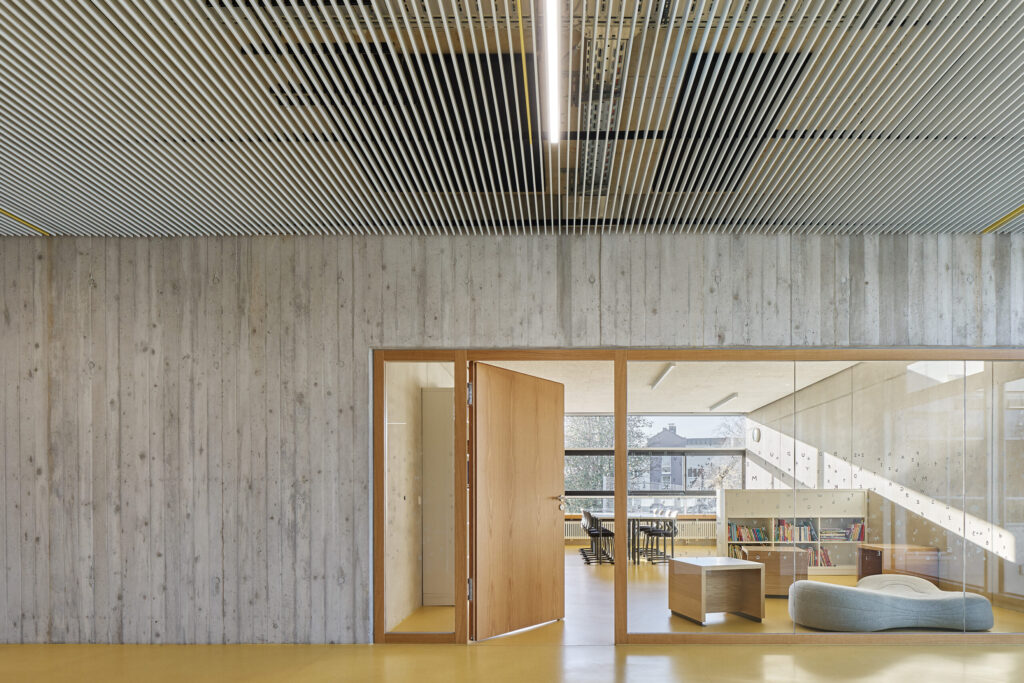
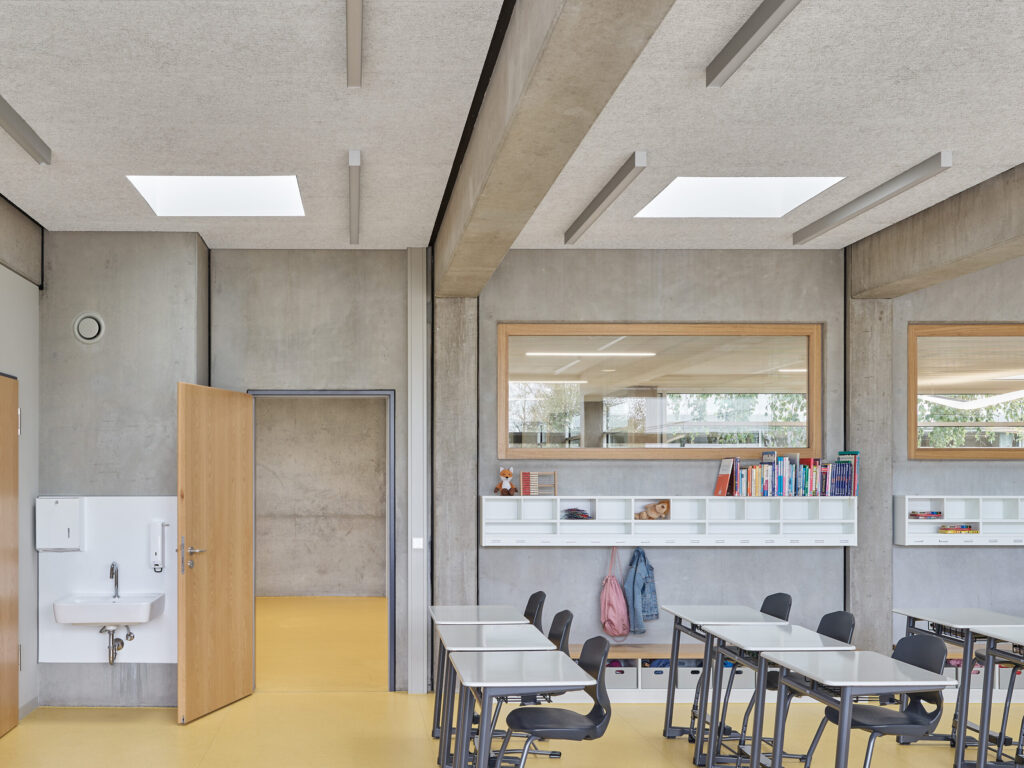
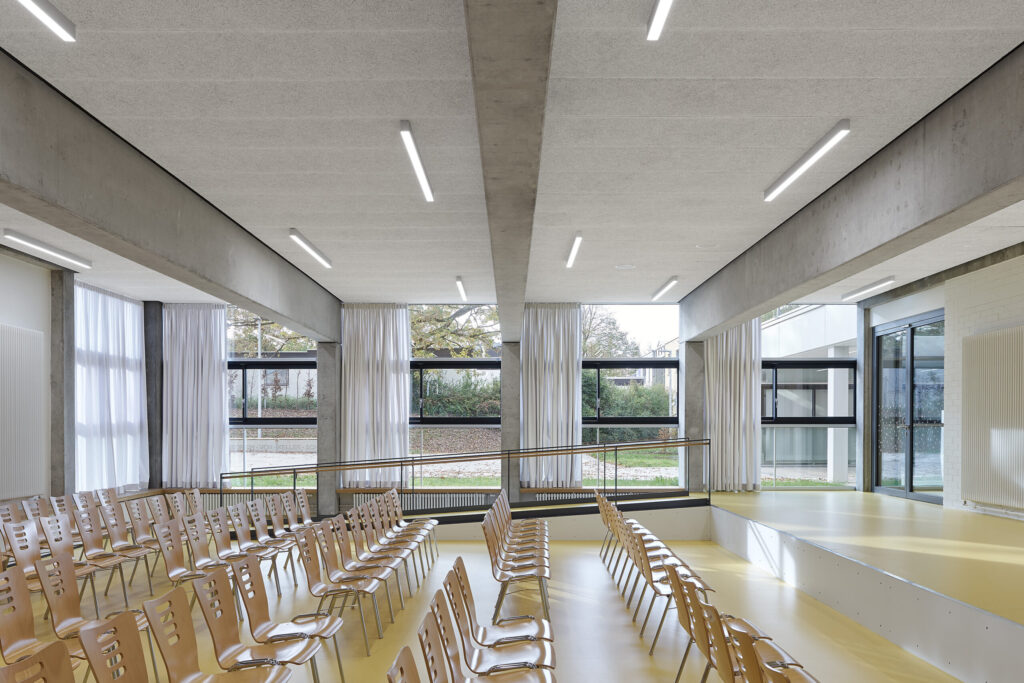
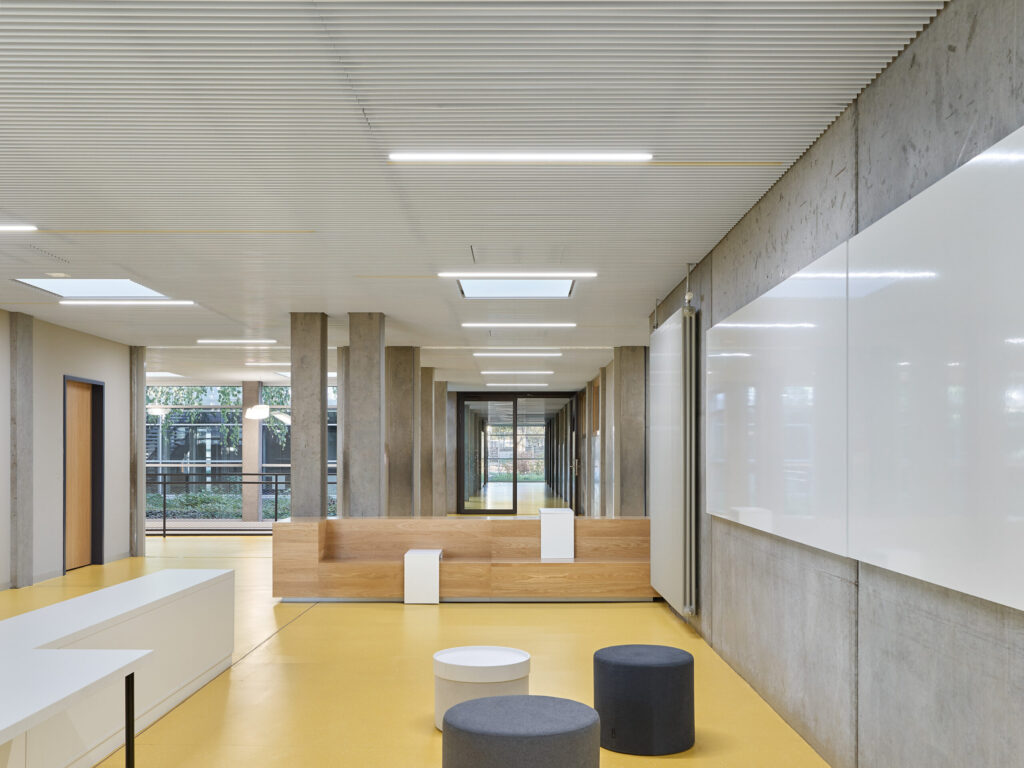
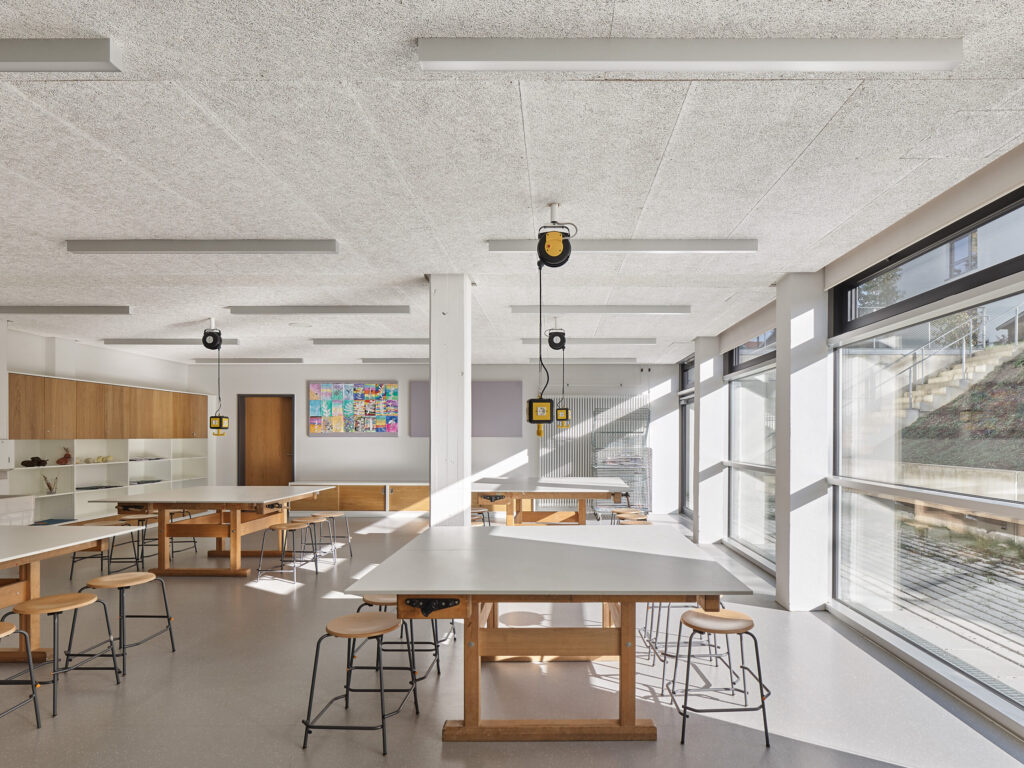
Exposed concrete meets warm oak wood, and a yellow rubber floor runs through both the old and new buildings. The reduction to a few, carefully selected materials contributes to a calm spatial atmosphere. The design concept follows ecological criteria based on Cradle-to-Cradle principles.
Energy-efficient renovation, accessibility, and the removal of hazardous materials are also part of the conversion. The new school is functionally designed for all-day operation—for around 300 students. However, the decisive factor remains not the size, but the interplay of spatial structure, materiality, and integration into the landscape.
The Friedrich-von-Keller-Schule represents an approach that takes what is already there seriously, complements it sensitively, and transfers it into new contexts. An example that deserves more relevance in the context of school construction.

You might also be interested in
SCHULBAU Fair
SCHULBAU Essen 2025 – Successful industry meeting for educational construction
Architecture, SCHULBAU Fair
Gustav Heinemann Comprehensive School Essen: How architecture accompanies change in the neighbourhood