Het Element: A school that grows with the city
Het Element: A school that grows with the city With sustainable construction, flexible use, and a close connection to the neighborhood, Het Element in Amersfoort is becoming a model for the educational buildings of tomorrow.
Educational architecture with vision

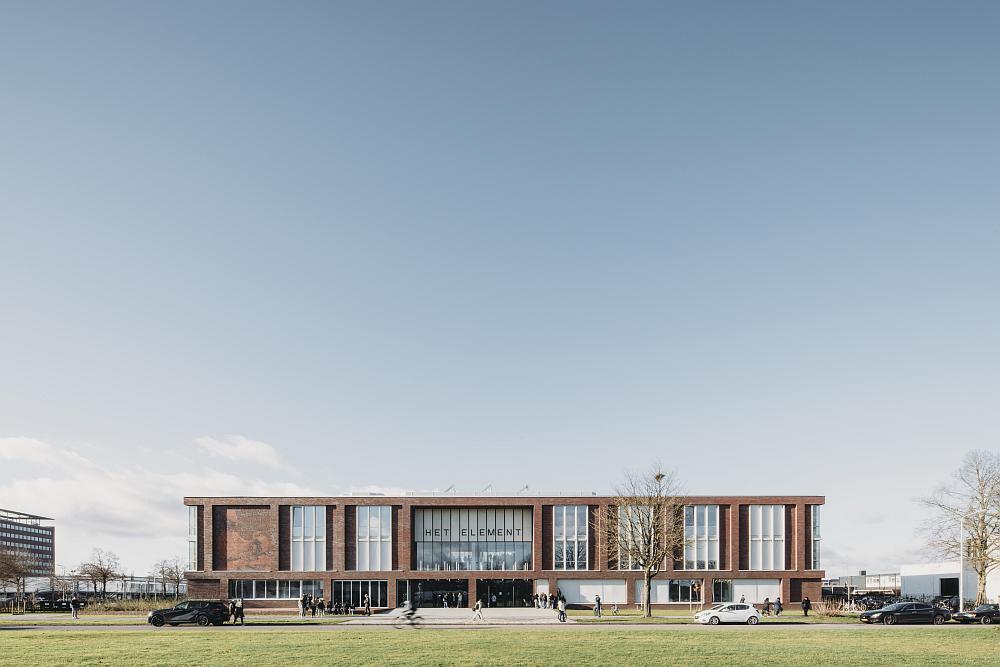
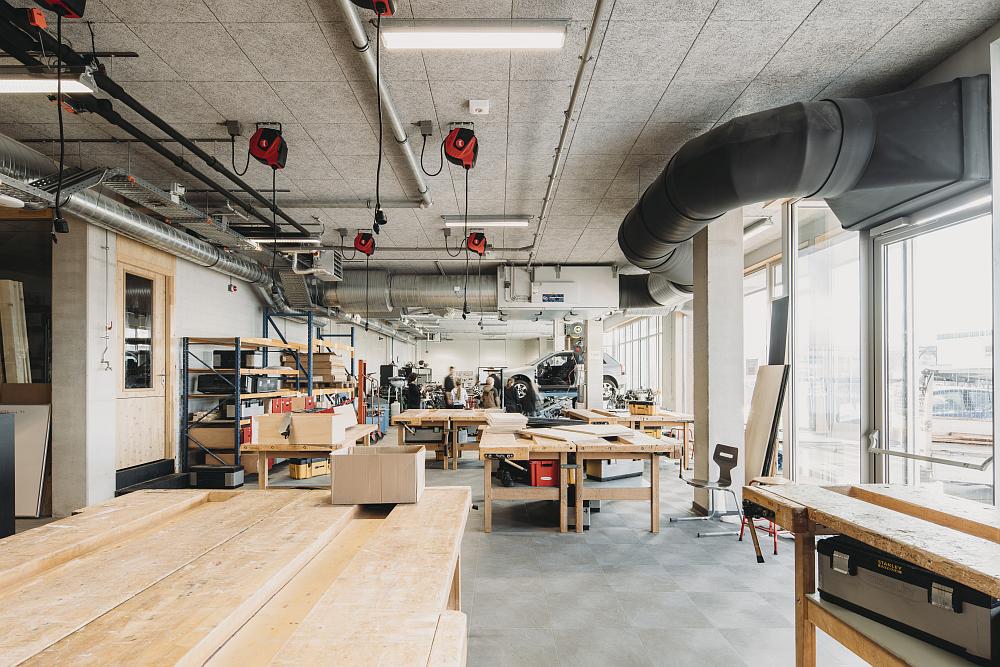
In the heart of the industrial area of Amersfoort, the vocational school Het Element is setting a standard for sustainable, flexible school construction. The compact new building combines two vocational schools, three sports halls, a dojo, and a language center across 12,000 square meters. However, the project is far more than just a functional building – it is intended to become a climate-conscious center for the Isselt district.
Spatial concept: Flexibility and identification
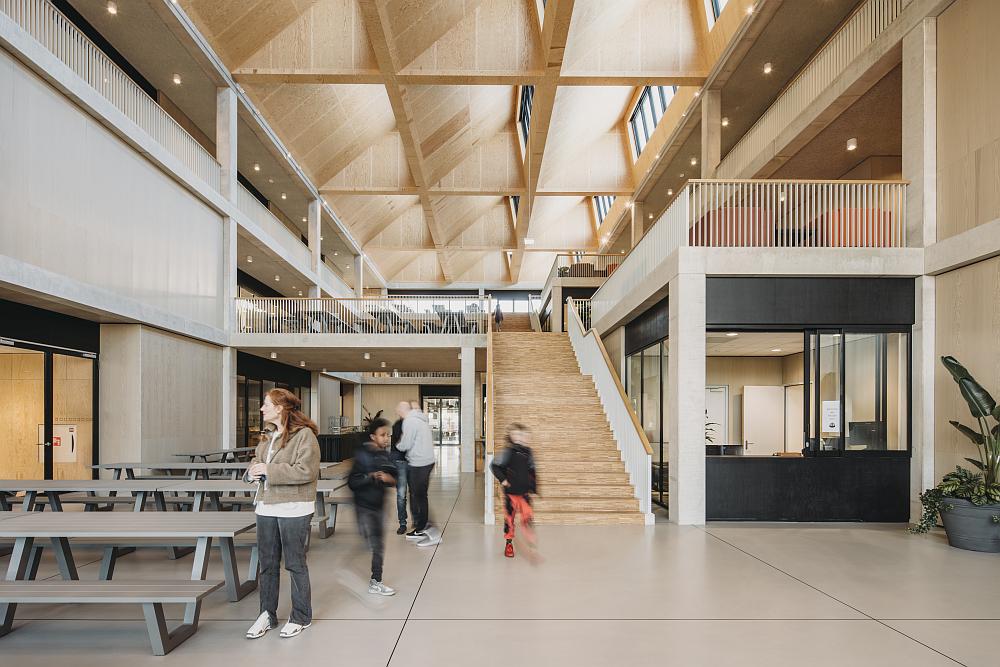
The school is organized around a light-filled center, which creates short distances and serves as a meeting place. The individual learning areas are housed in clubhouses, which are given their own identity through individual color and material concepts. This concept promotes students’ identification with their surroundings and simultaneously allows for a modulare expansion of the school.
The universally usable column grid plays a special role, facilitating future repurposing. Architect Bart van Kampen describes the vision: “Our idea is: never demolish again. The supporting structure is designed so that the building can also be used as a commercial property, care facility, or residential building in the future.”


Sustainability as a principle
The compact construction reduces heat loss and lowers energy consumption. The facade of brick mosaics references the school’s vocational training areas, while interior wood paneling creates a warm atmosphere. The sawtooth roofs are reminiscent of the industrial surroundings while bringing plenty of daylight into the rooms.
A particularly defining feature of the sustainable concept is the complete coverage of the roof with solar modules. This is complemented by durable materials such as concrete and aluminum windows, which keep maintenance requirements low.
A new center for the neighborhood
Het Element integrates into its surroundings not only functionally but also socially. The school grounds offer public green spaces and create a link between education and urban society. The field in front on Kaliumweg, which can be used in emergencies, has been converted into a public front garden. The side and rear areas have also been ecologically enhanced.
Through these measures, the school actively contributes to the climate resilience of the district – a model for sustainable educational buildings that are adapted not only to the needs of today but also to the requirements of tomorrow.



You might also be interested in
SCHULBAU Fair
SCHULBAU Essen 2025 – Successful industry meeting for educational construction
Architecture, SCHULBAU Fair
Gustav Heinemann Comprehensive School Essen: How architecture accompanies change in the neighbourhood