Maickler Primary School: Architecture Meets Intelligent Indoor Climate
Maickler Primary School: Architecture Meets Intelligent Indoor Climate The new primary school in Fellbach combines open learning spaces with invisibly integrated ventilation technology. The well-considered design creates a healthy, energy-efficient indoor climate for optimal learning…
A School Building for the Future

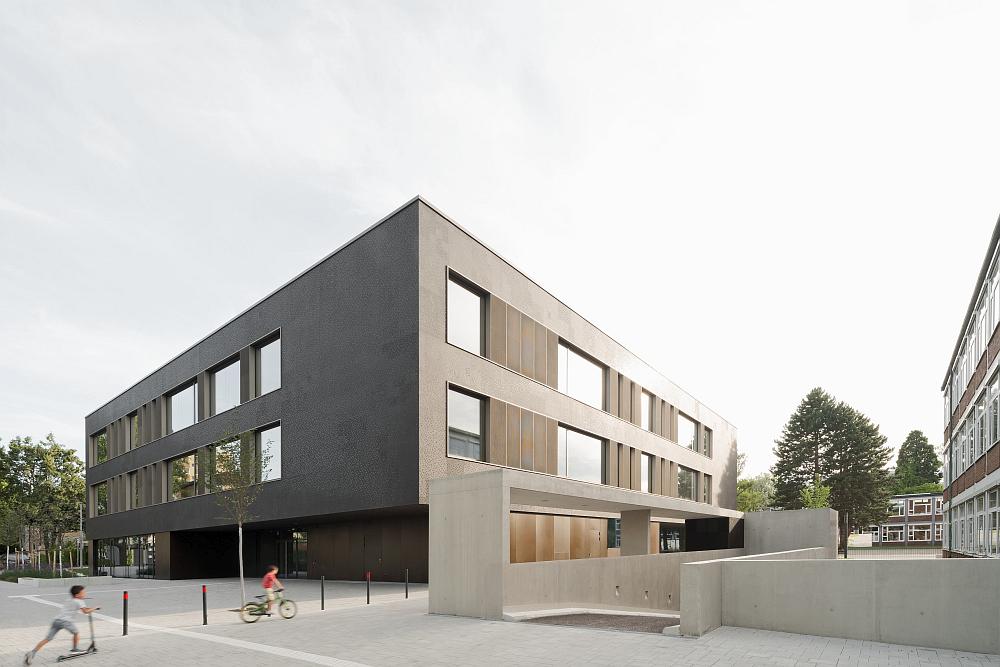
With the Maickler Primary School, Fellbach has gained an educational building that brings architecture, pedagogical concepts and building services engineering together into a coherent whole. Designed by Löhle Neubauer Architekten, the school follows a modern cluster approach in which open learning areas replace traditional classrooms. At the same time, an innovative ventilation system ensures a healthy indoor climate—an essential factor for focused learning.
Architecture for a New Learning Culture
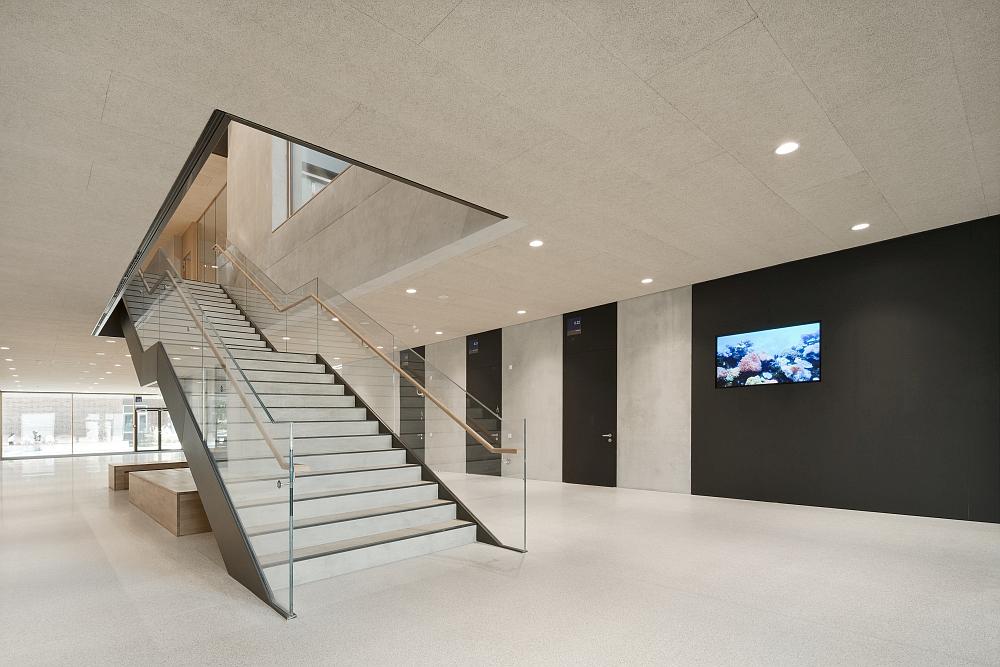
The three-storey school offers space for up to 400 pupils across 4,000 square metres. Instead of long corridors, the year groups are arranged around central marketplaces—places for exchange, independent learning and collaboration. This open structure strengthens the sense of community and allows flexible use of the spaces.
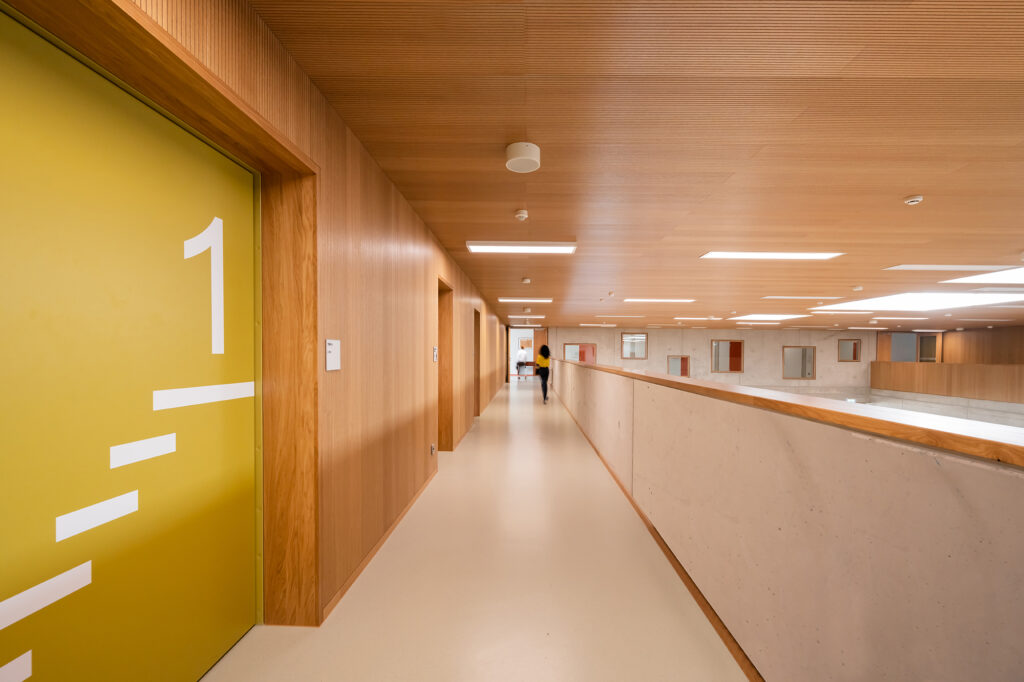
The building was completed in just two years of construction—despite challenges such as raw material shortages and supply bottlenecks. The arrangement of the building volumes creates seamless transitions between indoor and outdoor space. Large glazed areas provide a bright, welcoming atmosphere and visual connections to landscaped atriums and covered break areas.
Ventilation as an Integral Part of the Architecture
A distinctive feature of the Maickler Primary School is the consistent integration of ventilation technology into the architectural concept. The entire ventilation system was designed to be almost invisible, while still playing a central role in the indoor climate.
Two central ventilation units supply the rooms:
- The first unit, with 18,000 cubic metres of air exchange per hour, regulates the fresh-air supply in teaching and common areas.
- The second unit, with 7,000 cubic metres per hour, ensures efficient supply and extract ventilation for the school kitchen and prevents odours from spreading to other areas.
Supply air enters the rooms via subtle slot diffusers along the window frontage, while extract air is removed through shadow gaps above the built-in cupboards. This creates even air distribution without uncomfortable draughts.
Energy Efficiency Through Intelligent Control
A crossflow heat exchanger enables effective heat recovery, minimising energy losses. The entire ventilation system is integrated into the BACnet-based building automation system, allowing operating states to be centrally controlled and adjusted.
A Model for Healthy Learning Environments
The Maickler Primary School demonstrates how technical solutions and architectural concepts can complement one another to create the best conditions for everyday school life. It combines modern learning-space design with high air quality and energy efficiency—setting new standards for school construction.


Sustainability as a Principle
The compact design reduces heat loss and lowers energy consumption. The façade of brick mosaics references the school’s craft training areas, while timber cladding in the interior creates a warm atmosphere. The shed roofs evoke the industrial surroundings while also bringing ample daylight into the rooms.
A particularly defining element of the sustainable concept is the roof being fully covered with solar panels. This is complemented by durable materials such as concrete and aluminium windows, which keep maintenance requirements low.
A New Focal Point for the Neighbourhood
Het Element integrates into its surroundings not only functionally, but also socially. The school grounds provide public green spaces and create a link between education and urban society. The field in front on Kaliumweg, which can be used in an emergency, has been transformed into a public front garden. The side and rear areas have also been ecologically enhanced.
Through these measures, the school actively contributes to the climate resilience of the neighbourhood—a model for future-ready educational buildings that are adapted not only to today’s needs, but also to the requirements of tomorrow.

You might also be interested in
SCHULBAU Fair
SCHULBAU Essen 2025 – Successful industry meeting for educational construction
Architecture, SCHULBAU Fair
Gustav Heinemann Comprehensive School Essen: How architecture accompanies change in the neighbourhood