In Crissier near Lausanne, a piece of company history is changing: The headquarters of McDonald’s Switzerland, housed in an office building that is over 40 years old, has been extensively renovated. The aim was to create a future-proof working environment that spatially reflects the company’s values and at the same time enables new forms of collaboration. The Zurich-based architectural firm Mint Architecture is responsible for planning and implementation.
Transformation: Architecture as a tool for cultural change
The transformation follows a clear mandate: the previous structure of individual offices and fixed workplaces has been transferred to an open, zoned landscape that is geared towards changing forms of work and hybrid usage concepts. The basis is an intensive participatory process: Employees from various areas of the company have contributed their requirements in workshops and surveys. The findings derived from this form the foundation for a new workplace concept that brings together work reality, corporate culture and spatial design.

Desk sharing and zoned working
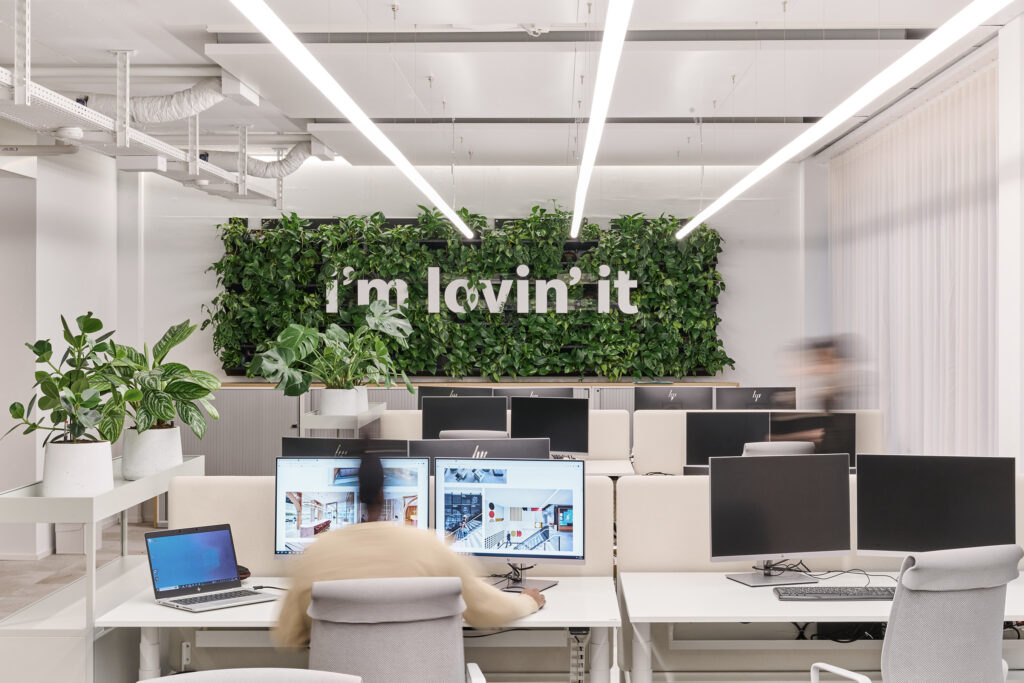
On an area of around 1,600m2 , modern open-plan offices are being built according to the desk-sharing principle. The space layout provides for a clear division into different room types: community zones, meeting areas with open and closed rooms, open work landscapes for teamwork and specifically usable rooms for focused work. A centrally located circulation core connects all areas with each other. It acts as the backbone of the building – both in terms of design and function.
Encounter, retreat and flexible use
The first floor in particular makes the new concept tangible. Here, life is concentrated around the central canteen with coffee counter, kitchen and a variety of seating options. A spacious terrace and a flexibly divisible meeting room with presentation technology frame this area. Mobile partitions and curtains allow different zones to be connected to form an event space. Opposite are open workstations with additional retreats for concentrated work.
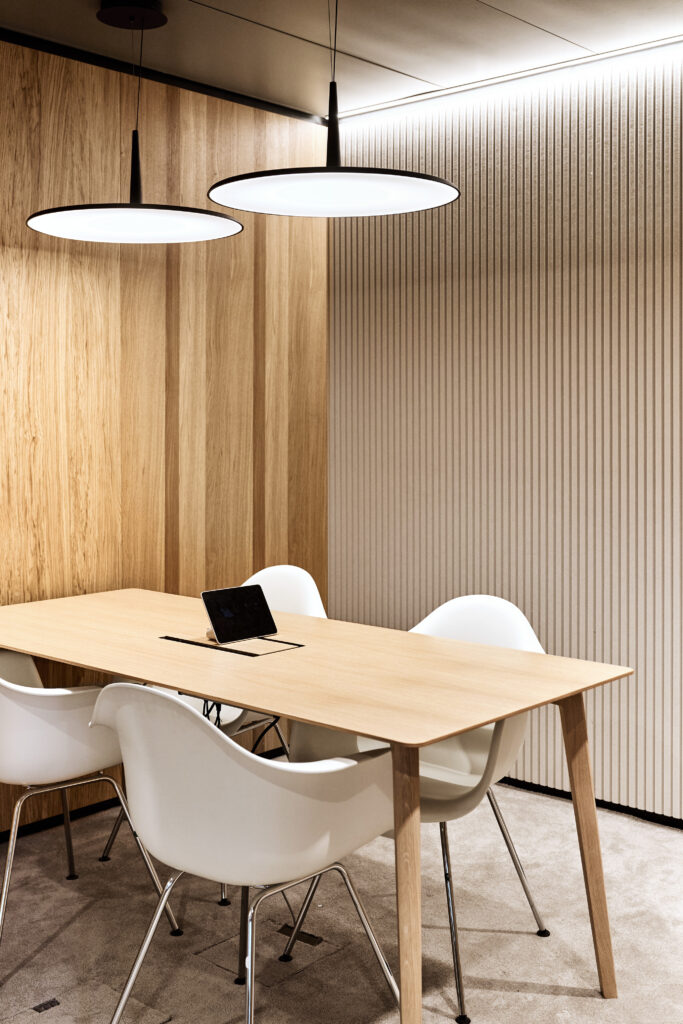
The upper two floors also follow this principle: generous window areas provide natural lighting thanks to the new, light-regulating glass façade. Meeting rooms, focus rooms and small kitchenettes are integrated into the open work areas and enable a wide range of usage scenarios – from spontaneous exchange to discreet one-on-one conversations.
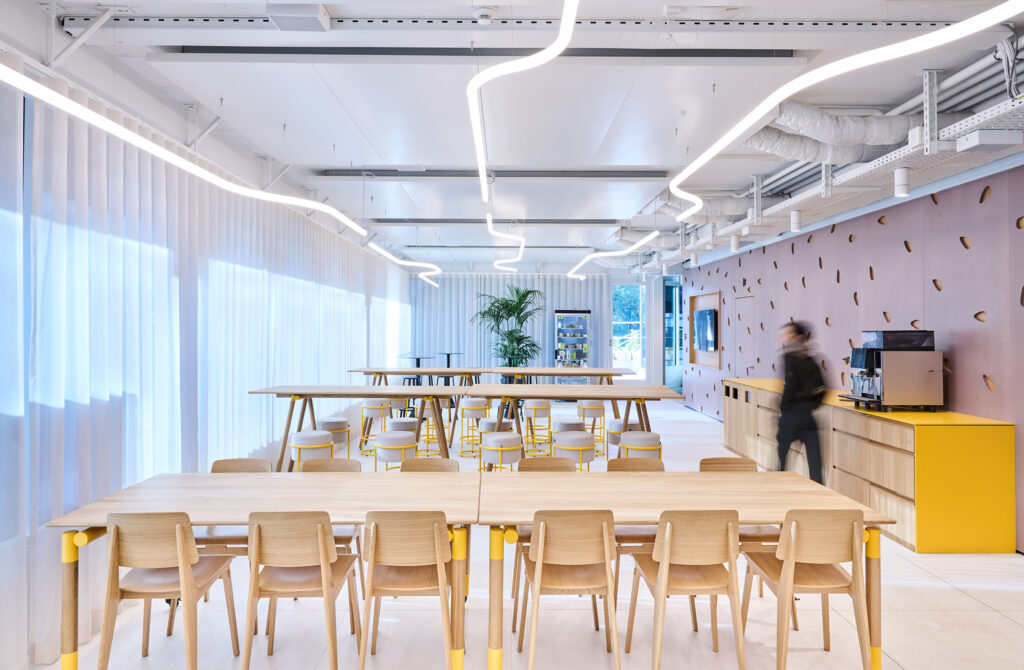
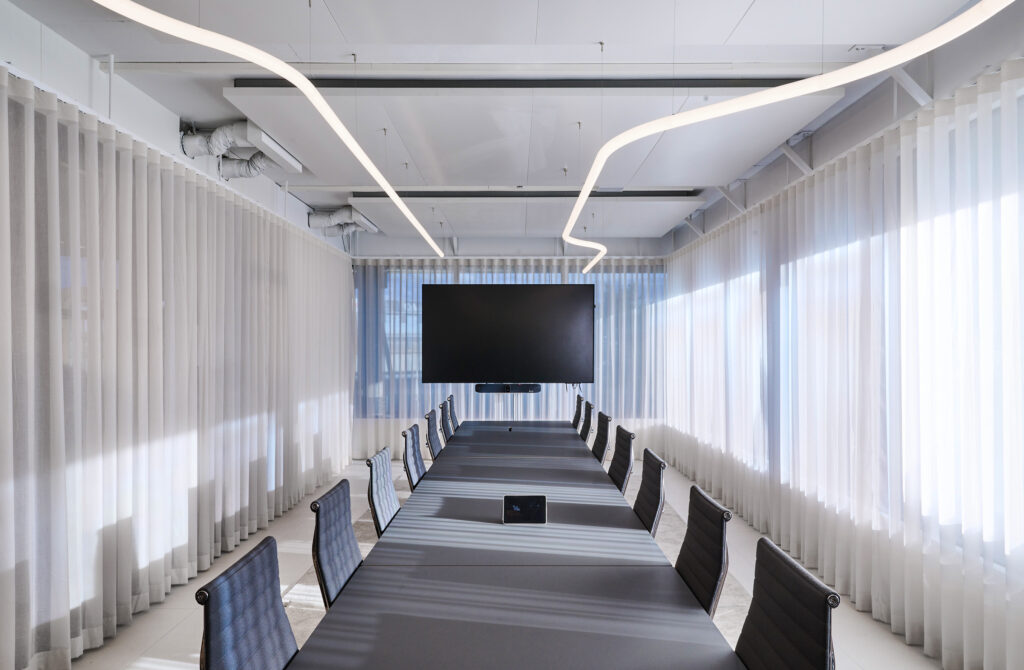
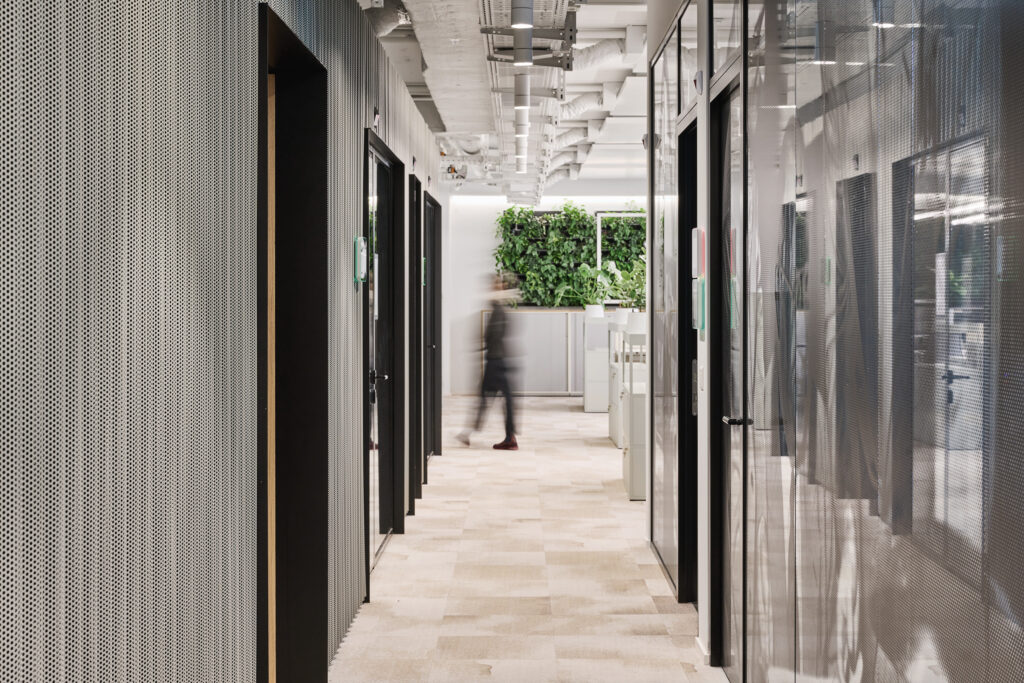
Interior design with brand reference
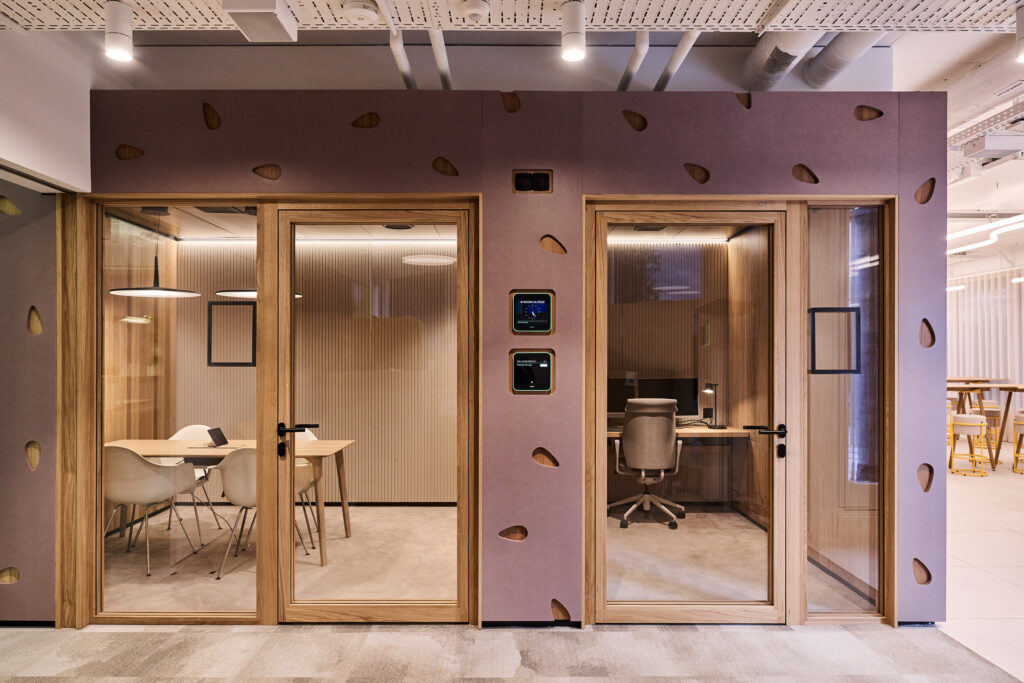
At the heart of the design concept is the strikingly staged core of the building: perforated corrugated iron, black-framed glass doors, fixtures made of oiled oak and textile acoustic panels create a strong contrast to the deliberately restrained design of the rest of the surfaces. Light materials, white façade elements and green accents from the planting create a calm atmosphere and leave room for focused work.
Elements from McDonald’s restaurant design are also incorporated into the interior design – but reinterpreted. A yellow lighting fixture under a red ceiling, so-called green walls in the open spaces and large-format black-and-white photographs on glass surfaces combine corporate identity with suitability for everyday use. These design decisions were derived from previously developed design stories that were created as part of the employee participation program.
Energy efficiency as a building block for future viability
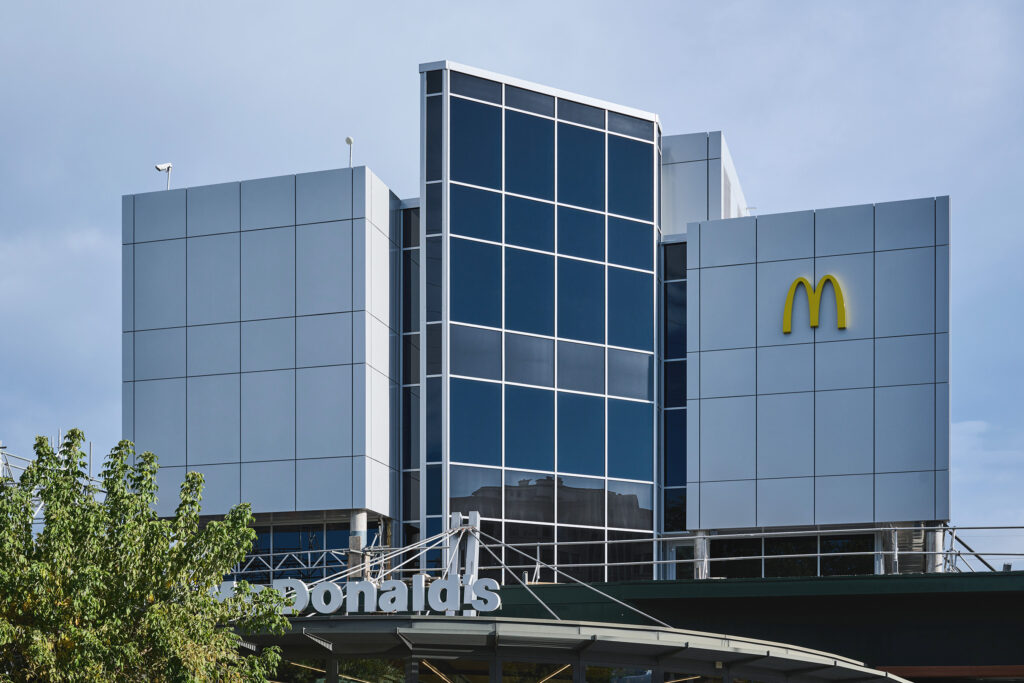
In addition to the spatial restructuring, the project also includes a comprehensive technical refurbishment: the entire HVAC, plumbing and electrical installations have been modernised. This is supplemented by a new lighting and booking system that supports resource-saving use of space. Another building block: the replacement of the previous glass façade with smart glazing. This reacts automatically to the lighting conditions and thus significantly reduces energy consumption – without restricting visual comfort.
New Work: Space as a strategic tool
The renovation of McDonald’s Swiss headquarters exemplifies the current development in the field of corporate architecture and educational buildings: space is no longer understood as a purely functional tool, but as an active tool to support corporate culture, communication and sustainable thinking. The implementation in Crissier makes it clear how brand identity, energy efficiency and flexible working methods can come together to create a coherent overall picture – without any loud gestures.
Construction board
- Client: McDonald’s Suisse Development Sàrl, 1023 Crissier
- Contract: Redesign, conversion and renovation of the Swiss headquarters of McDonald’s into a modern working environment
- Services: Analysis and feasibility study, workplace strategy, workplace design, interior design, office conversion, energy-efficient building renovation, façade replacement, implementation planning, construction management and construction management
- Areas: Office space 1st – 3rd floor: 1590 mª (gross floor area)
- Client: McDonald’s Suisse Development Sàrl
- Architecture (building in existing buildings): Mint Architecture
- Workplace concept and interior design: Mint Architecture
- Construction management: Mint Architecture with Christophe Lebet, Architecte HES
- Façade planner: Mebatech AG
- Electrical engineer: R+B engineering AG and JR Engineering GmbH
- HVAC planning and sanitary planning: Weinmann Energies S.A.
- Fire protection designer: Ignis Salutem SA
- Completion: 2024
- Photography: © Mint Architecture | Oliver Rust
- Plans & Drawings: © Mint Architecture

You might also be interested in
SCHULBAU Fair
SCHULBAU Essen 2025 – Successful industry meeting for educational construction
Impulses, Lifestyle
WEtransFORM in Bonn: Exhibition outlines visions for sustainable construction