Rethinking Education: How a School Building in Mosonmagyaróvár Was Transformed into a Vibrant Experiential Space
A contemporary learning environment has been created in a baroque school building in Hungary – featuring a well-conceived spatial structure, a pedagogical concept, and a clear vision for the future of educational construction.
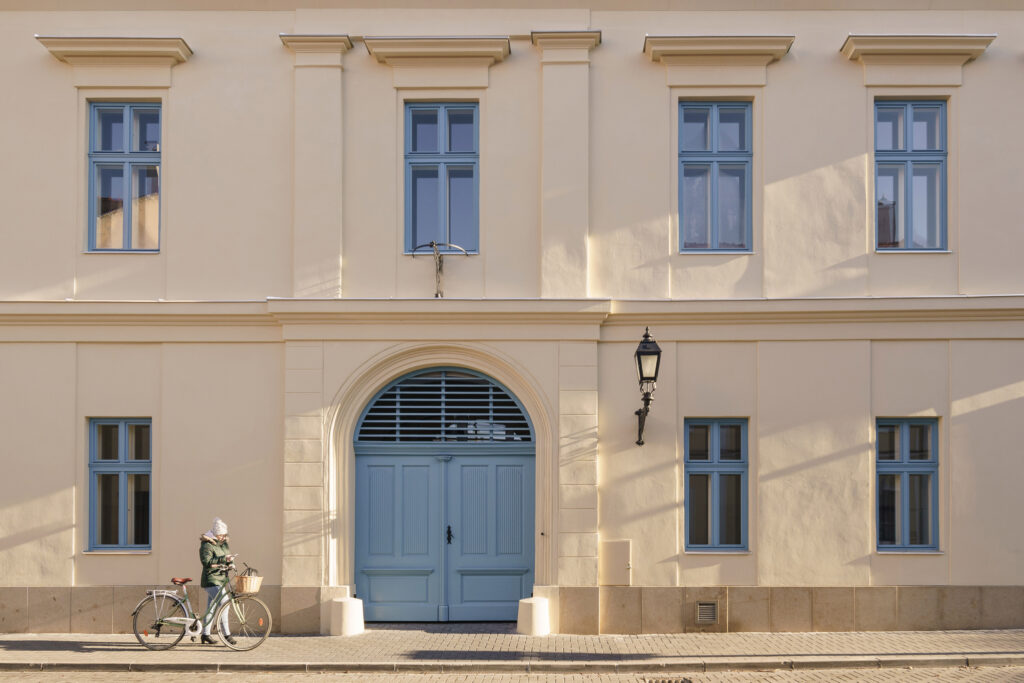
Spaces have gained significance in the educational discourse. Architecture is increasingly understood as a co-creator of learning processes: it structures, accompanies, and inspires. The baroque school building of the Piarist Grammar School by CAN Architects in Mosonmagyaróvár, Hungary, embodies precisely this approach. Here, historical heritage meets contemporary pedagogy – with a clear goal: an architecture that facilitates learning, shapes attitudes, and fosters identification.
Education as a Spatial Process
Modern school architecture is guided by the question of how spaces can effectively support learning processes. Mere expansion of area is not enough. What is needed are functional transitions, comprehensible connections, and an environment that allows for diverse pedagogical concepts. In Mosonmagyaróvár, this has led to a concept that understands learning spaces as adaptable experiential environments.
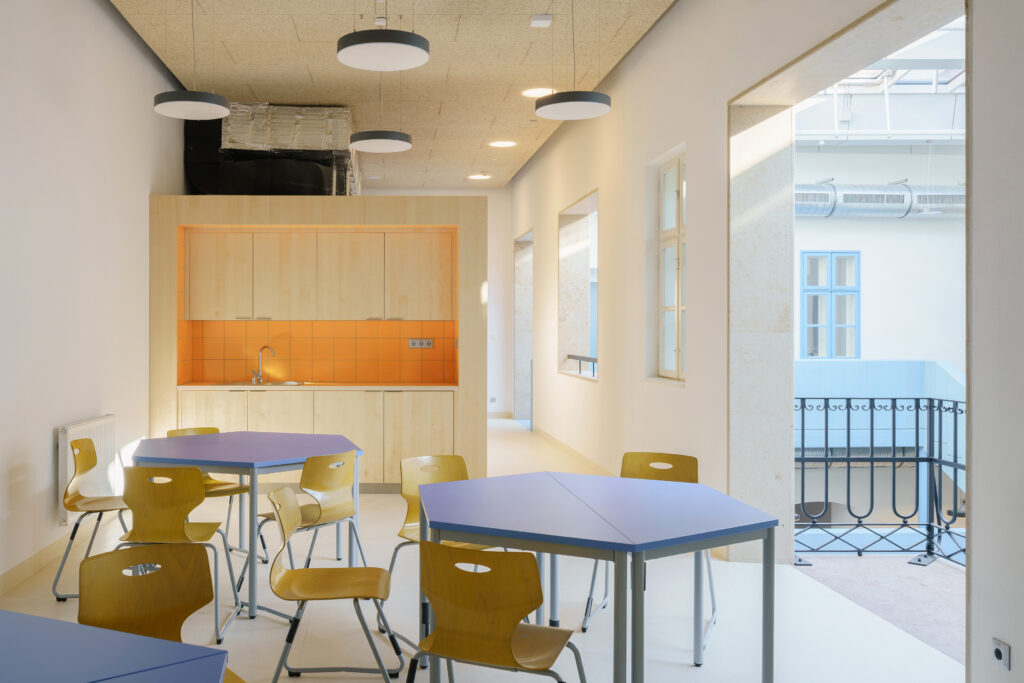
Terms like “corridor” or “classroom” were rethought. The result is a spatial language that provides new impetus to everyday pedagogical practice: the corridor becomes a learning landscape, the canteen a summer kitchen, the inner courtyard a piazza. Such reinterpretations create new meanings and also influence how these spaces are perceived and used.
A Building as an Adaptable System
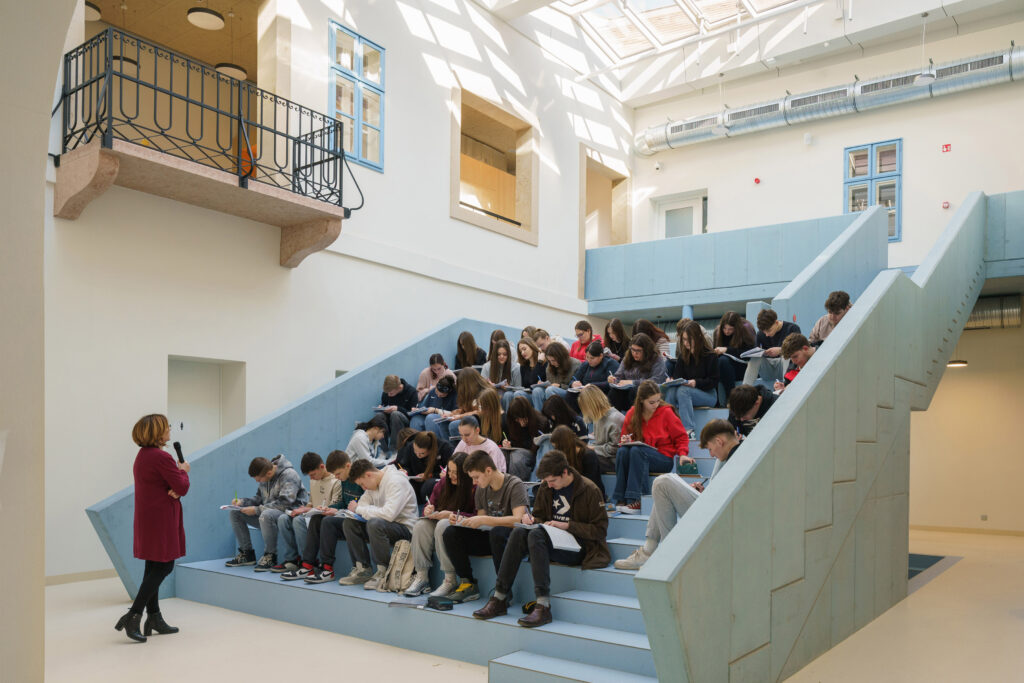
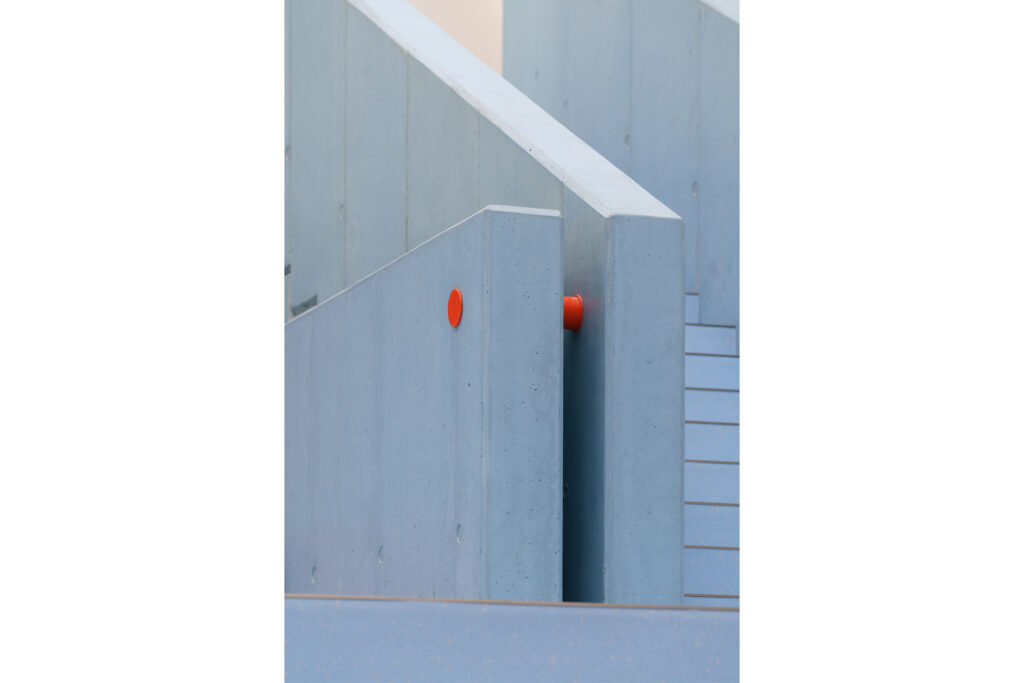
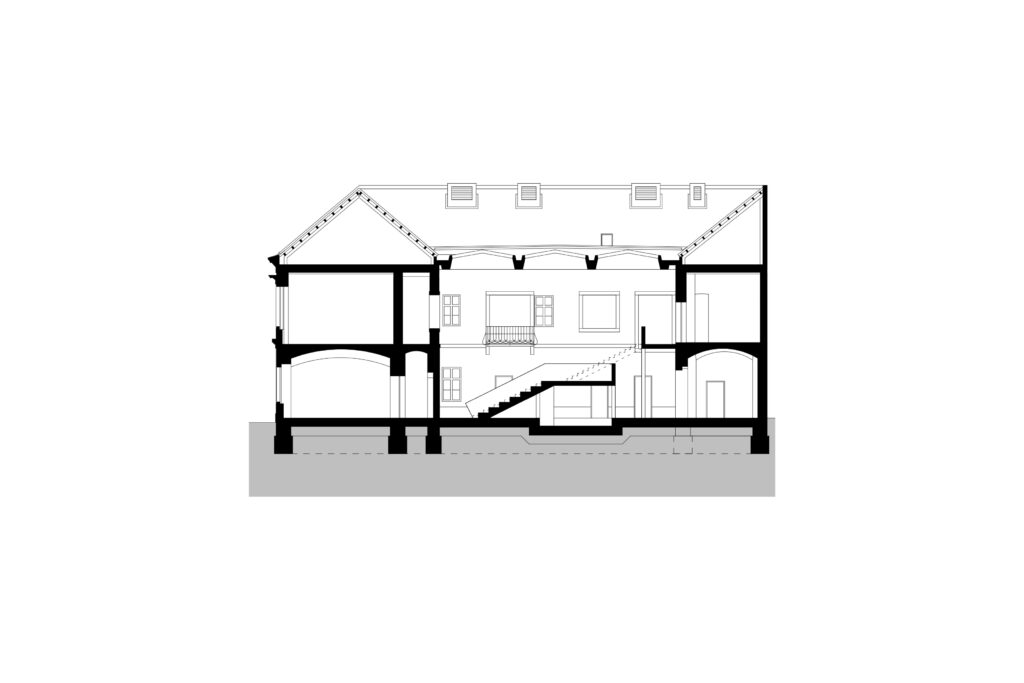
The structural transformation took place in stages – thoughtfully designed, functional, and adaptable. The southeastern wing of the building marked the beginning. A formerly unused inner courtyard was converted into a light-filled spatial structure, at the center of which is a sculptural, blue-framed staircase. It stands freely in the space, connects floors, and creates a new spatial hub.
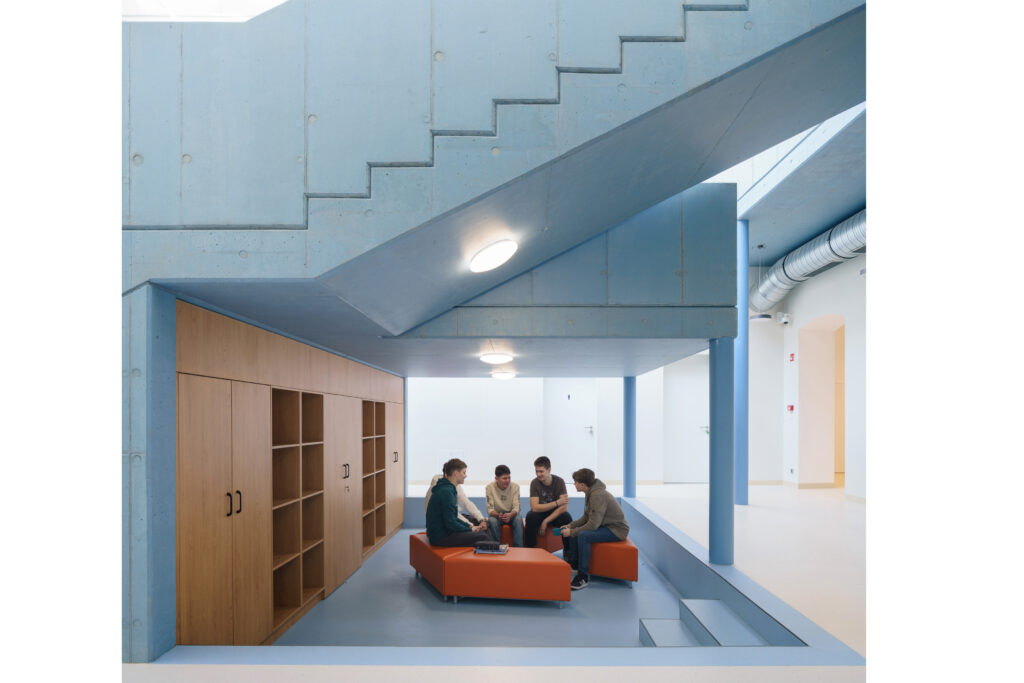
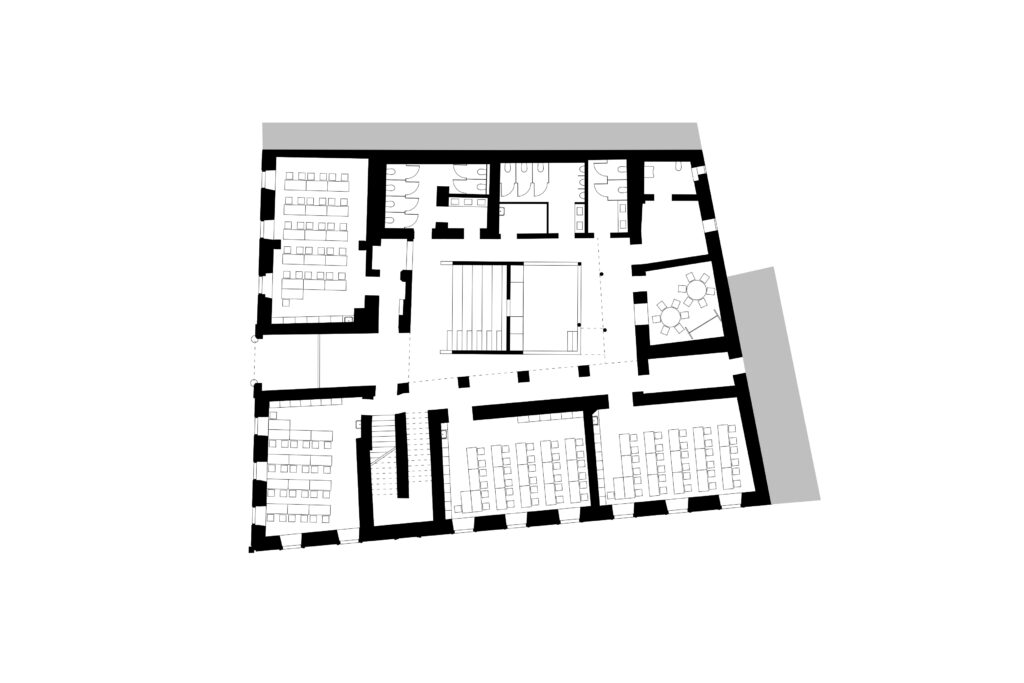
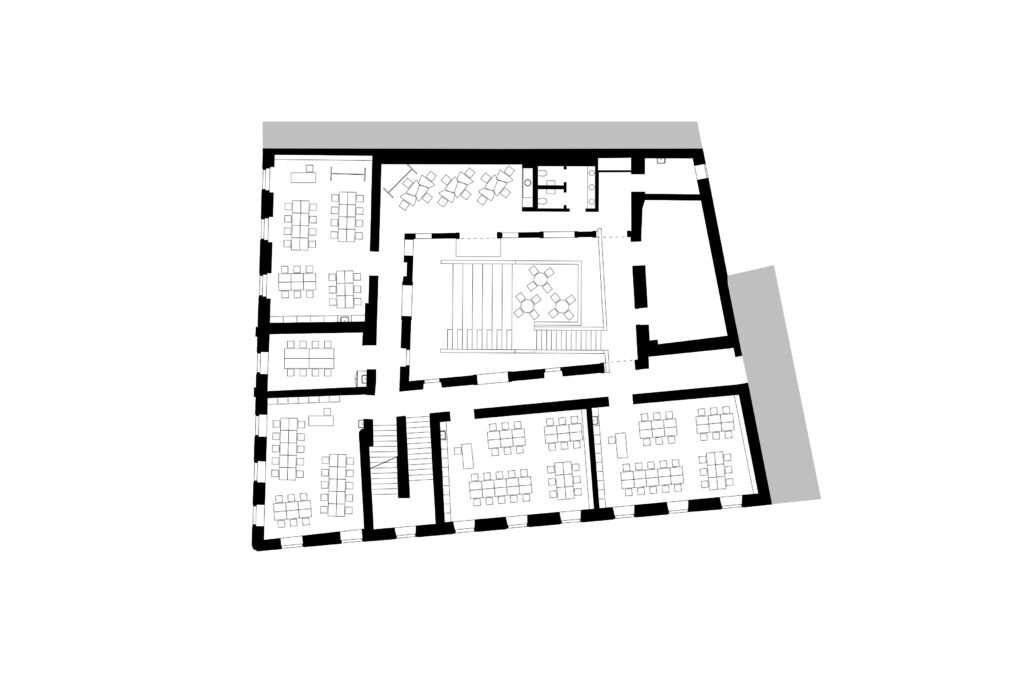
Different usable spatial zones are grouped around this new element. The design allows for project-oriented, cooperative work in addition to traditional teaching. Existing spatial structures were deliberately retained. Instead of abandoning them, they were functionally expanded – a respectful approach to the existing building that enables future viability.
The building also opens up new potential vertically: balconies, galleries, retreats, and sunken levels create spatial depth. This creates an environment that offers freedom of movement while simultaneously providing orientation. Architecture and pedagogy enter into a productive exchange.
Learning as a Spatial Experience
The planning is based on an anthropological model: different age groups are given spatial analogies – the protective “home,” the open “apartment building,” the vibrant “urban space.” This idea also shapes the now realized renovations. The spaces convey familiarity, promote individual development, and invite participation.
The grand staircase becomes a stage for togetherness – a place for conversations, impulses, and spontaneous encounters. The surrounding cloister connects floors, creates visual relationships, and makes orientation intuitively tangible. The adjacent rooms differentiate between quiet retreat, active collaboration, and concentrated learning.
Architecture as an Everyday Tool
The design relies on targeted means. Visual connections, lighting, materials, and acoustic qualities intertwine. The spaces are not overloaded but clearly structured. Environments are created that function in everyday life and prove their worth in the long term – not mere showrooms.
The summer kitchen also represents this attitude. It replaces the traditional cafeteria with a place that combines cooking, eating, learning, and exchange. The everyday becomes part of the educational space. The threshold between life and learning is deliberately kept low – an invitation to appropriation.
Existing Structures as a Resource for the Future
The project in Mosonmagyaróvár clearly demonstrates the potential of building upon existing structures. Historic buildings can meet current requirements and support future-proof education. The existing structure forms a reliable foundation upon which new spatial concepts emerge. Spaces are clearly defined yet versatile. No area remains unused, no construction seems superfluous. Well-conceived connections and functional openness create an environment that proves its worth in everyday school life – without grand gestures, but with a strong impact. Learning here is not conceived as a fixed format, but as a dynamic, open process.
The spatial transformation in Mosonmagyaróvár emerged from an intensive, collaboratively supported planning process. Already in the early conceptual phase, architects, interior designers, environmental psychologists, structural engineers, lighting designers, acousticians, and educators worked closely together. The teachers were also involved from the outset – their experiential knowledge significantly shaped the design decisions. This fostered a deep understanding of how spaces are not only designed but also experienced and brought to life.
Impulses from a design-artistic perspective came from textile artist and art educator Szilvia Vereczkey. Her view on material, placement, and atmosphere complemented the architectural approach with a sensory, experimental dimension. Discussions about order, change, habit, and diversity led to considerations that go beyond traditional spatial use. The focus on textiles, structures, and textile spatial boundaries sharpened awareness for spatial fine-tuning. Thus, design decisions became comprehensible both technically and atmospherically.
Project Details
- Project Title: Renovation of a listed building for the Piarist Grammar School, Primary School, and Kindergarten in Mosonmagyaróvár
- Architecture: CAN Architects
- Location: Mosonmagyaróvár, Hungary
- Planning Year / Completion: 2021 / 2025
- Project Management: Cseh András DLA, Élő József, Köninger Szilárd, Németh Dávid, Tátrai Ádám
- Architects in Project Team: Horváth Márton, Vadász Vanessza
- Photography: Alex Shoots Buildings

You might also be interested in
SCHULBAU Fair
SCHULBAU Essen 2025 – Successful industry meeting for educational construction
Architecture, SCHULBAU Fair
Gustav Heinemann Comprehensive School Essen: How architecture accompanies change in the neighbourhood