The backlog of renovations at TU Berlin leads to a university crisis
What began with a surprising building closure developed within a few weeks into one of the most severe infrastructure crises in the history of the Technical University of Berlin. At the beginning of May, the…
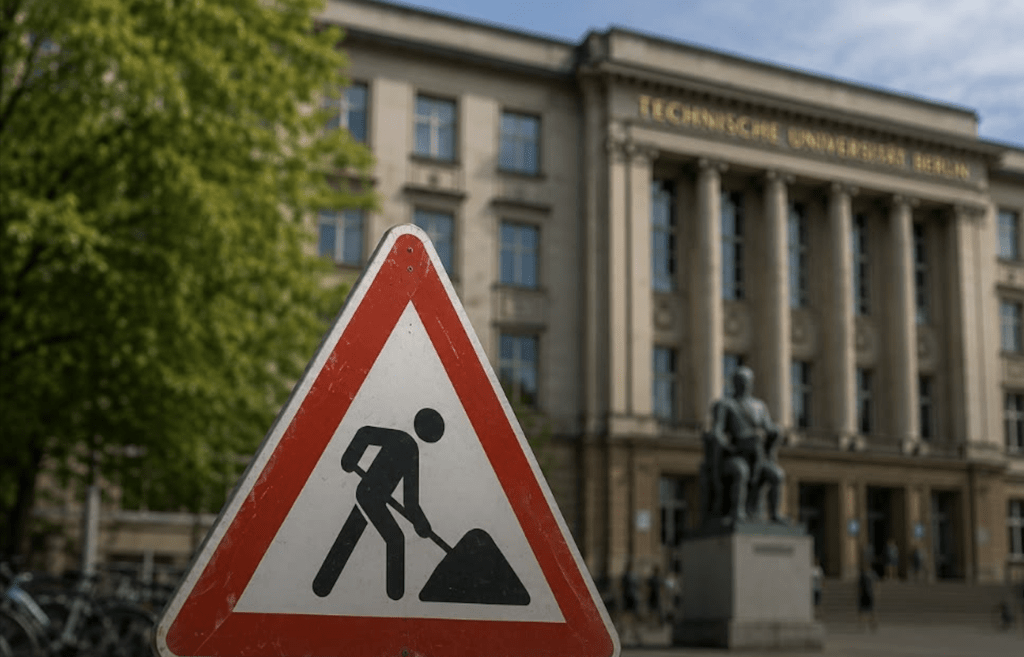
What began with a surprising building closure developed within a few weeks into one of the most severe infrastructure crises in the history of the Technical University of Berlin. At the beginning of May, the main building on Straße des 17. Juni had to be closed with immediate effect following an inspection by the building authority and fire department. The decisive factors were significant structural and fire safety deficiencies. Safe access to the building was therefore no longer possible.
The Berlin Senator for Science spoke of a “medium-scale catastrophe” and referred to the backlog of renovations that has grown over the years, which at TU Berlin alone is now said to amount to several billion euros.
Staff had only a few hours to clear their offices, courses were relocated at short notice or conducted digitally. For approximately 32,000 students and numerous employees, the closure meant massive restrictions in teaching, research, and administration.
Indications of structural deficiencies
In the weeks following the closure of the main building, additional buildings had to be temporarily taken out of operation due to technical and safety-related deficiencies. The sum of the closures makes it clear that this is not an isolated case, but rather structural deficits in the building stock.
Public focus on underfunding
The university’s crisis team is organizing replacement spaces and converting central administrative processes to provisional solutions. At the same time, the incident brings the decades-long underfunding of higher education infrastructure into the focus of public debate.
Personnel consequences
The ongoing crisis ultimately also leads to personnel consequences. The management of the construction department at TU Berlin was relieved of its duties and the department was temporarily reorganized. With this, the university is responding visibly for the first time to criticism of its handling of the structural condition of its buildings. However, personal responsibility was not publicly established. Rather, the development points to a complex interplay of years of investment backlog, organizational challenges, and inadequate maintenance measures.
Important questions remain open
The suspension therefore marks less the conclusion of the review than the beginning of a comprehensive analysis of responsibilities. While teaching operations are being gradually stabilized, the future of the main building remains as open as the question of how universities in Berlin can be protected in the future from a comparable backlog of renovations and safety issues.

You might also be interested in
SCHULBAU Fair
SCHULBAU Essen 2025 – Successful industry meeting for educational construction
Impulses, Lifestyle
WEtransFORM in Bonn: Exhibition outlines visions for sustainable construction