The Wilhelm-Hausenstein-Gymnasium as Educational Space and Urban Building Block
A Gymnasium as Urban Building Block: In Munich-Bogenhausen, the Wilhelm-Hausenstein-Gymnasium is emerging as an educational facility that consistently connects architecture, pedagogy, and urban development—open, sustainable, and future-oriented.
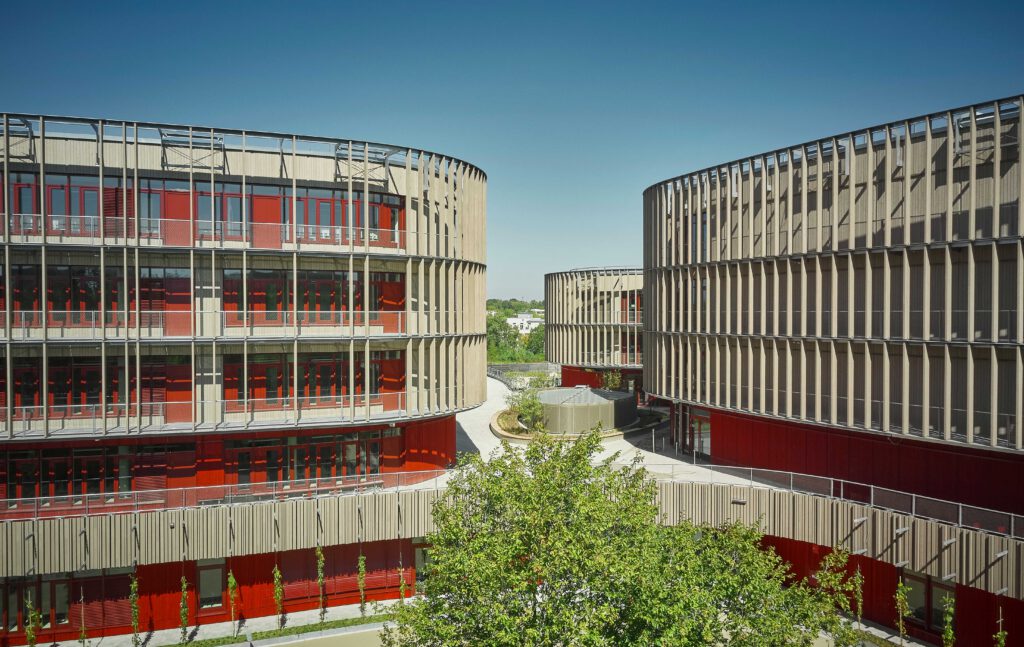
In the heart of Munich’s Climate Park in Bogenhausen, the Wilhelm-Hausenstein-Gymnasium integrates architecture, pedagogy, and urban development on a 20,000 m² site to create a spatially open learning environment. The building by Hascher Jehle Architektur emphasizes transparency, landscape integration, and a flexible spatial structure—responding to growing demands on educational architecture in the urban context.
Education and Urban Space on Equal Terms
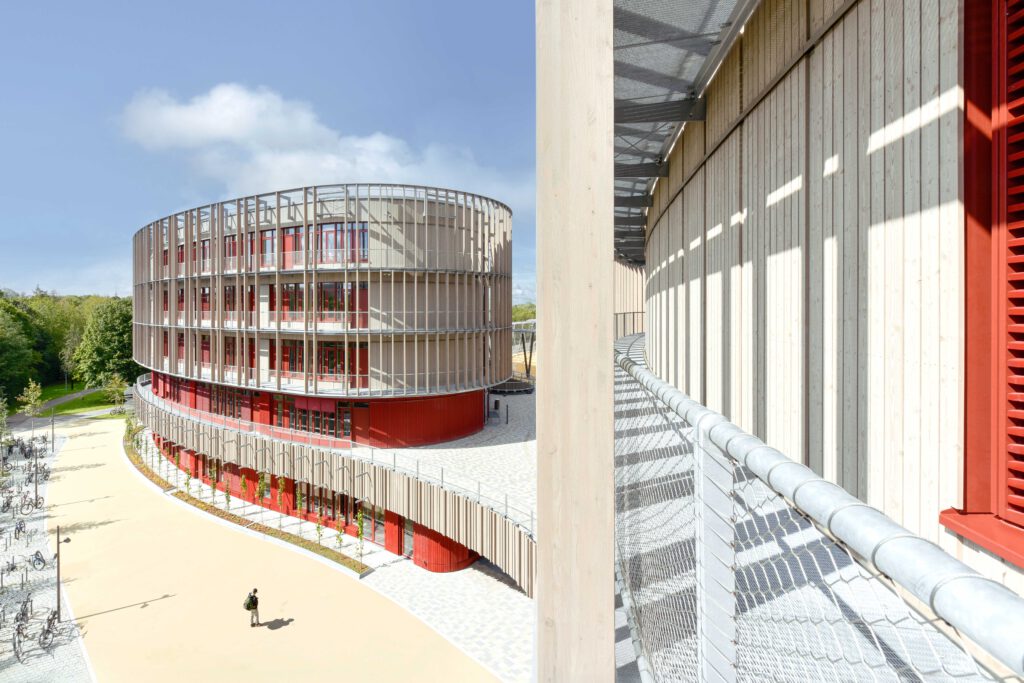
From the outside, the building ensemble stands out through its soft, organic lines. Four curved building volumes form a cloverleaf-like floor plan. The center of the new gymnasium features a generous foyer that functions as a connecting element between the learning houses and the three-part, sunken sports hall. The hall includes a grandstand and thus also meets requirements for club sports.
A distinctive feature is the complete opening of the site into the surrounding urban space. The school is not fenced in, but rather part of the neighborhood. The green outdoor staircase connects the various levels of the schoolyard with the adjacent climate park—a deliberately placed architectural signal for integration and openness.
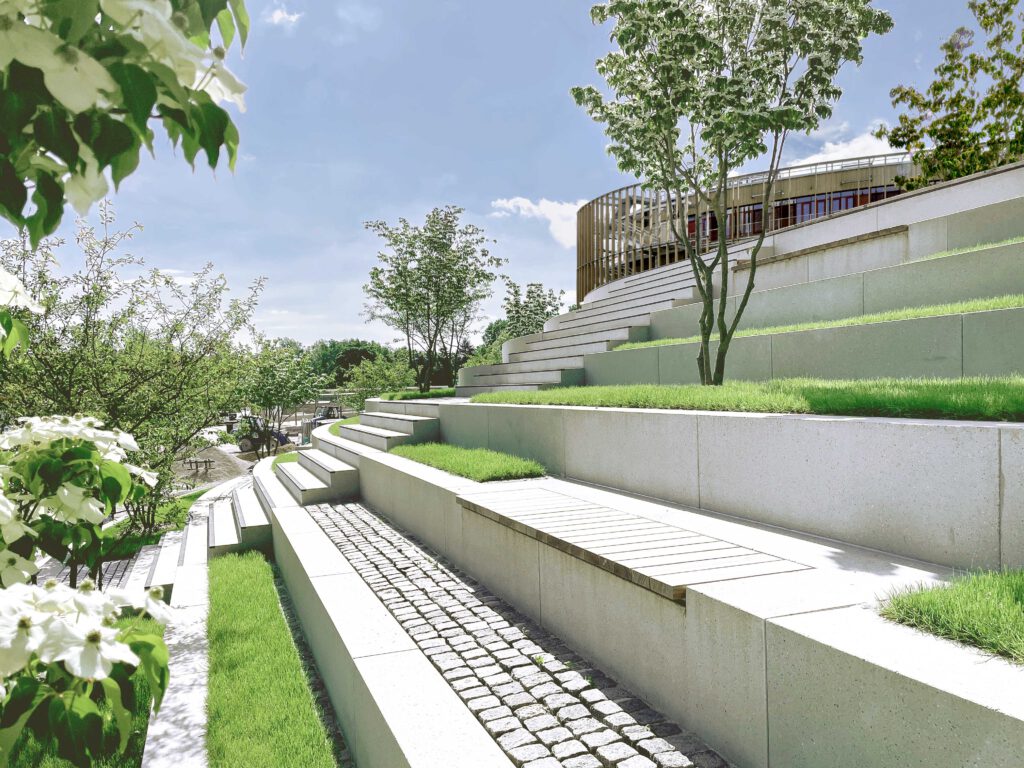
and becomes a vibrant meeting point for residents. | © Svenja Bockhop / Hascher Jehle Architektur
Learning Architecture in Light and Movement
Inside, the building follows the learning house principle with flexible room sizes, mobile partitions, and open visual connections. Floor-to-ceiling glazing creates sightlines between corridors and classrooms, while courtyards bring daylight deep into the building. This spatial transparency supports a pedagogy based on exchange, collaboration, and personal responsibility.
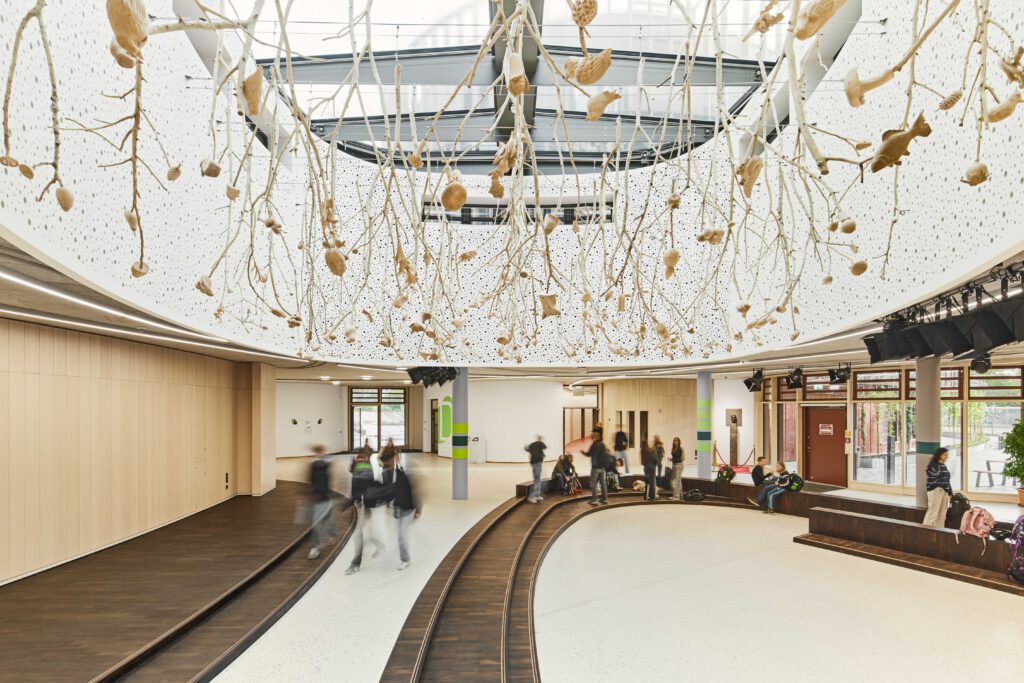
Particularly striking: In the entrance area, an installation by Gabriela Oberkofler hangs beneath a glass dome. Small wood carvings from the world of school knowledge—animals, plants, scientific motifs—come together to form an artistic tableau. Depending on the daylight, a constantly changing interplay of shadow and light emerges.
Materials with Impact
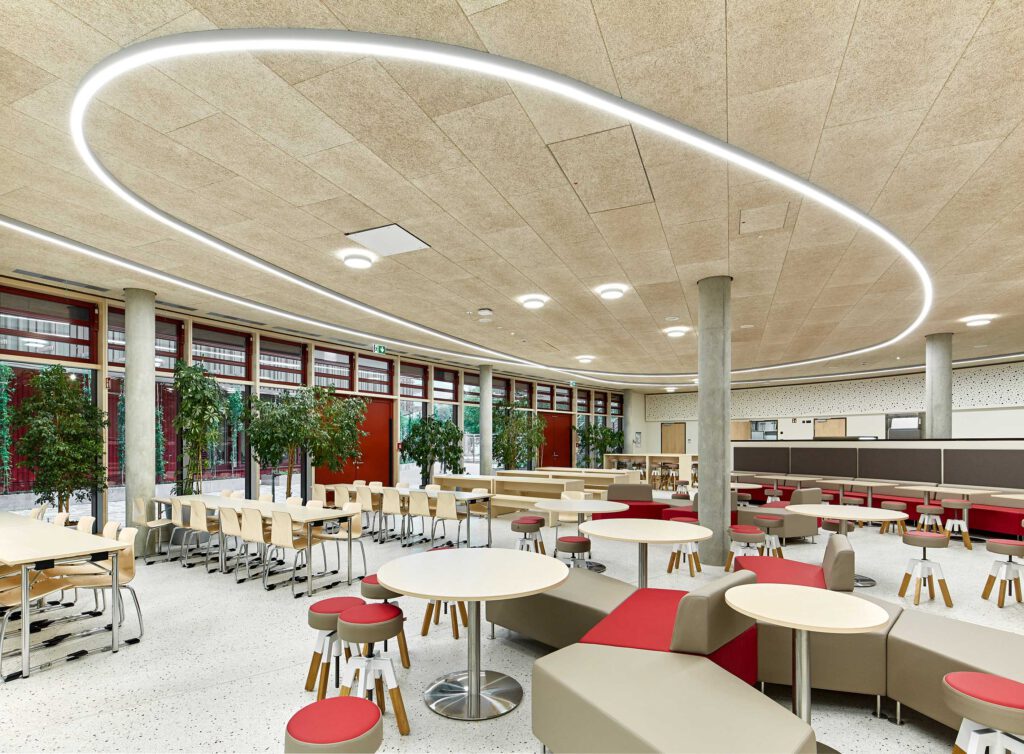
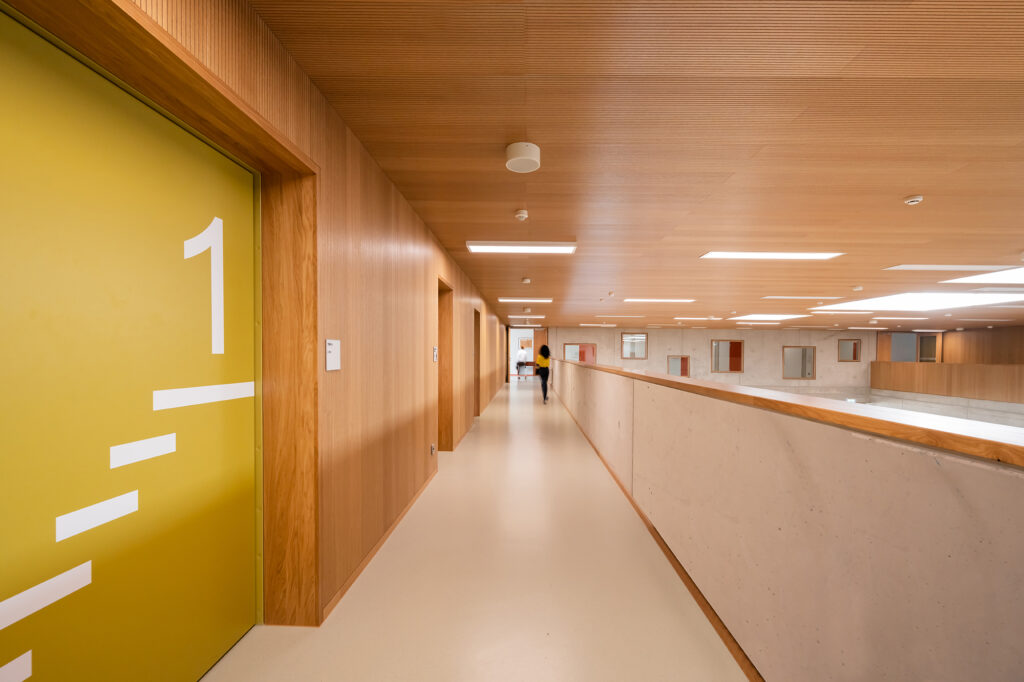
The selection of building materials follows a clear concept. On the exterior, vertical larch wood panels and greened facade elements define the appearance. The interior spaces are characterized by light spruce and maple wood, which reflects light and creates a warm atmosphere. A dark red linoleum floor provides deliberate accents. The spatial geometries feature rounded corners, asymmetrical layouts, and a dynamic formal language that follows the natural flow of movement of students and teachers.
Stacking with Function: Roofs as Sports Surfaces
In the interest of resource-efficient land use, roof surfaces are greened and actively integrated into the pedagogical concept. The roof of the sports hall serves as a sports field and is equipped with a ball catch net that simultaneously supports a photovoltaic system. Green roofs promote biodiversity and contribute to the microclimate in the neighborhood.
The extensively used roof areas additionally provide retreat spaces for plants and insects—while simultaneously offering enhanced quality of stay for students. The schoolyard becomes a terraced system with spatial gradation and clear zoning.
Participation and Planning Culture
The school project exemplifies a new approach to educational buildings in urban space. The City of Munich emphasized participation early on: In five dialogue rounds, citizens, neighborhood representatives, and administration were jointly involved in the planning process. Even the basic form of the school emerged through exchange with the public.
In addition to the architecture firm Hascher Jehle, ver.de Landschaftsarchitekten and the Baureferat München under the direction of Stefanie Fuchs von Bimbach, Pinar Bicer, Thomas von Greißing, and Stefan Ballmeier were involved. The outdoor facilities play a key role in the overall concept—both functionally and atmospherically.
Shaping the City with Educational Spaces
With the new construction of the Wilhelm-Hausenstein-Gymnasium, a learning environment has been created that thinks beyond the classroom. The school provides space for approximately 1,700 students—while simultaneously becoming an open, permeable urban building block. The integration of educational mission, sustainable architecture, and urban planning responsibility makes the project a model case for future school buildings.
The combination of light-flooded learning architecture, participatory spatial concept, and respectful use of resources sets new standards for education in public space. In Bogenhausen, school construction is not understood as an isolated measure, but as an impetus for a growing urban neighborhood.

You might also be interested in
SCHULBAU Fair
SCHULBAU Essen 2025 – Successful industry meeting for educational construction
Architecture, SCHULBAU Fair
Gustav Heinemann Comprehensive School Essen: How architecture accompanies change in the neighbourhood