Higher educational quality in daycare centres – thanks to well-designed acoustics
Noise is part of everyday life in daycare centres, but it is often underestimated. A consistently high noise level affects concentration, language development and the well-being of children and staff alike. Quiet rooms relieve children…
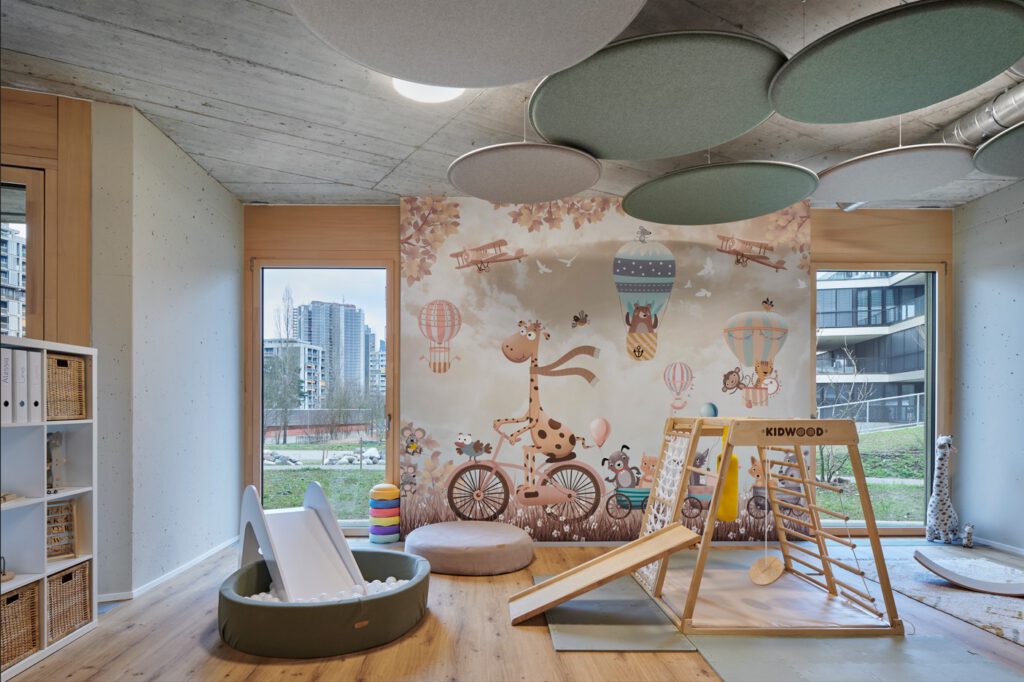
Noise is part of everyday life in daycare centres, but it is often underestimated. A consistently high noise level affects concentration, language development and the well-being of children and staff alike. Quiet rooms relieve children and staff, promote concentration and language, and create an atmosphere that enables development.
When everyday noise becomes a burden
In many facilities, noise levels regularly exceed recommended values. Studies show that even moderate noise exposure can impair language processing and attention. At the same time, stress levels among educational staff increase significantly. Nevertheless, room acoustics are often only considered late in the planning process. Yet they are a key factor in the quality of educational spaces. A well-considered design reduces reverberation, improves intelligibility and creates an atmosphere in which children can orient themselves and concentrate.
Spaces for development and calm
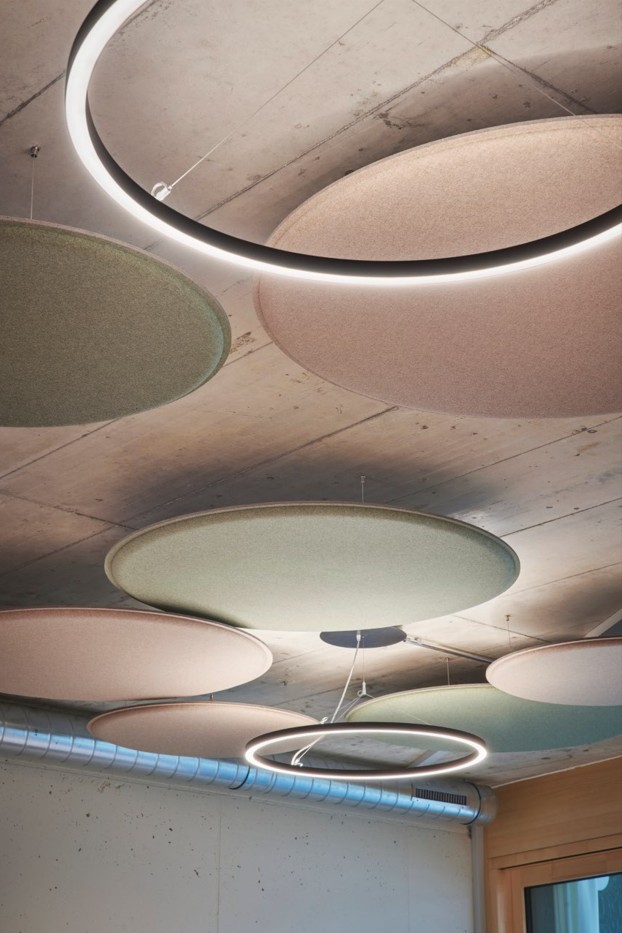
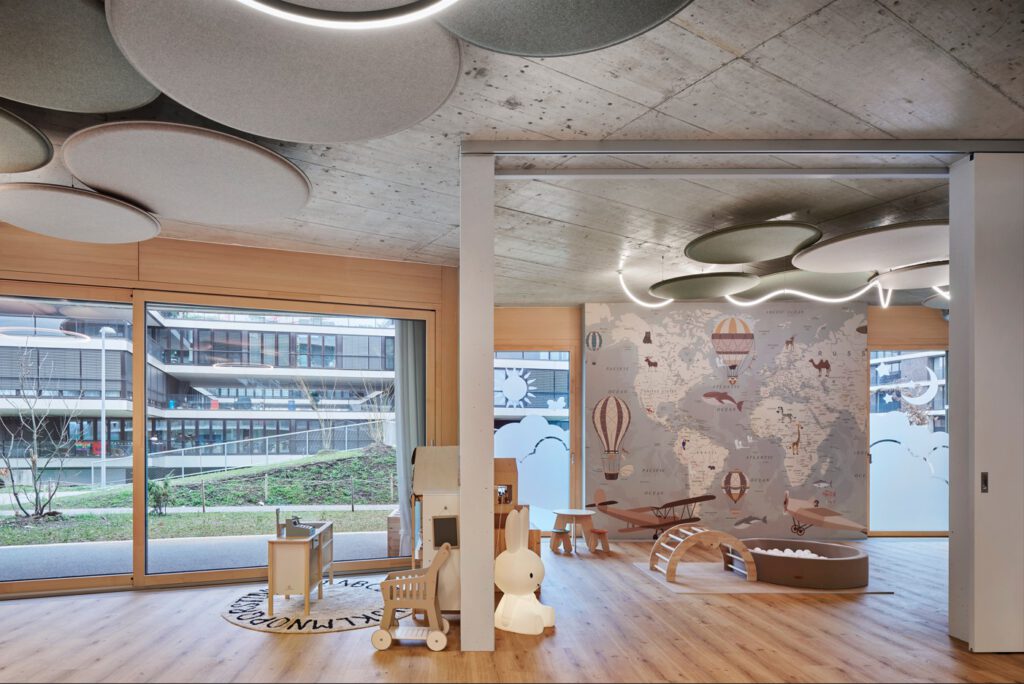
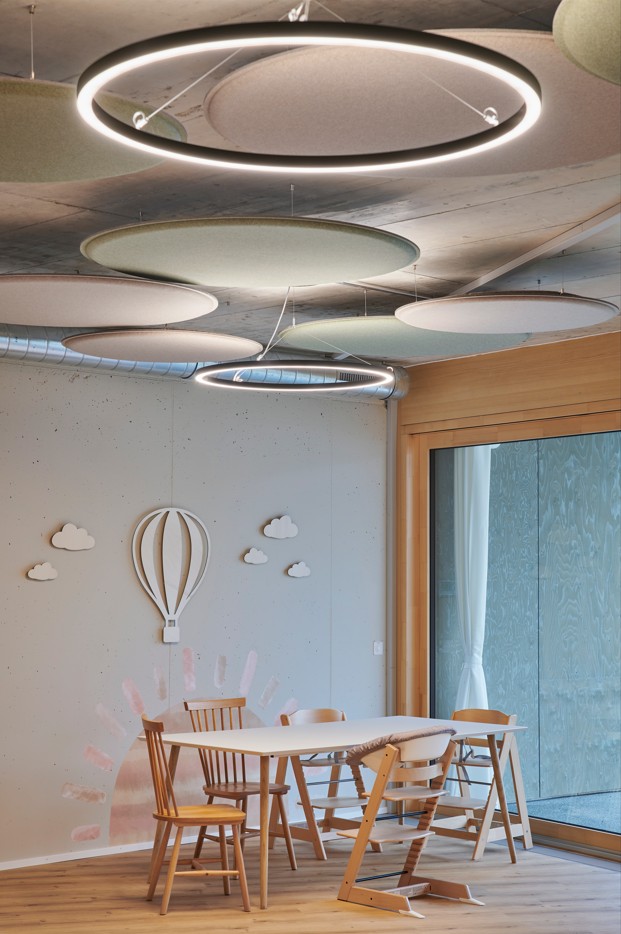
Especially in early childhood education, a balanced acoustic environment is crucial. Children are sensitive to stimuli, and their hearing is still developing. Persistent noise can not only delay language development but also influence social behaviour. Conflicts increase, periods of concentration become shorter, and retreat is made more difficult. At the same time, staff are also exposed to high levels of strain. Voice problems, exhaustion and increased sick leave are common consequences. Targeted acoustic planning therefore starts early. It takes into account room volume, surface materials and furnishings as well as how the spaces are used. Absorptive surfaces on ceilings and walls can significantly reduce reverberation and improve speech intelligibility. In addition, structured floor plans help to disperse noise sources and create quiet zones. Particularly in open-plan concepts, differentiated acoustic zoning is essential. This creates areas for movement, communication and retreat that do not disturb one another. A conscious choice of materials further supports this approach. Natural surfaces can be acoustically effective and also have a positive impact on the indoor climate. What matters is the interplay of all factors – from planning through to use.
Architecture as the foundation for healthy learning environments
The practical example shows how consistently conceived spatial design can transform the quality of educational settings. A calm, clearly structured environment helps children to orient themselves and act independently. At the same time, it creates working conditions that relieve staff and provide long-term stability. Room acoustics thus become an integral part of planning and operation – with a direct impact on learning, health and social interaction.

You might also be interested in

SCHULBAU Fair
SCHULBAU Essen 2025 – Successful industry meeting for educational construction