Showcasing museums in the right light
Two museums between past and present: here, light tells more about history. The atmospheric staging of the buildings combines architecture, exhibition, and perception into narrative spaces with a clear spatial dramaturgy. No longer boring Museums…
Two museums between past and present: here, light tells more about history. The atmospheric staging of the buildings combines architecture, exhibition, and perception into narrative spaces with a clear spatial dramaturgy.
No longer boring
Museums are evolving into spatial narratives in which architecture, exhibition, and staging interlock. Design becomes the mediating medium that provides orientation, shapes atmospheres, and makes content legible. At the Theaterfigurenmuseum Lübeck and the Staatliches Museum Schwerin, it becomes clear how historic fabric, curatorial dramaturgy, and contemporary perception come together to form a coherent overall picture. Two institutions, two contexts—connected by a precisely designed spatial impact. Both projects make it clear how strongly museum spaces are defined by their atmospheric quality. Design interprets history, supports architectural structures, and sharpens the perception of art—both structuring and storytelling at the same time.
Theaterfigurenmuseum Lübeck – a stage of space and movement
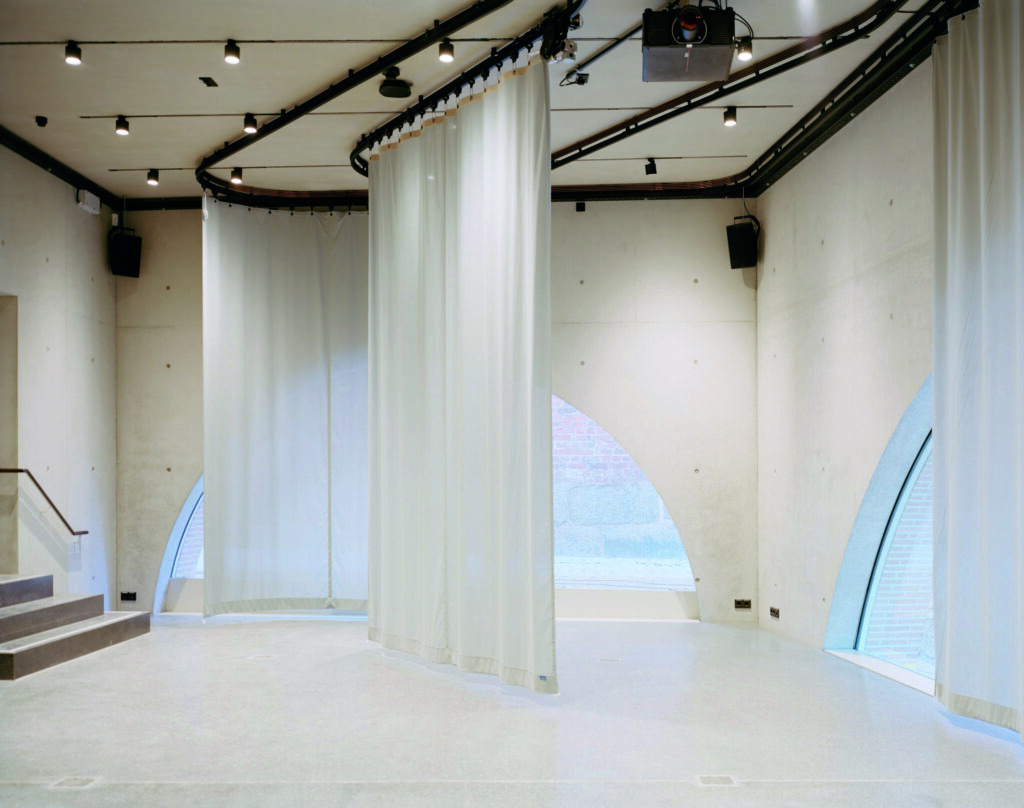
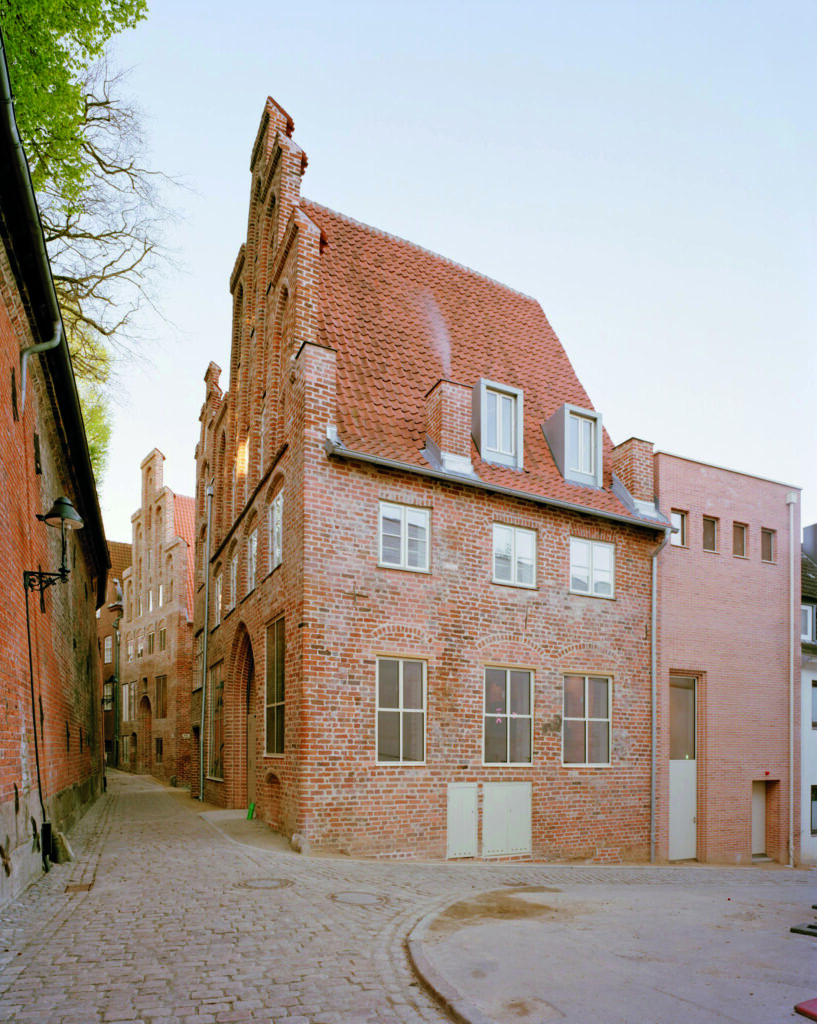
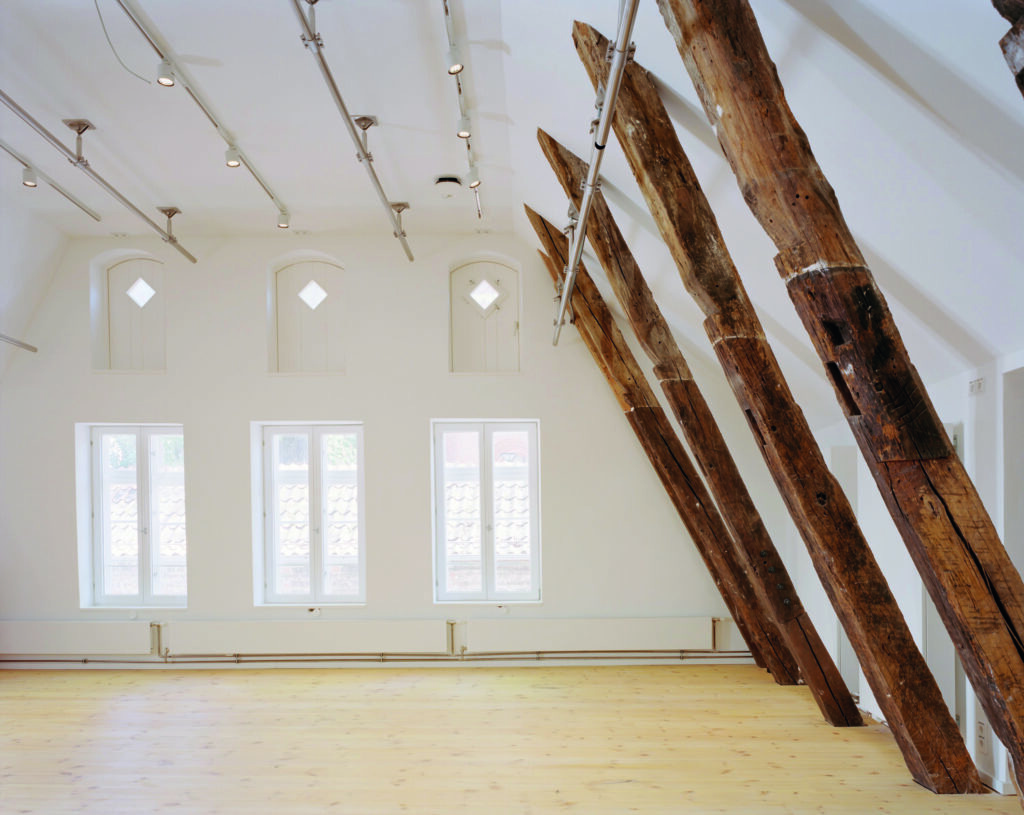
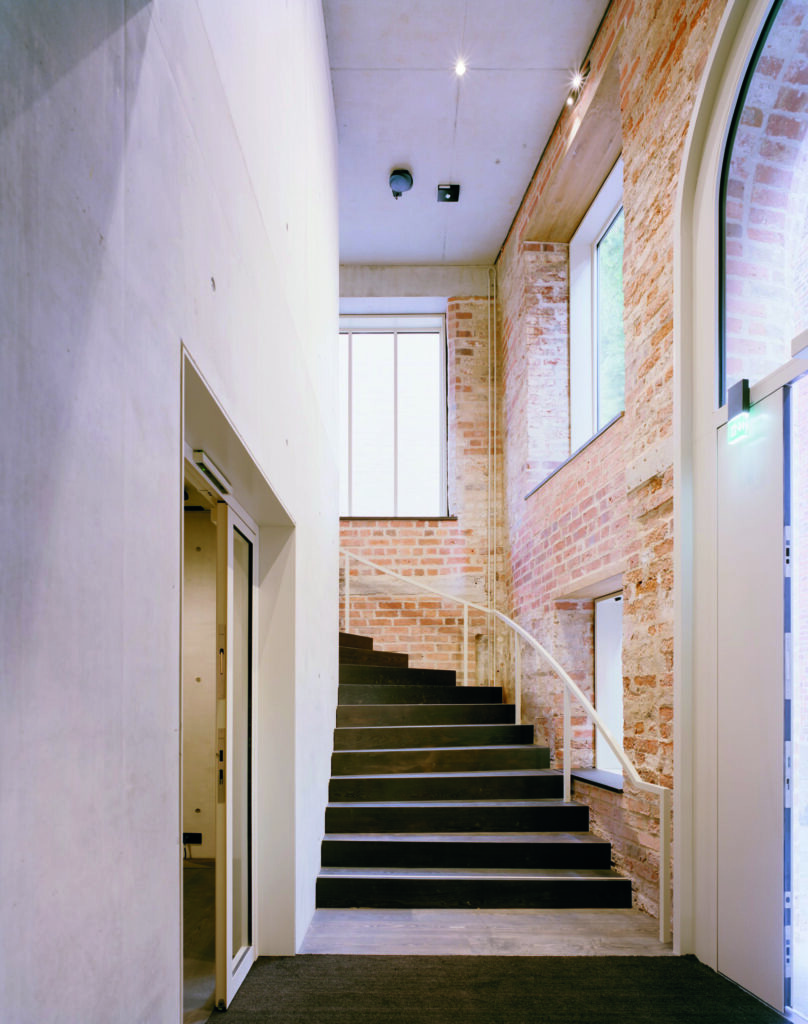
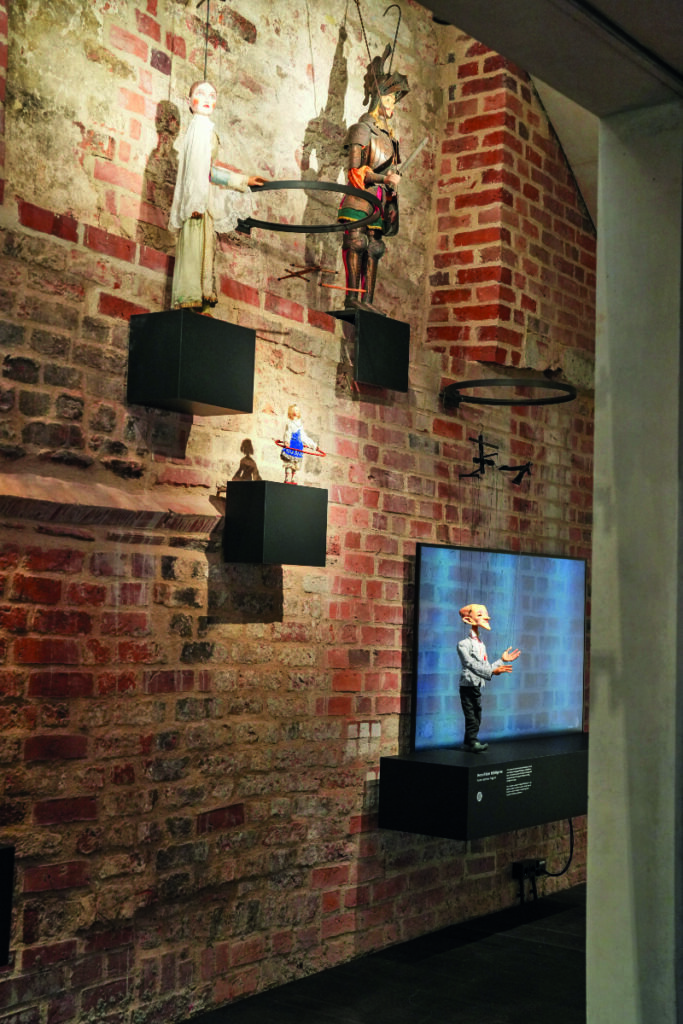
The Theaterfigurenmuseum Lübeck is one of the city’s oldest buildings. Behind the listed brick façade, a new exposed-concrete extension complements the existing structure. Floor by floor, a sequence of different puppet-theatre scenarios unfolds. A double helical staircase connects old and new and leads through the exhibition. Precisely positioned luminaires in the historic masonry model surfaces, emphasise textures, and structure transitions. A window to the street opens the building to the outside and makes the staging visible. The museum enters into a relationship with the urban space. In the forum and the temporary exhibition areas, a flexible stage is created for different formats. Variable systems enable both focused presentations and events in the interplay of space and audience. On the upper floor, restrained lighting creates a calm, even atmosphere. A custom-designed chandelier marks the transition to the theatre hall. Folded expanded-metal mesh forms light, dance-like figures that dissolve into the space while creating equally striking reflections. The design remains subtle, yet still shapes the perception of the place.
Staatliches Museum Schwerin – between heritage and the present
The Staatliches Museum Schwerin brings together works from the 17th century to the present day. Accordingly, the task of reconciling historic spatial structures with contemporary requirements for presentation and conservation was demanding. In the top-lit galleries, depth is created through directed daylight that reinforces the original spatial effect. In areas without natural light, a finely tuned system takes over. Proportions, materiality, and art stand out clearly without overlaying the historic fabric. A curved element in the foyer marks the transition between old and new and sets a calm accent. This approach is also evident in the newly designed entrance area: design provides orientation, opens up the space, and invites visitors in.
Light as a connecting spatial medium
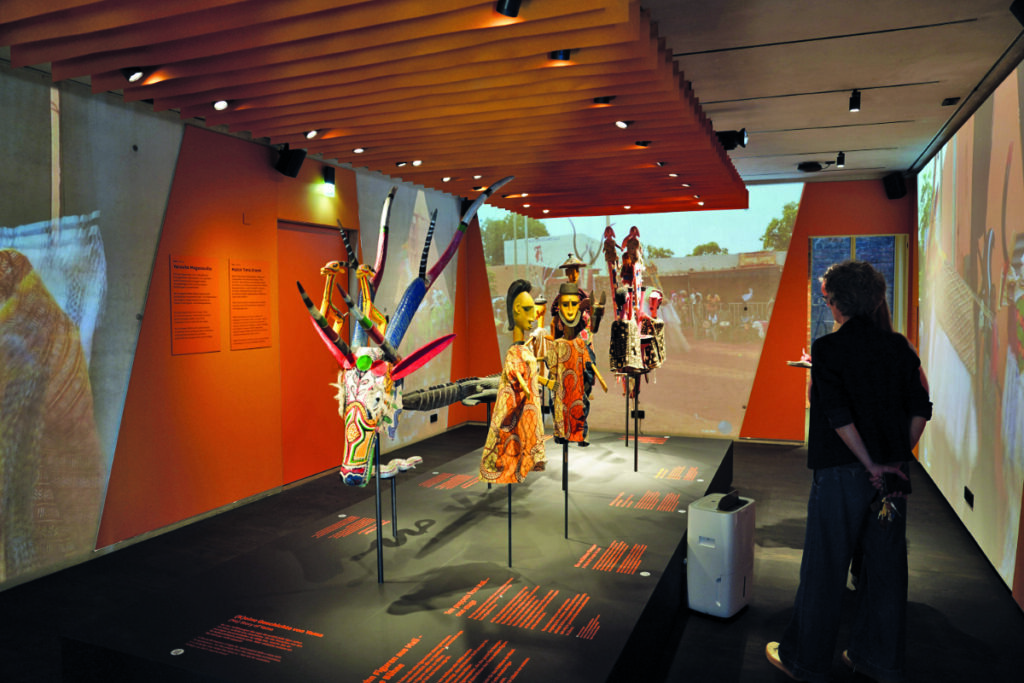
Both projects demonstrate that museum lighting design today goes far beyond technical precision. It becomes a narrative medium—a tool of interpretation that connects architecture, history, and art. At the Theaterfigurenmuseum Lübeck and the Staatliches Museum Schwerin, light creates atmosphere, guides the eye, and unites past, present, and art into a sensorial overall experience.

You might also be interested in
SCHULBAU Fair
SCHULBAU Essen 2025 – Successful industry meeting for educational construction