Trees, Time, Architecture: When Trees Become the Counterpart of Building
How can we build with trees—instead of against them? The exhibition Trees, Time, Architecture! opens up new perspectives on the interplay between architecture, time, and living nature. A plea for growing spaces and process-based design.
Pressure on urban spaces is increasing. Densification, heatwaves, and the loss of biodiversity all demand a rethink in architectural design. For a long time, trees were considered mere staffage—a decorative backdrop to the built environment. But what if they became an active part of architectural processes instead of being merely added or preserved? The exhibition “Trees, Time, Architecture!” at the TUM Architecture Museum focuses on exactly this question.
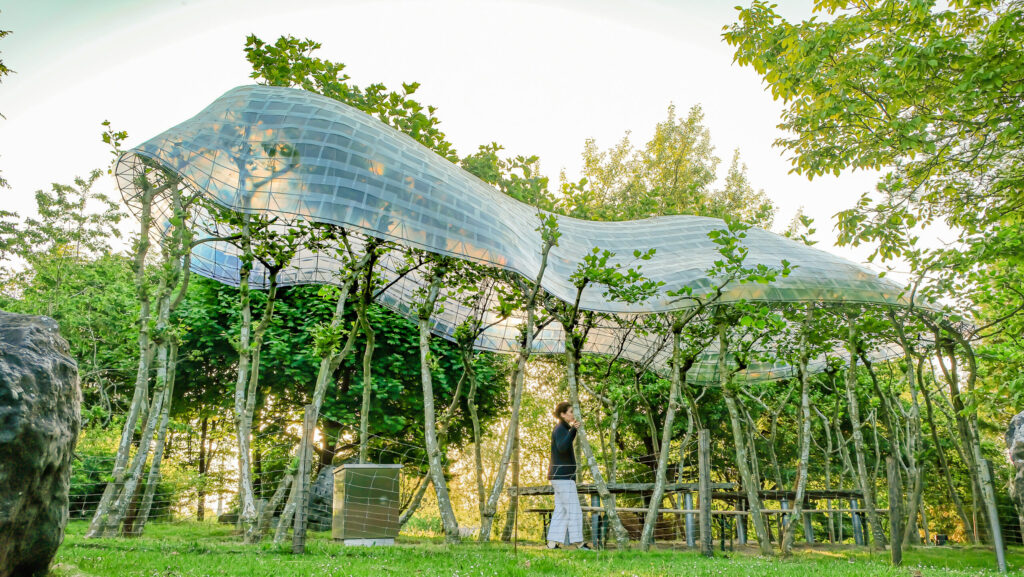
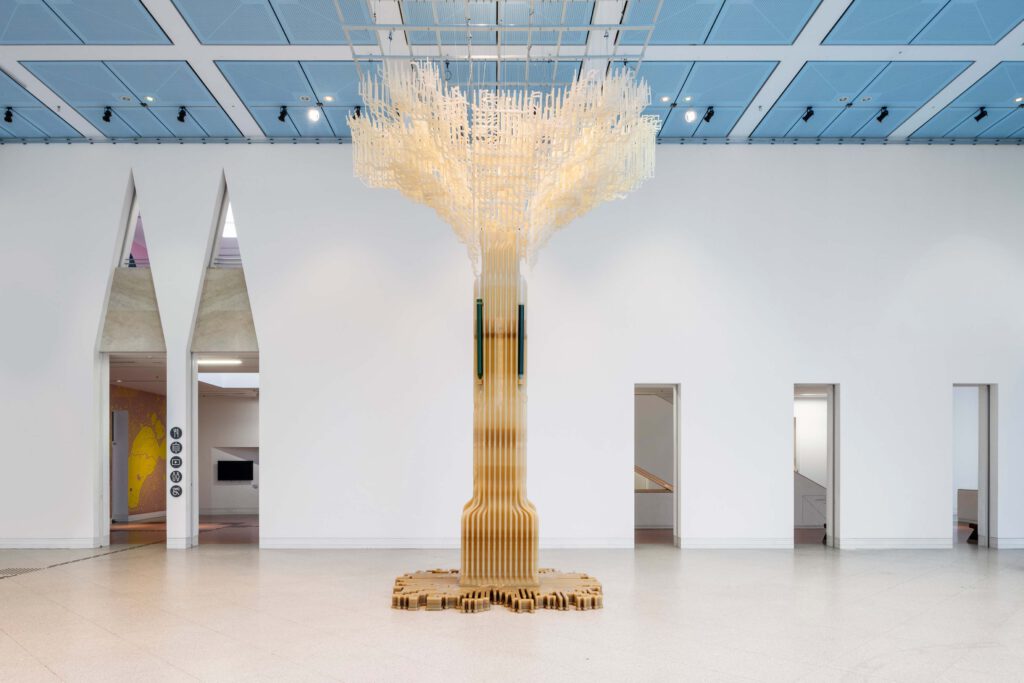
© TUM, Photo: Kristina Pujkilovic
Trees as architectural actors
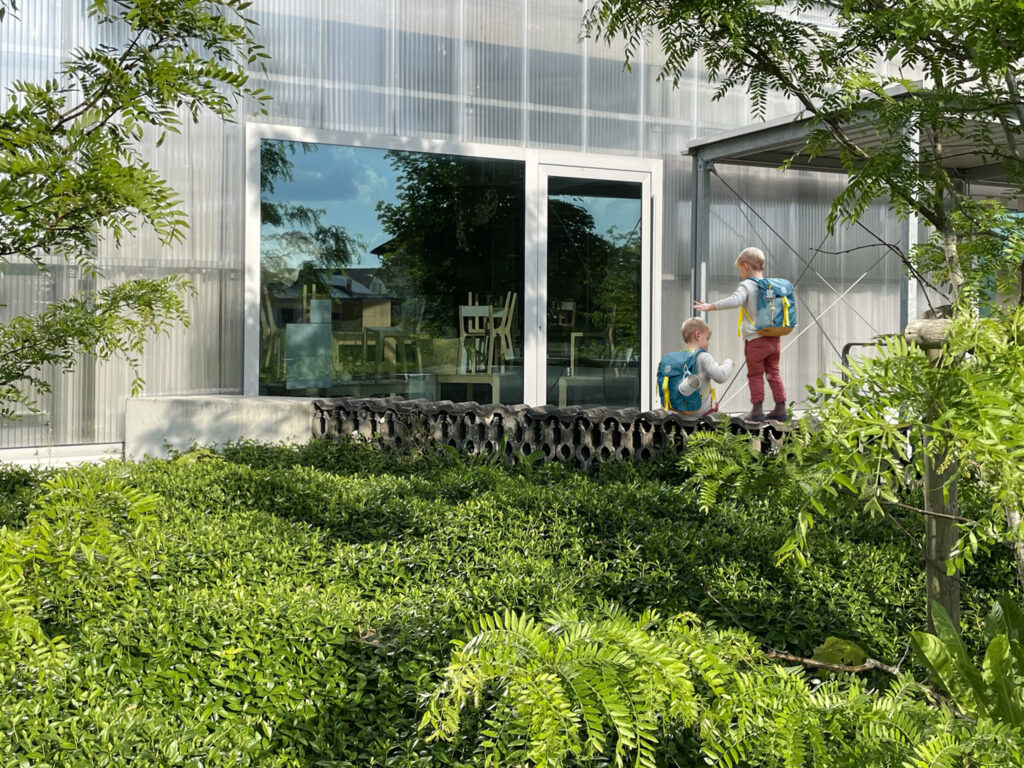
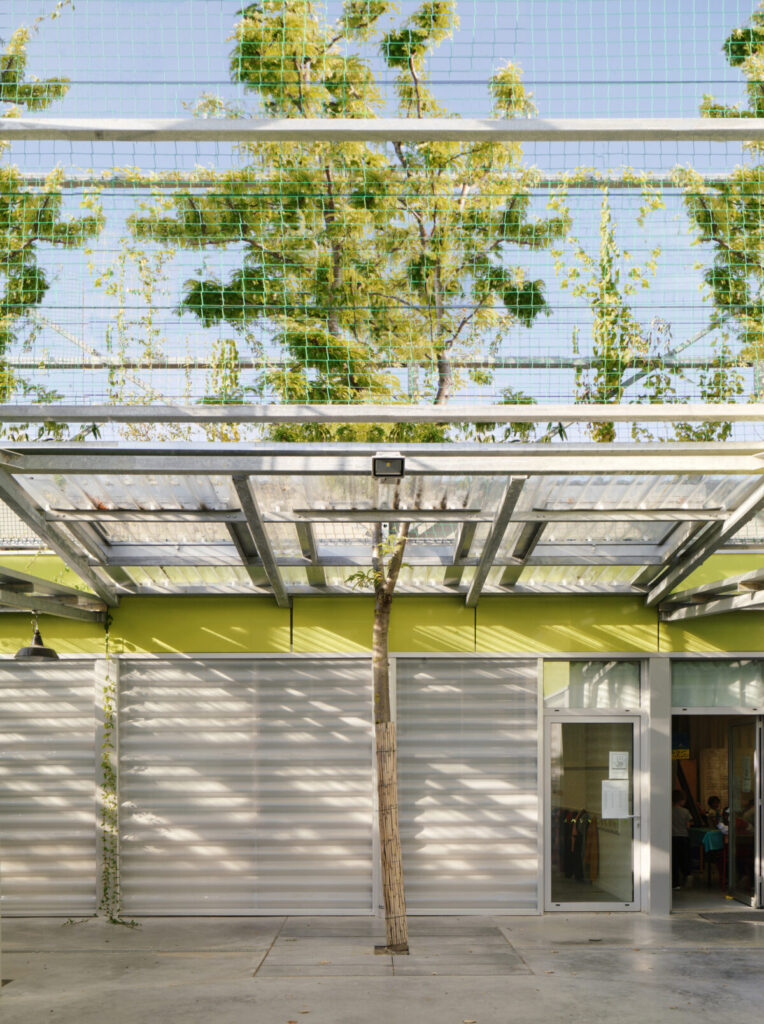
Instead of planning buildings around existing trees or integrating them into green concepts after the fact, the exhibition calls for a paradigm shift: architecture should integrate itself into living processes—and take trees seriously as active co-designers. This means no longer understanding design as the creation of finished objects, but as a process-oriented engagement with time, growth, and transformation.
Divided into three thematic chapters—”Tree, Time, and Human,” “Tree and Architecture,” and “Tree as Architecture”—the exhibition unfolds a discursive space that makes the tree understandable in all its complexity. Historical dimensions become just as visible as aesthetic, political, and ecological ones. The starting point is often the contradictory nature of the subject: the tree’s function as a CO₂ sink stands in contrast to the increasing consumption of wood as a building material. Its regenerative power meets climate-related fragility. Architecture encounters an organism that eludes complete control.
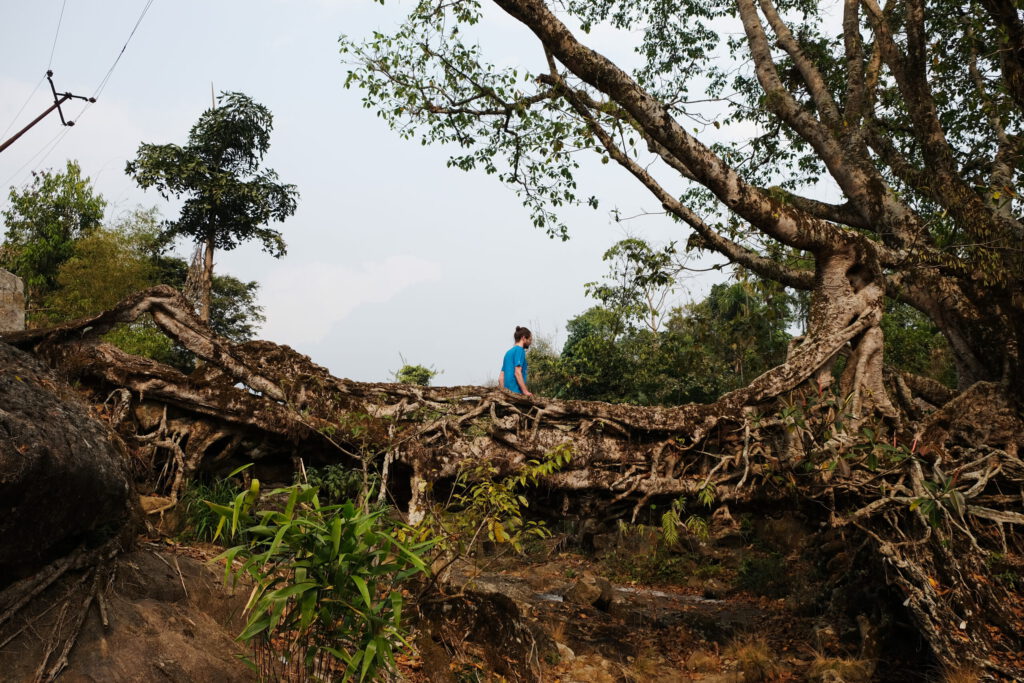
© TUM, Photo: Ferdinand Ludwig, 2019
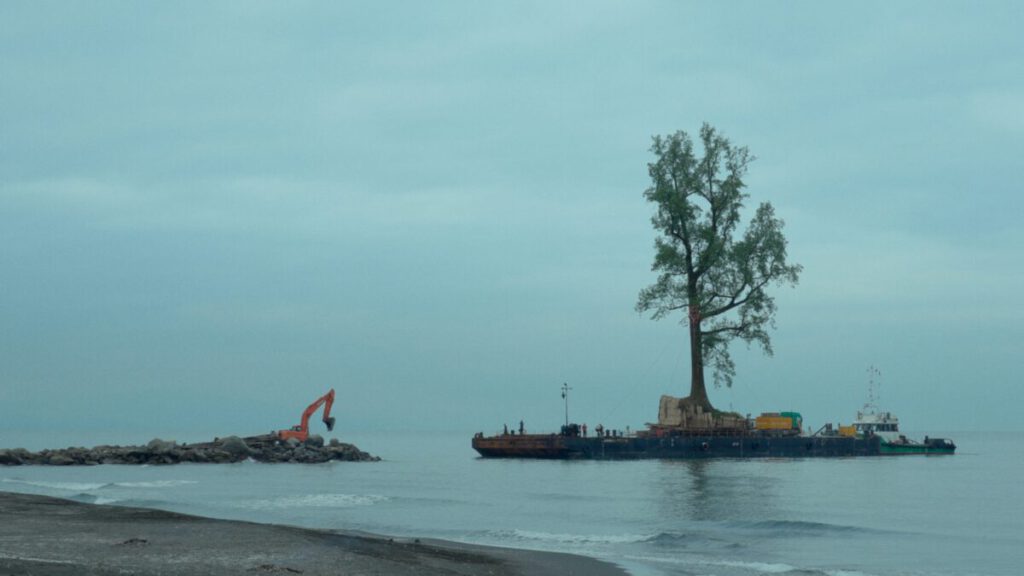
Video still from the film “Taming the Garden,” Salomé Jashi.
© Mira Film / Corso Film / Sakdoc Film, 2021
From Object to Process: New Design Perspectives
How far can architecture go if it aligns itself with the life cycles of living systems? International positions provide answers—among them Carlo Ratti, Francis Hallé, White Arkitekter, and Frei Otto. Their projects move between experimental urban planning, biological-technical hybridization, and poetic reflection.
Special attention is given to the research field of Baubotanik (Living Plant Construction). Since 2017, the Technical University of Munich has been researching how plant growth can be specifically guided and combined with non-living structural elements. The result is structures that can maintain, transform, and, in the ideal case, repair themselves. A Baubotanik sculpture made of 22 living hornbeams in front of the Pinakothek der Moderne makes this principle visually tangible—a growing counter-image to rigid architectural production.
Architecture in Motion: Rethinking Educational Spaces
Educational spaces can also benefit from this way of thinking. Designing schools as living systems means engaging with the interplay of built space, temporal development, and social processes. The exhibition makes it clear: architecture must be conceived in motion, not as a static object, but as an open framework that grows, changes, and creates space for participation—both spatially and symbolically.
The topic will be explored in depth through excursions, panel discussions, workshops, and a summer school. Visitors should not expect a finished answer, but rather a space of possibilities. Because the era of building at the expense of nature is over. Now, it is about building with it.
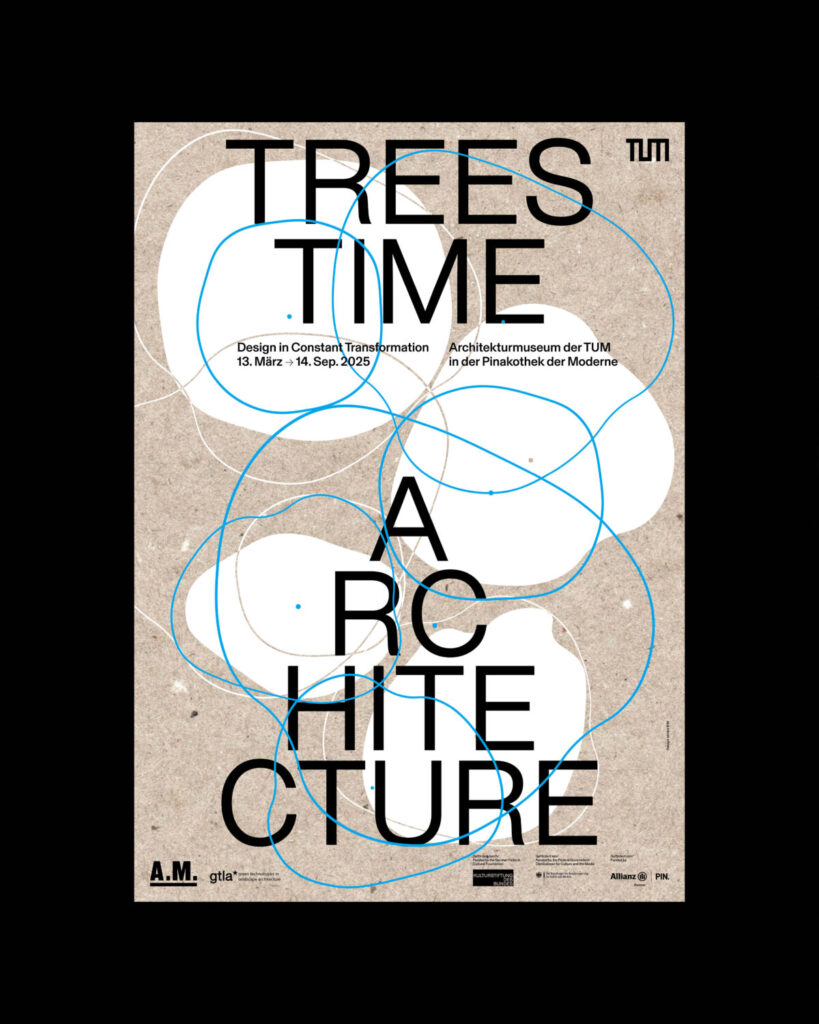
Exhibition title: Trees, Time, Architecture!
Dates: March 13 to September 14, 2025
Location: Architecture Museum of the Technical University of Munich
Address: Pinakothek der Moderne, Barer Str. 40, 80333 Munich
Further info: www.architekturmuseum.de

You might also be interested in
SCHULBAU Fair
SCHULBAU Essen 2025 – Successful industry meeting for educational construction
Impulses, Lifestyle
WEtransFORM in Bonn: Exhibition outlines visions for sustainable construction