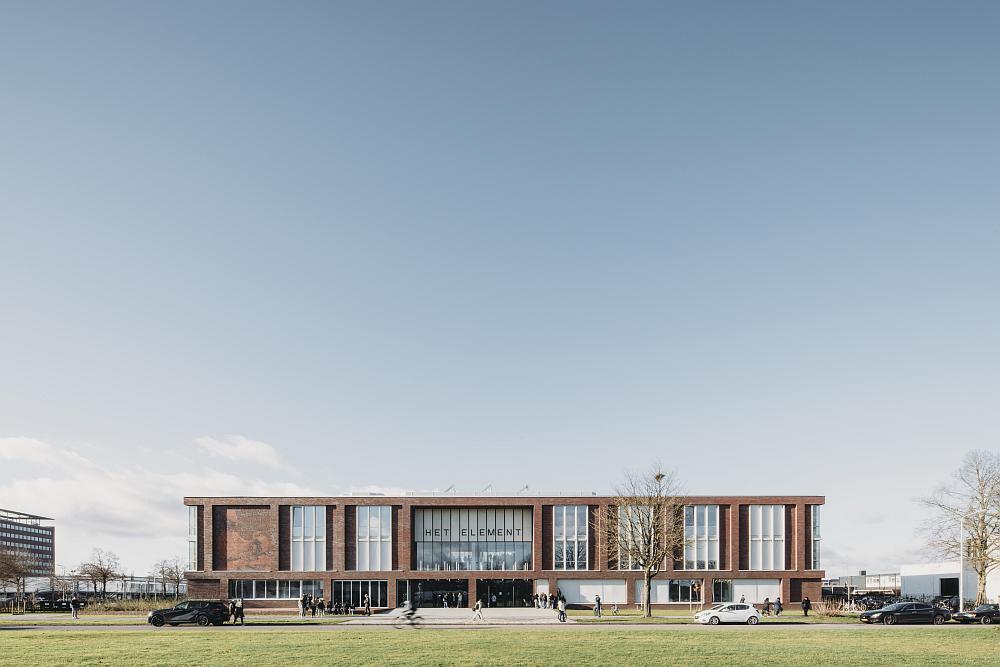
Cologne Demonstrates How Future Educational Infrastructure is Created
Educational construction is evolving into one of the most dynamic segments of public building construction in Germany. This is particularly evident in Cologne, where the city is currently pursuing 212 school construction projects, 95 of…

Educational construction is evolving into one of the most dynamic segments of public building construction in Germany. This is particularly evident in Cologne, where the city is currently pursuing 212 school construction projects, 95 of which are already in planning or execution. Simultaneously, extensive investments are underway in the expansion of daycare centers and several major higher education construction projects.
This development is far more than a municipal infrastructure program. It signals to the entire construction and education landscape, offering valuable insights for construction companies, architectural firms, school administrations, project developers, and municipal decision-makers.
New Opportunities for the Construction Industry
For the construction industry, educational building provides long-term planning security. While other market segments are sometimes affected by economic fluctuations, public investments in schools, daycare centers, and universities ensure high demand for many years. New constructions, extensions, renovations, and energy modernizations create continuous order volumes for general contractors, specialist planners, MEP companies, and craft businesses.
At the same time, demands for sustainability, digitalization, and energy efficiency are increasing. Educational buildings are increasingly being used as showcase projects for climate-friendly construction, serial construction methods, and intelligent building technology. Companies that build corresponding competencies can secure long-term competitive advantages.
An Innovation Lab for Architects and Planners
For architects, educational construction offers the opportunity to actively shape the learning environments of the future. Modern schools are long since more than traditional teaching buildings. Flexible room concepts, open learning landscapes, hybrid learning environments, inclusive design, and sustainable construction methods are in demand.
The construction of new schools and universities offers planning offices the chance to develop innovative concepts that combine pedagogical requirements with architectural quality. The large projects in Cologne, in particular, demonstrate how closely education, urban development, and architecture are now intertwined.
More Than Buildings: New Perspectives for School Administrations
For school administrations, the focus is on pedagogical opportunities. Modern school buildings create the conditions for contemporary teaching, all-day programs, digital learning formats, and stronger collaboration between teachers, students, and external partners.
Investments in educational infrastructure thus directly impact the quality of learning. New spatial concepts enable more flexible teaching methods and promote the individual development of students. At the same time, modern buildings improve the quality of stay and the attractiveness of the school location.
A Model for Other Municipalities
Other cities and municipalities throughout Germany also benefit from looking to Cologne. The city faces the same challenges as many other growing municipalities: increasing student numbers, additional childcare needs, renovation backlogs, and high demands for climate protection and digitalization.
The implementation of 212 school construction projects demonstrates the organizational, financial, and strategic approaches required to successfully manage large educational construction programs. Experiences from Cologne can therefore serve as guidance for other municipalities facing similar investment decisions.
Higher Education Construction as a Location Factor
Additional impetus comes from the higher education sector. With the new construction of the Chemical Institutes of the University of Cologne and the further development of the TH Köln Deutz Campus, two of North Rhine-Westphalia’s most significant higher education construction projects are emerging. Such investments not only strengthen research and teaching but also the regional economy, knowledge transfer, and the innovative capacity of a location.
Educational Construction Remains a Growth Driver
The investment dynamics in educational construction are expected to continue to increase in the coming years. Growing student numbers, the expansion of all-day programs, additional daycare places, increasing demands for digitalization and climate protection, and the need for modernization of many existing buildings ensure persistently high investment pressure nationwide.
Cologne as a Blueprint for Other Municipalities
Cologne already demonstrates today how comprehensively and strategically municipalities can respond to these challenges. The multitude of ongoing school, daycare, and higher education construction projects makes the city an important benchmark for the development of educational construction in Germany. At the same time, new standards for sustainable construction, modern learning environments, and efficient project management are emerging here.
Opportunities for the Construction and Planning Industry
This opens up a long-term attractive market for construction companies, architects, specialist planners, and technology providers. Competencies in sustainable building materials, serial and modular construction, digital planning, and energy-efficient building concepts are increasingly in demand. Those who position themselves early can benefit from stable demand for years.
New Perspectives for Educational Institutions
School administrations, universities, and educational providers also face an exciting development. Modern educational buildings create the conditions for innovative pedagogical concepts, flexible learning forms, and stronger networking of education, research, and society. The building infrastructure is thus increasingly becoming a strategic success factor.
The Future is Being Built Now
The coming years will show which innovative solutions will prevail and how cities will utilize educational institutions as central building blocks for sustainable, livable, and competitive urban development. It is already certain today: educational construction will be among the defining infrastructure tasks of the next decade – and thus one of the most important future markets for municipalities, educational institutions, and the entire construction industry.

You might also be interested in
SCHULBAU Fair
SCHULBAU Essen 2025 – Successful industry meeting for educational construction
Architecture, SCHULBAU
Friedrich-von-Keller-Schule in Ludwigsburg: Renovation as an Opportunity for Educational Architecture