From Airport to Future Lab: Tegel’s Terminal A Becomes University Campus
Where millions of passengers once began their journeys, a modern university campus for research, teaching, and innovation will emerge in the coming years. With the official groundbreaking ceremony, the conversion of the listed Terminal A…
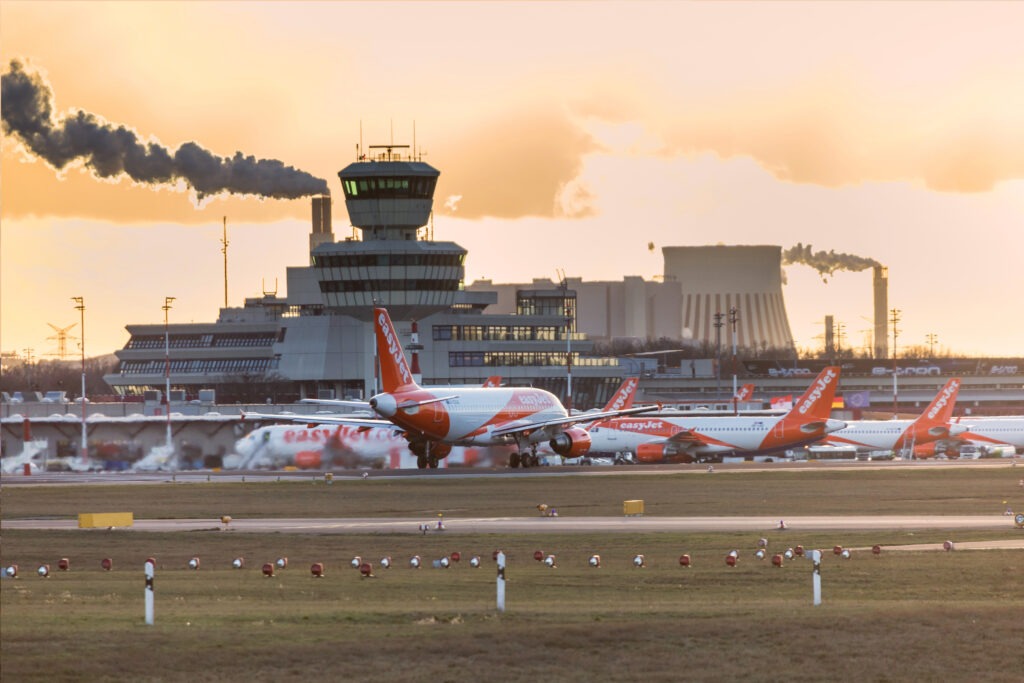
Where millions of passengers once began their journeys, a modern university campus for research, teaching, and innovation will emerge in the coming years. With the official groundbreaking ceremony, the conversion of the listed Terminal A of the former Berlin-Tegel Airport into the new campus of the Berlin University of Applied Sciences (BHT) begins. The project forms a central component of the “Urban Tech Republic” and exemplifies the sustainable repurposing of existing large buildings.
An Airport Gets a New Purpose
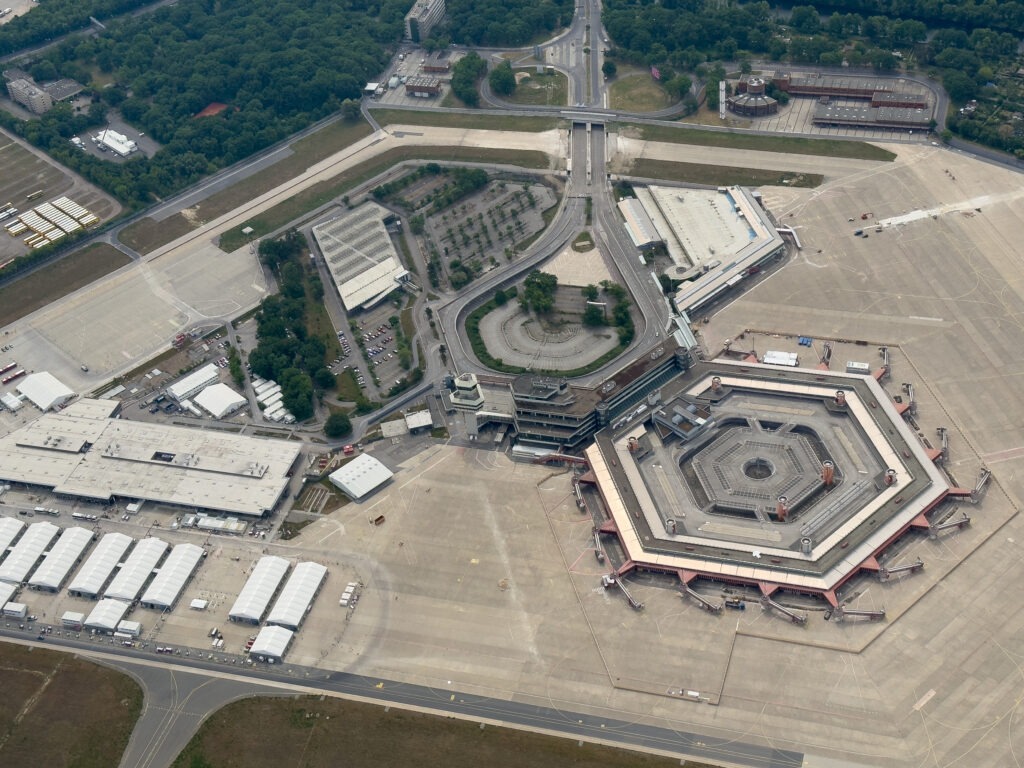
After the closure of Berlin-Tegel Airport in 2020, a new chapter now begins for the distinctive hexagonal terminal building. Instead of departure boards and check-in counters, the building will in the future feature lecture halls, laboratories, seminar rooms, and research areas. The symbolic groundbreaking ceremony at the end of July 2026 marked the official start of the extensive conversion.
The new campus will be part of the Berlin University of Applied Sciences (BHT) and is planned to accommodate approximately 2,400 students as well as numerous lecturers and researchers. The historic terminal will largely be preserved and carefully adapted to the requirements of modern university operations. The goal is to maintain the architectural character of the building while creating contemporary learning and working conditions.
The completion of the main construction measures is scheduled for 2032. Until then, a university location that brings together research, teaching, and innovation in one place will gradually emerge.
Heritage-Compliant Conversion with Modern Requirements
The transformation of the former airport presents planners and construction managers with particular challenges. Terminal A is a listed building and is considered one of the most famous examples of German airport architecture from the 1970s. Therefore, many characteristic structural components and spatial arrangements must be preserved, while simultaneously integrating modern building technology, accessibility, and energy-efficient standards.
Inside, flexible lecture halls, seminar rooms, workshops, and laboratory spaces will be created. These will be supplemented by office areas, a cafeteria, and communal lounge zones. The outdoor areas of the former airport will also be redesigned and integrated into the future campus.
The conversion exemplifies how existing buildings can be sustainably developed. Instead of constructing an entirely new building, existing structures are utilized and adapted to new requirements. This conserves resources while preserving a significant building of Berlin’s architectural history.
Heart of the Urban Tech Republic
The new university campus is far more than a single construction project. It forms the center of the so-called “Urban Tech Republic,” which is being developed on the former airport grounds. On the approximately 500-hectare site, Berlin will develop a research, innovation, and business location with companies, start-ups, and scientific institutions in the coming years.
The Berlin University of Applied Sciences plays a key role in this. Research priorities such as sustainable construction, mobility, digitalization, energy supply, and intelligent urban development are to be directly networked with companies and research institutions on the site. Short distances between science and industry create ideal conditions for interdisciplinary collaboration and the transfer of new technologies into practice.
The repurposing of the former airport thus creates not only a new university campus but also a place where future topics are researched and developed. The project combines the preservation of an architecturally significant building with the demands of a modern knowledge society and demonstrates how former infrastructures can be successfully transformed into vibrant educational and innovation hubs.

You might also be interested in
SCHULBAU Fair
SCHULBAU Essen 2025 – Successful industry meeting for educational construction
Architecture, SCHULBAU Fair
Gustav Heinemann Comprehensive School Essen: How architecture accompanies change in the neighbourhood