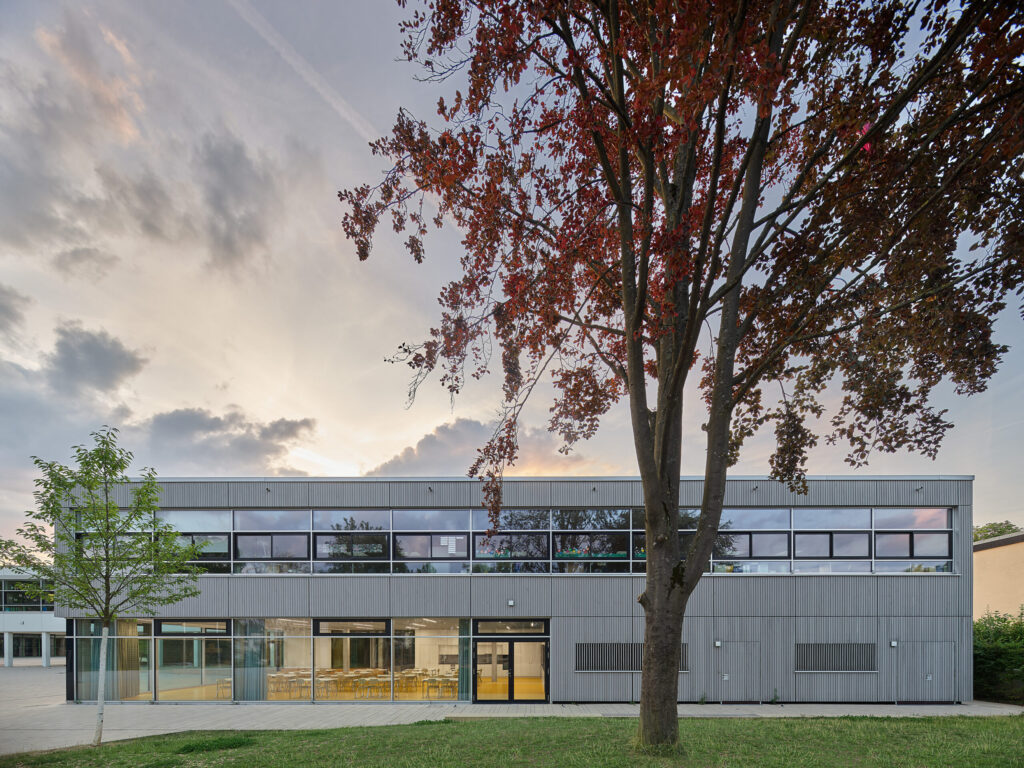
SCHULBAU Munich 2025: How School Construction Becomes Urban Development – and Education Opens New Spaces
For two days at our SCHULBAU – International Salon and Trade Fair in Munich on May 7 and 8, 2025, passionate discussions were held, bold presentations were made, and collaborative thinking advanced.
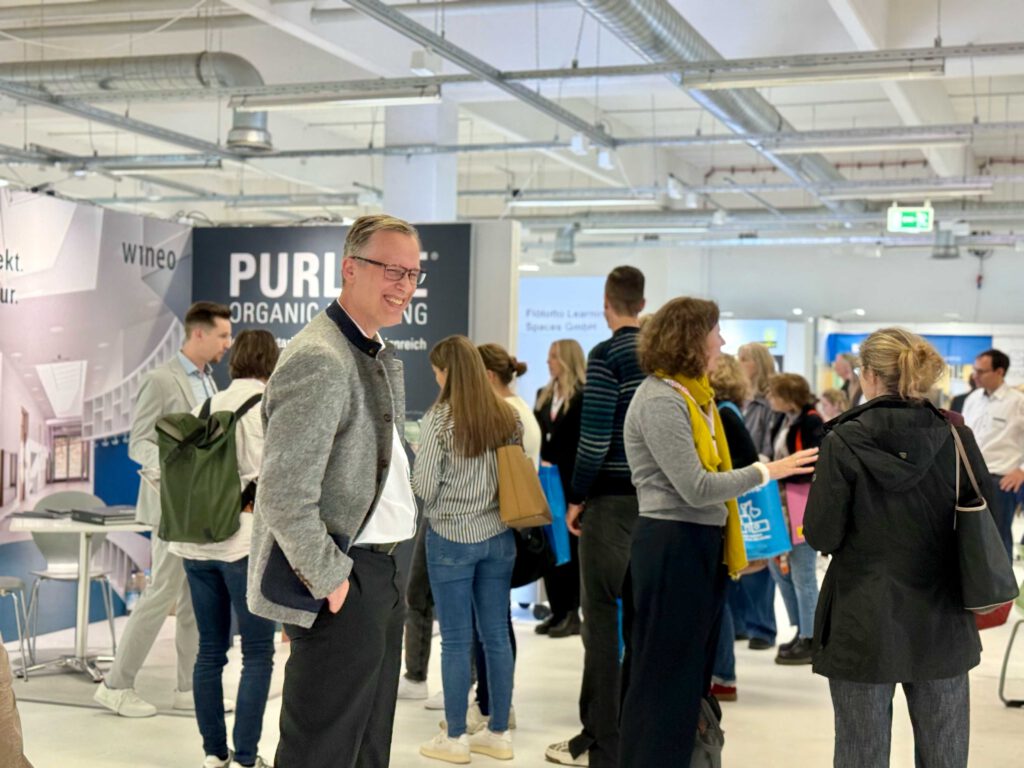
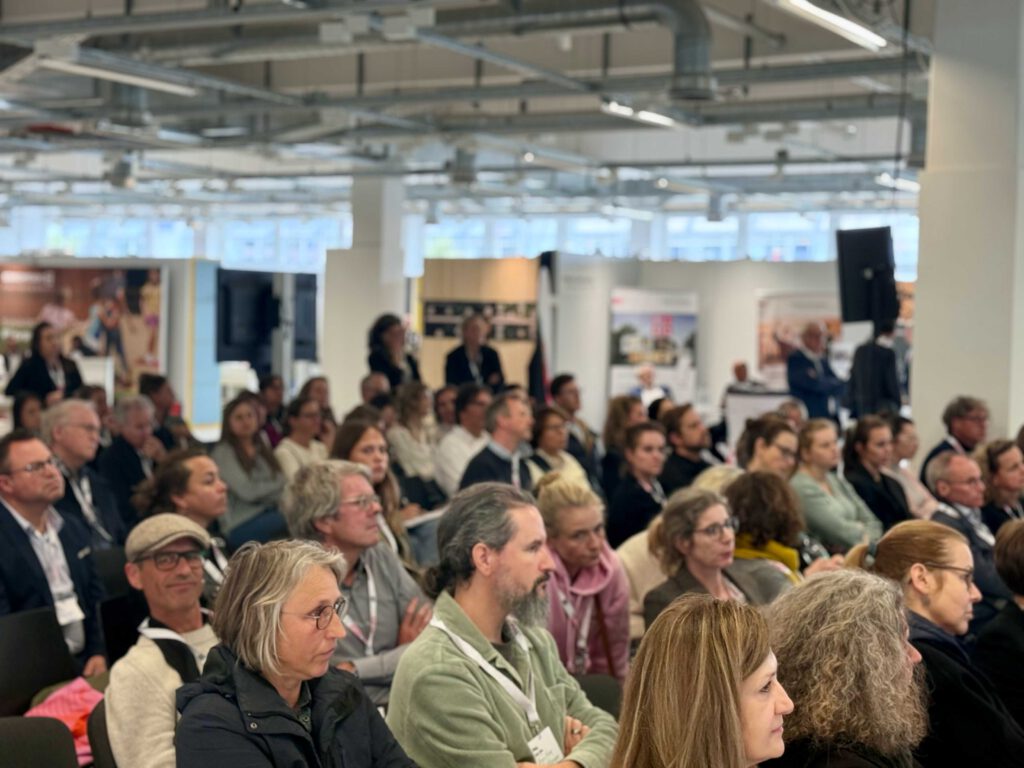
SCHULBAU Munich Day 1: District, All-Day Schooling, Community – Education as a Public Responsibility
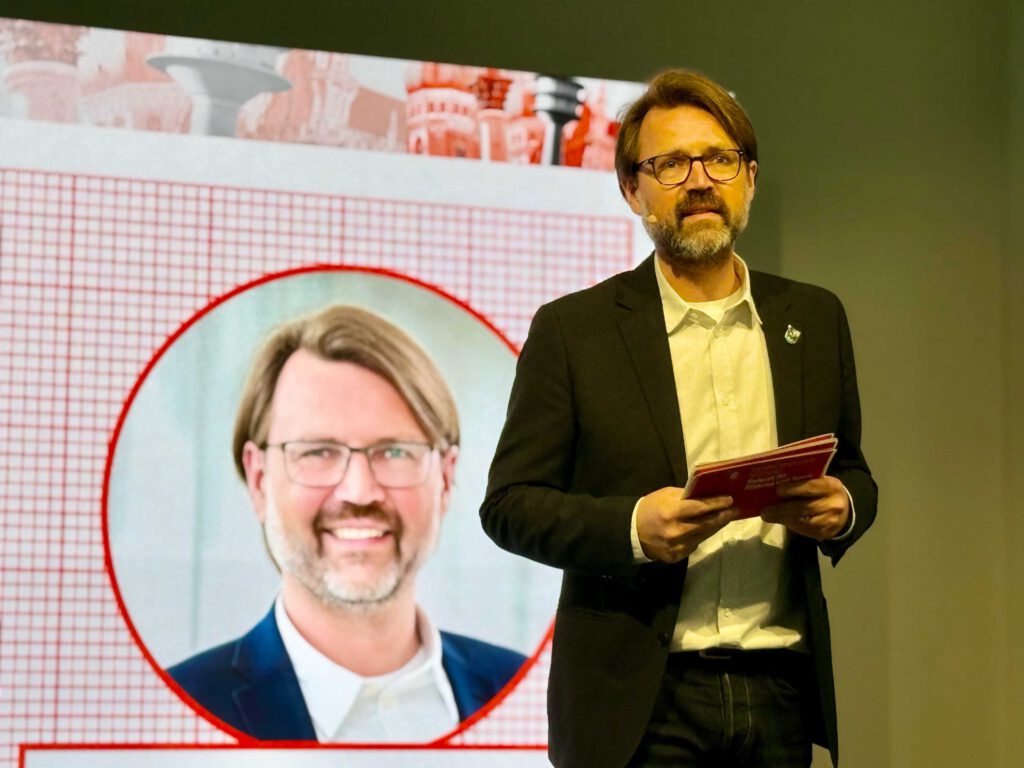
Our SCHULBAU Trade Fair at MTC Munich was opened by Kirsten Jung, founder of the SCHULBAU Trade Fair and Managing Director of Cubus Medien Verlag GmbH, together with Dr.-Ing. Jeanne-Marie Ehbauer, Head of the Department of Construction of the City of Munich. Their words immediately set the tone for the event: Those who plan schools are not constructing buildings, but designing spaces of societal possibility.
Special attention was given to the topic of all-day schooling: Dr. Meike Kricke, consultant at the Montag Stiftung Jugend und Gesellschaft, presented the nationwide project “All-Day Schooling and Space.” Her contribution impressively demonstrated how schools can be conceived as pedagogical living environments – without new buildings, but with new ways of thinking. Flexible spatial structures, child-appropriate daily rhythms, carefully selected furnishings, and well-considered fire protection solutions interlock here and unlock potential within existing spaces.


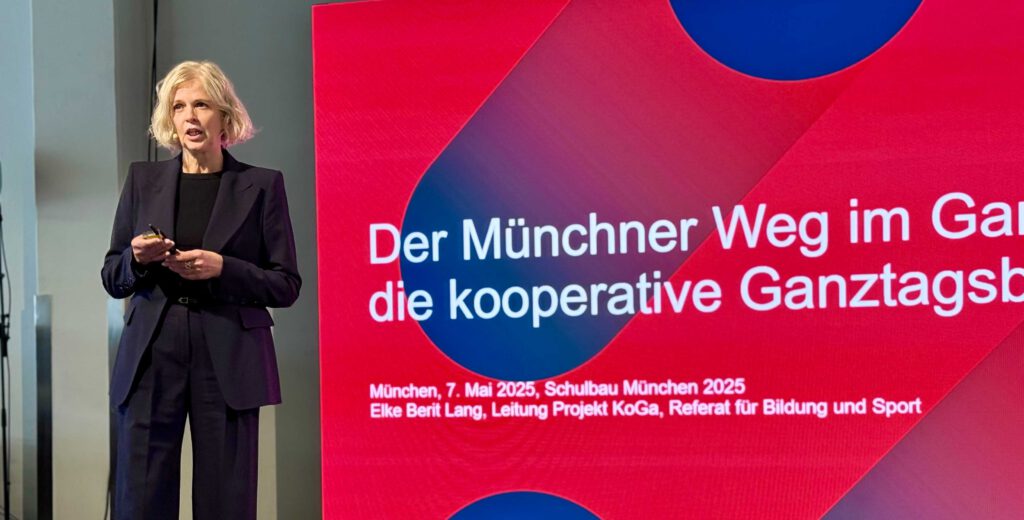
An exciting insight into the municipal approach to the legal entitlement to all-day care was provided by Elke Berit Lang, Project Manager for Cooperative All-Day Education in the Department of Education and Sports of the City of Munich. The “KoGa” model – Cooperative All-Day Education – transforms primary schools into all-day learning, play, and living environments. By the 2025/26 school year, 36 primary schools in Munich will be operating within this structure. A development that illustrates how administration, pedagogy, and architecture can work hand in hand.
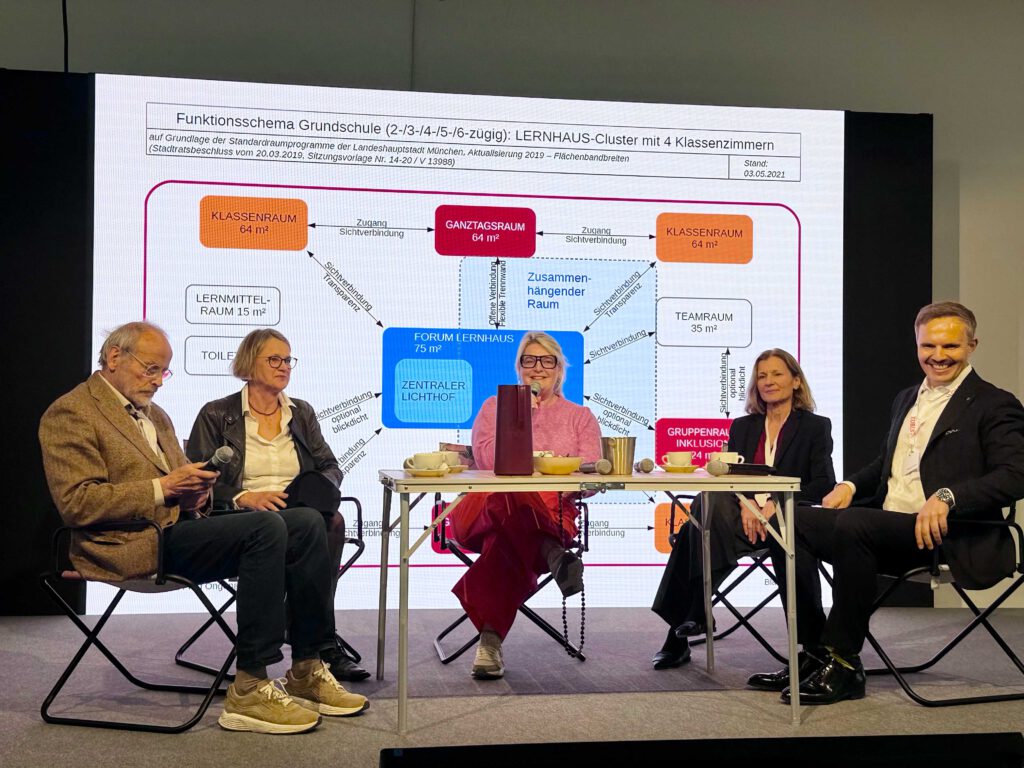
Another highlight on the first day of the SCHULBAU Trade Fair in Munich was the discussion format “At the Kitchen Table,” in which four distinguished experts jointly focused on climate – both in ecological and planning terms. Moderated by Kirsten Jung, Simone Magdolen, Climate Protection Manager in the Central Property Management of the Department of Education and Sports (RBS), Christine Lippert, City Planning Director of the City of Fürth, Florian Braun from the Department of Construction of the City of Munich, and Fire Department Councilor Tobias Gerullis discussed the requirements, conflicting objectives, and opportunities of climate-adapted educational architecture. The conversation ranged from energy-efficient renovation to structural fire protection to municipal strategies that equally consider climate goals and educational equity. An exchange that made clear: Sustainability does not begin with technology – it starts with attitude.
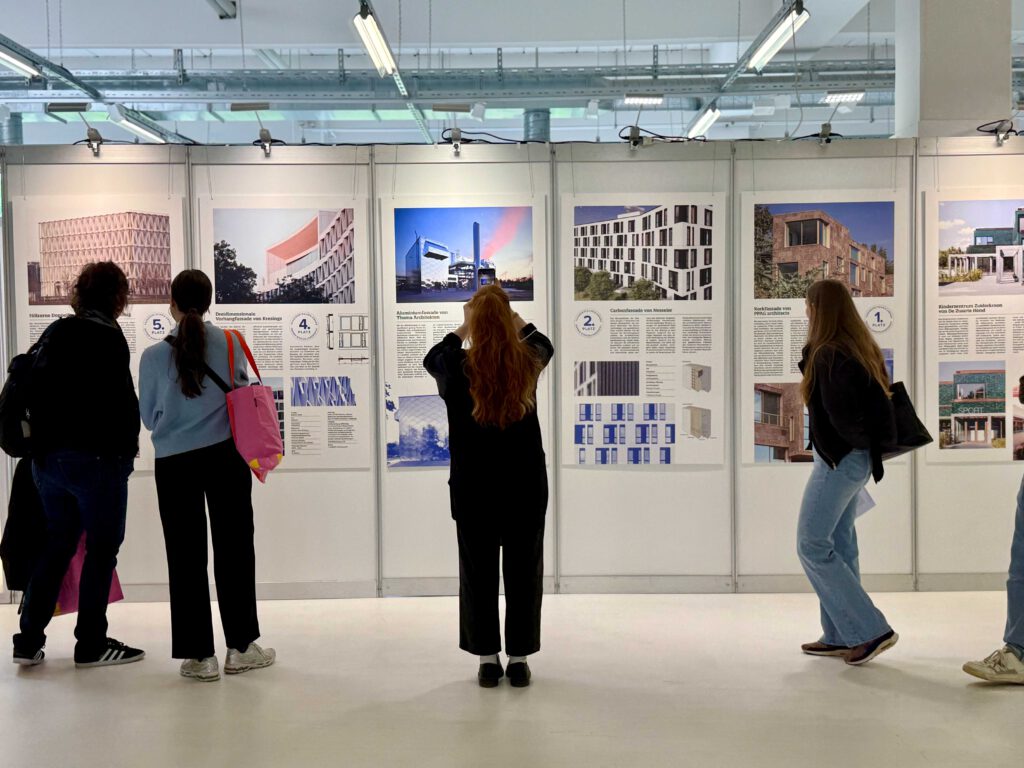
During the trade fair, a significant anniversary was also acknowledged: ten years of the Munich Educational Construction Initiative under the motto “Now – We Are Building Education.” Iris Lemke, Head of Department in the Department of Construction of the City of Munich, and Salome Benz, Head of the Central Property Management Division in the Department of Education and Sports, presented key milestones and perspectives of the extensive construction program. Parts of the accompanying exhibition were directly visible at our SCHULBAU Trade Fair and invited informed reflection as well as discussion about the path forward.
To conclude the first day of the trade fair, the “Blue Hour” invited relaxed exchange over drinks, snacks, and good company. Surrounded by speakers, exhibitors, and colleagues, DJ Vibes provided the perfect soundtrack to the ongoing discussion.


SCHULBAU Munich Day 2: City in Dialogue – and School as a Place for the Future
The second day of the trade fair began with the opening by Kirsten Jung, founder and Managing Director of the SCHULBAU Trade Fair, together with Florian Kraus, City School Councilor of the City of Munich. Their joint opening made clear: School construction is part of municipal public services – and requires the collaboration of education policy, administration, planning, and society.
Thinking was also ambitious in architectural terms: In the Expert LAB, Falk Saalbach and Dirk Tillmann, both architects and Senior Associate Partners at RKW Architektur +, discussed how schools can be planned as identity-forming places for entire neighborhoods. The presented projects demonstrated that educational buildings can strengthen social cohesion and develop integrative impact – when they are understood as part of the urban fabric.
Carolin Probst, architect and Head of Project Development in the Department of Construction Munich, and Dr. Michael Kirch, educator and Head of the General Education Schools Unit in the Department of Education and Sports Munich, presented an impressive plea for a new way of thinking in educational construction. Dr. Michael Kirch passionately appealed to the professional audience to mentally detach from the traditional image of school – away from the building, toward the district. What is needed are not new schools, but new conceptions of what school is – and can be.


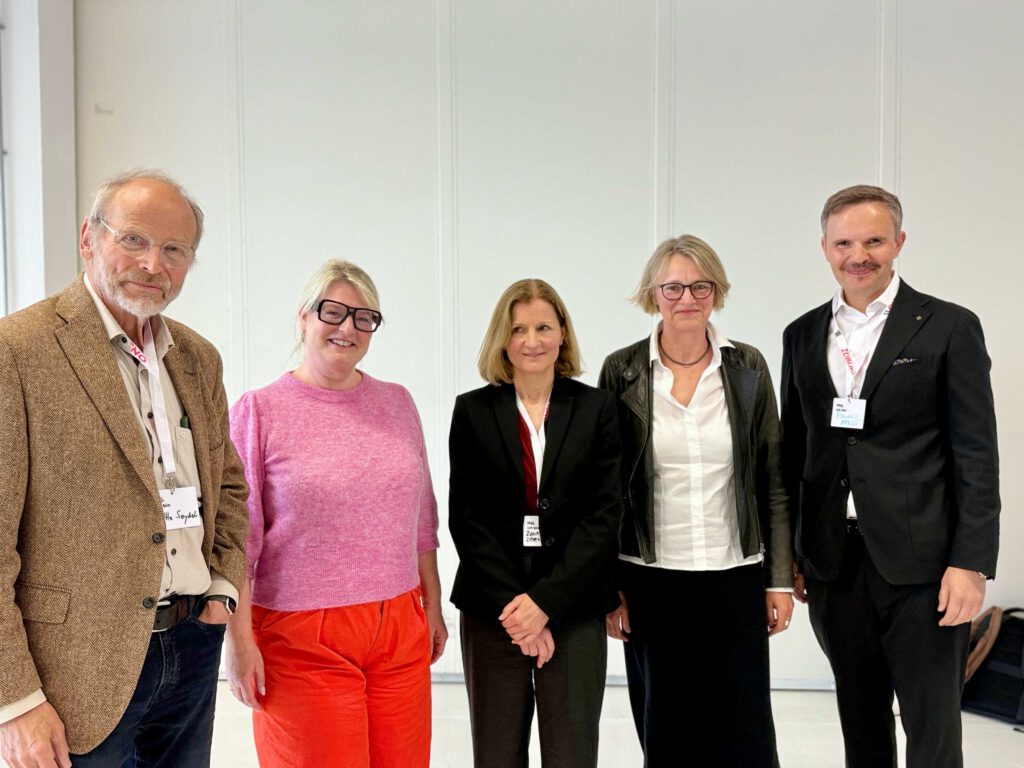
The format “Q&A – At the Kitchen Table” opened the space for open conversations: Moderated by Kirsten Jung, Renate Pfanzelt, Department of Construction Munich, Ellen Dettinger, Schürmann Dettinger Architekten, Dr. Otto Seydel, Institute for School Development, and Eduard Arndt, Department of Education and Sports Munich, discussed the development of the learning house and the school of the future. Practical, controversial, constructive – a format that enabled genuine depth.
An outstanding moment of the trade fair: the conference of the Intercommunal School Construction Network, which took place as part of the SCHULBAU Trade Fair. Participants included Iris Lemke, Head of Department of the Main Department of Building Construction in the Department of Construction of the City of Munich, Jan Schneck, Managing Director of Schulbau Hamburg (SBH), Henriette Weber, Head of Department in the Department of Urban Development and Construction – Office of Building Management of the City of Leipzig, Roland Hatz, Head of the Project Management School Construction Department in the Office of Construction and Real Estate of the City of Frankfurt am Main, and Norbert Illiges, Head of the School Construction Task Force at the Senate Department for Education, Youth and Family in Berlin. In their joint exchange, municipal challenges became visible, but above all, common goals: livable educational places in strong neighborhoods.
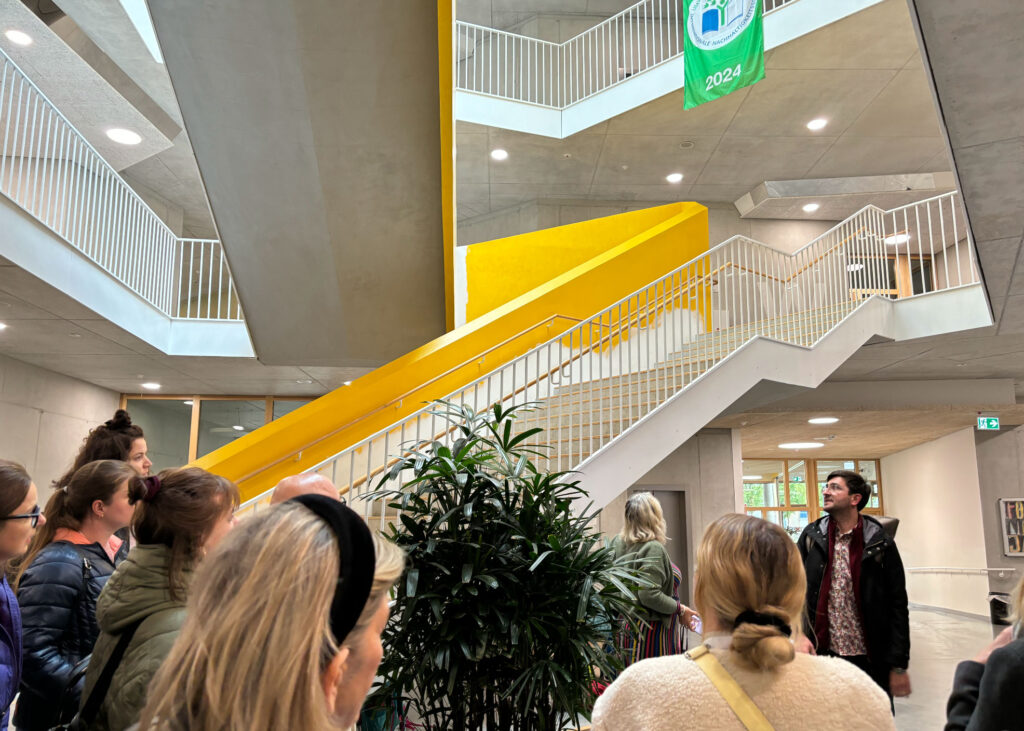
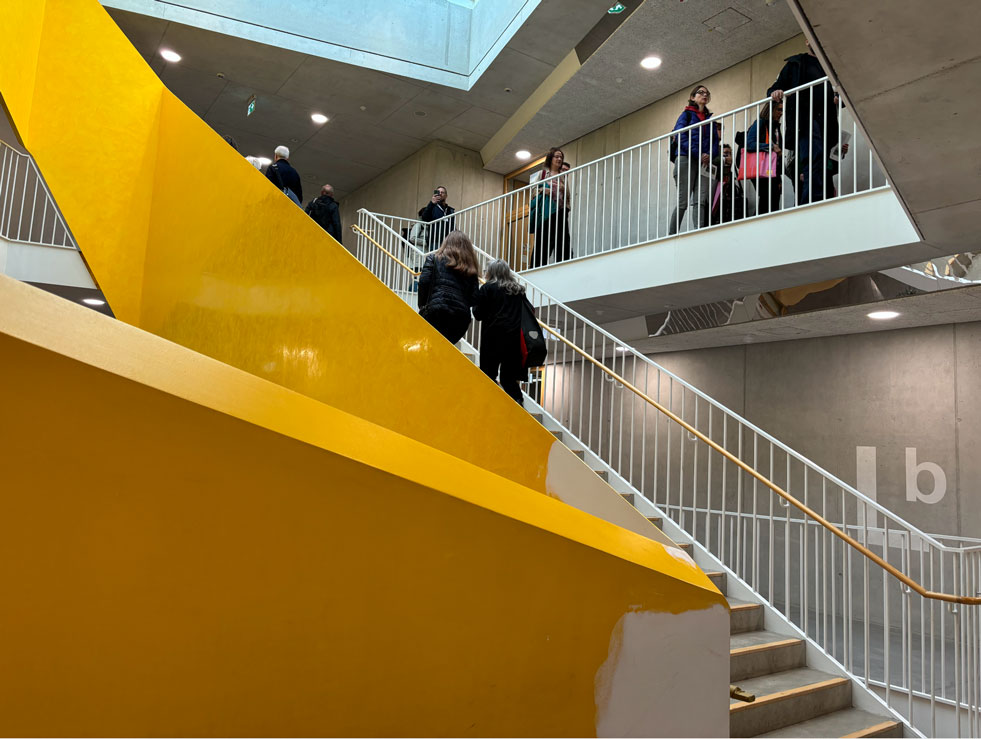
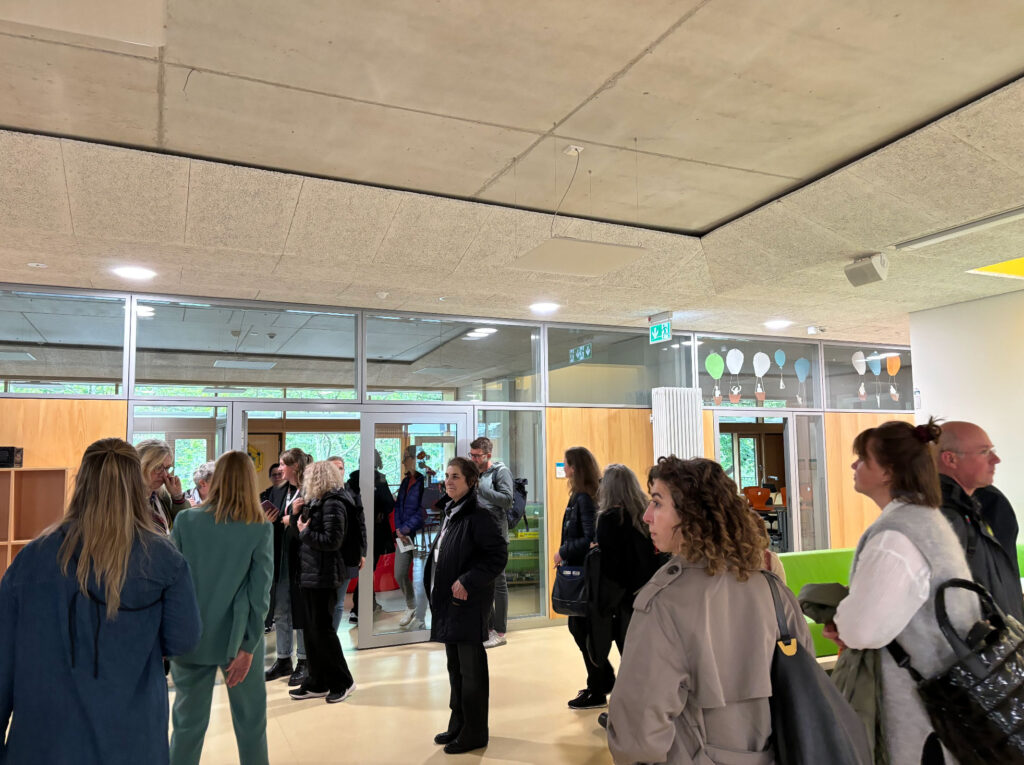
The conclusion of the second day of the trade fair was an exclusive excursion: Andreas Gabriel from the Department of Construction of the City of Munich, Maria Hirnsperger, Partner at Behnisch Architekten, and Iulian Bindar from Behnisch Architekten guided participants to the primary school and children’s center on Infanteriestrasse. On site, spatial qualities, material selection, and pedagogical aspirations became directly tangible – a vivid example of how architecture makes educational goals visible.
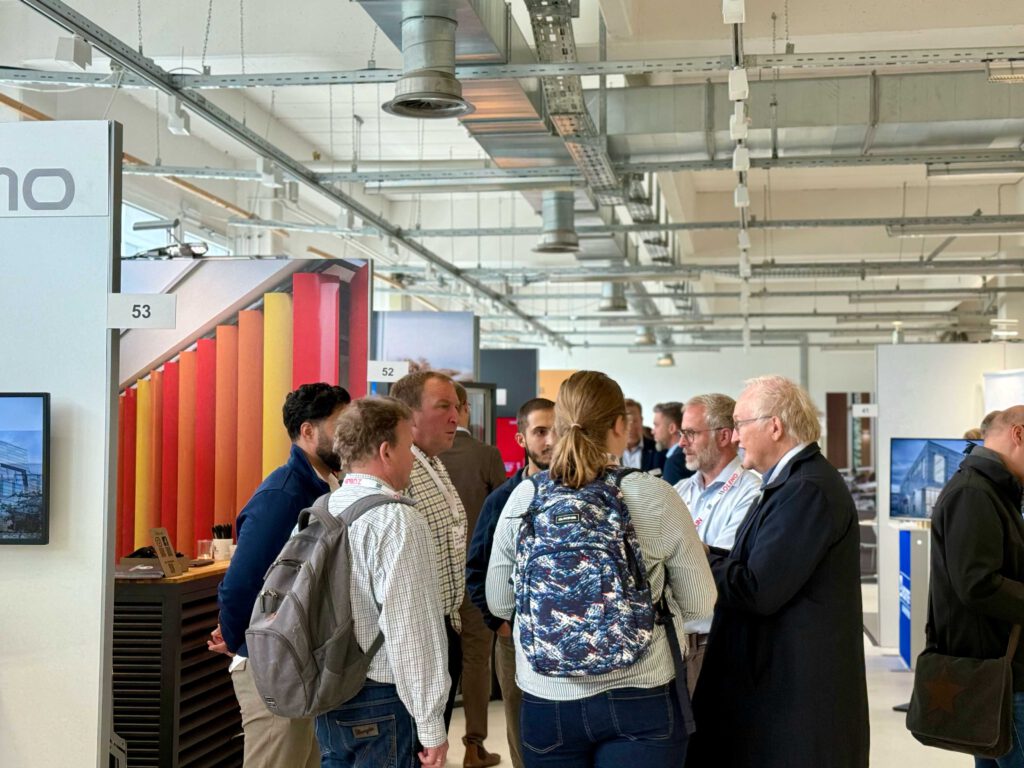
Both days of the trade fair were accompanied by over 60 exhibitors who presented the latest materials, technical solutions, furnishing concepts, and planning approaches. The exhibition areas were fully occupied – further proof of the enormous impact of the event.
What Remains: Momentum, Exchange, Responsibility
Our SCHULBAU Trade Fair in Munich 2025 impressively demonstrated what is possible when expertise, conviction, and dialogue converge. For two days, education was shaped with passion – in both small and large ways. Those who want to know how schools become vibrant urban spaces, how obligation becomes encounter, and how architecture creates the future will find both inspiration and connection to a growing community here. The next dates are already confirmed – and those who want to be part of this momentum should secure a ticket early. We look forward to seeing you on June 3 in Copenhagen at our International SCHULBAU Think Tank!

You might also be interested in
SCHULBAU Fair
SCHULBAU Essen 2025 – Successful industry meeting for educational construction
Architecture, SCHULBAU Fair
Gustav Heinemann Comprehensive School Essen: How architecture accompanies change in the neighbourhood